Blog Archives
Pearls from artists* # 666

*an ongoing series of quotations – mostly from artists, to artists – that offers wisdom, inspiration, and advice for the sometimes lonely road we are on.
Most of my writing life consists of nothing more than unglamorous, disciplined labor. I sit at my desk and I work like a farmer, and that’s how it gets done. Most of it is not fairy dust in the least.
But sometimes it is fairy dust. Sometimes when I’m in the midst of writing, I feel like I am suddenly walking on one of those moving sidewalks that you find in a big airport terminal; I still have a long slog to my gate. And my luggage is still heavy, but I can feel myself being gently propelled by some exterior force. Something is carrying me along – something powerful and generous – and that something is decidedly not me.
You may know this feeling. It’s the feeling you get when you’ve made something wonderful, or done something wonderful, and when you look back at it later, all you can say is: “I don’t even know where that came from.”
Elizabeth Gilbert in Big Magic: Creative Living Beyond Fear
Comments are welcome!
Pearls from artists* # 230
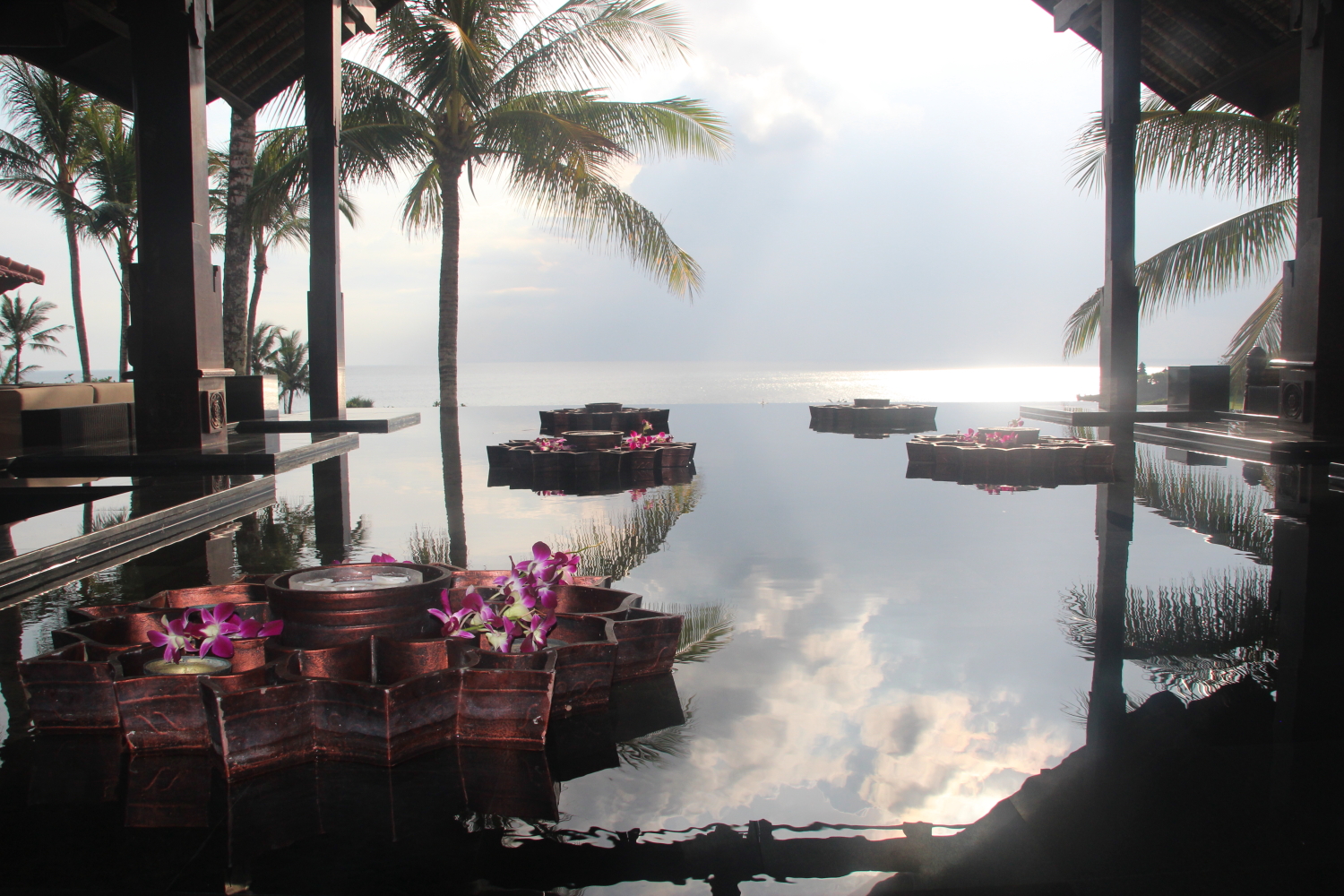
On the Indian Ocean in Tanah Lot, Bali
* an ongoing series of quotations – mostly from artists, to artists – that offers wisdom, inspiration, and advice for the sometimes lonely road we are on.
I like excitement as much as the next person. Perhaps even more than the next person. But I get overstimulated easily, and I can feel my brain shorting out when I have too much going on. And it doesn’t take much: a good piece of news, a nice review, a longed-for assignment, a cool invitation, and suddenly I can’t think straight. The outside world glitters, it gleams like a shiny new toy. Squinting, having lost all sense of myself, I toddle with about as much consciousness as a two-year-old in the direction of that toy. Once I get a little bit of it, I am conditioned to want more, more, more. I lose all sight of whatever I had been doing before.
One of the strangest aspects of a writing life is what I think of as going in and out of the cave. When we are in the middle of a piece of work, the cave is the only place we belong. Yes, there are practical considerations. Eating, for instance. Or helping a child with homework. Or taking out the trash. Whatever. But a writer in the midst of a story needs to find a way to keep her head there. She can’t just pop out of the cave, have some fun, go dancing, and then pop back in. The work demands our full attention, our deepest concentration, our best selves. If we’re in the middle – in the boat we’re building – we cannot let ourselves be distracted by the bright and shiny. The bright and shiny is a mirage, an illusion. It is of no use to us.
If there is a time for that brightness, it is at the end: when the book is finished and the revisions have been turned in, when you’ve given everything inside of you and then some. When the cave is empty. Every rock turned over. The walls covered with hieroglyphics that only you understand – notes you’ve written to yourself in the darkness. But it’s possible that something interesting has happened while you’ve toiled amid the moths and millipedes. Once you’ve acclimated to cave life, stumbling toward the light may have lost some of its appeal. What glitters looks shopworn. The sparkle and hum of life outside the cave feels somehow less real than what has taken place deep within its recesses. Savor it – this hermetic joy, this rich unexpected peace. It’s hard-won, and so easy to lose. It contains within it the greatest contentment I have ever known.
Dani Shapiro in Still Writing: The Perils and Pleasures of a Creative Life
Comments are welcome!
Pearls from artists* # 216
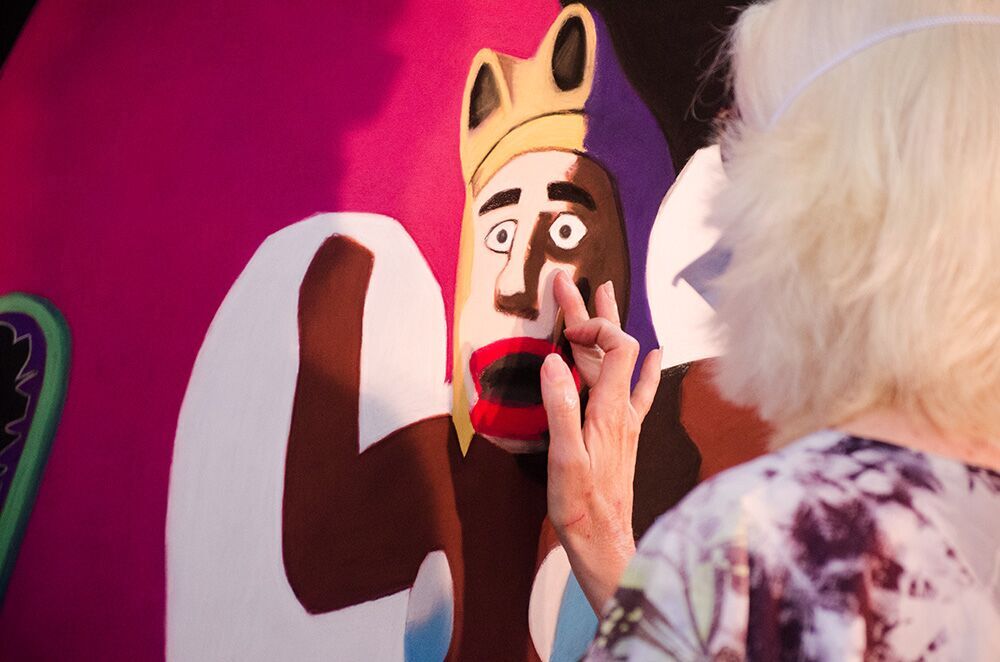
Working on “Charade”
* an ongoing series of quotations – mostly from artists, to artists – that offers wisdom, inspiration, and advice for the sometimes lonely road we are on.
This is true for all artists, not only writers.
The writing life requires courage, patience, persistence, empathy, openness, and the ability to deal with rejection. It requires the willingness to be alone with oneself. To be gentle with oneself. To look at the world without blinders on. To observe and withstand what one sees. To be disciplined, and at the same time, take risks. To be willing to fail – not just once, but again and again, over the course of a lifetime. “Ever tried, ever failed,” Samuel Beckett once wrote. “No matter. Try again. Fail again. Fail better.” It requires what the great editor Ted Solotoroff once called endurability. It is this quality, most of all, that I think of when I look around a classroom at a group of aspiring writers. Some of them will be more gifted than others. Some of them will be driven, ambitious for success or fame, rather than by the determination to do their best possible work. But of the students I have taught, it is not necessarily the most gifted, or the ones most focused on imminent literary fame (I think of these as short sprinters), but the ones who endure, who are still writing, decades later.
Dani Shapiro in Still Writing: The Perils and Pleasures of a Creative Life
Comments are welcome!


 barbararachkoscoloreddust.com