Blog Archives
Q: What’s on the easel today?
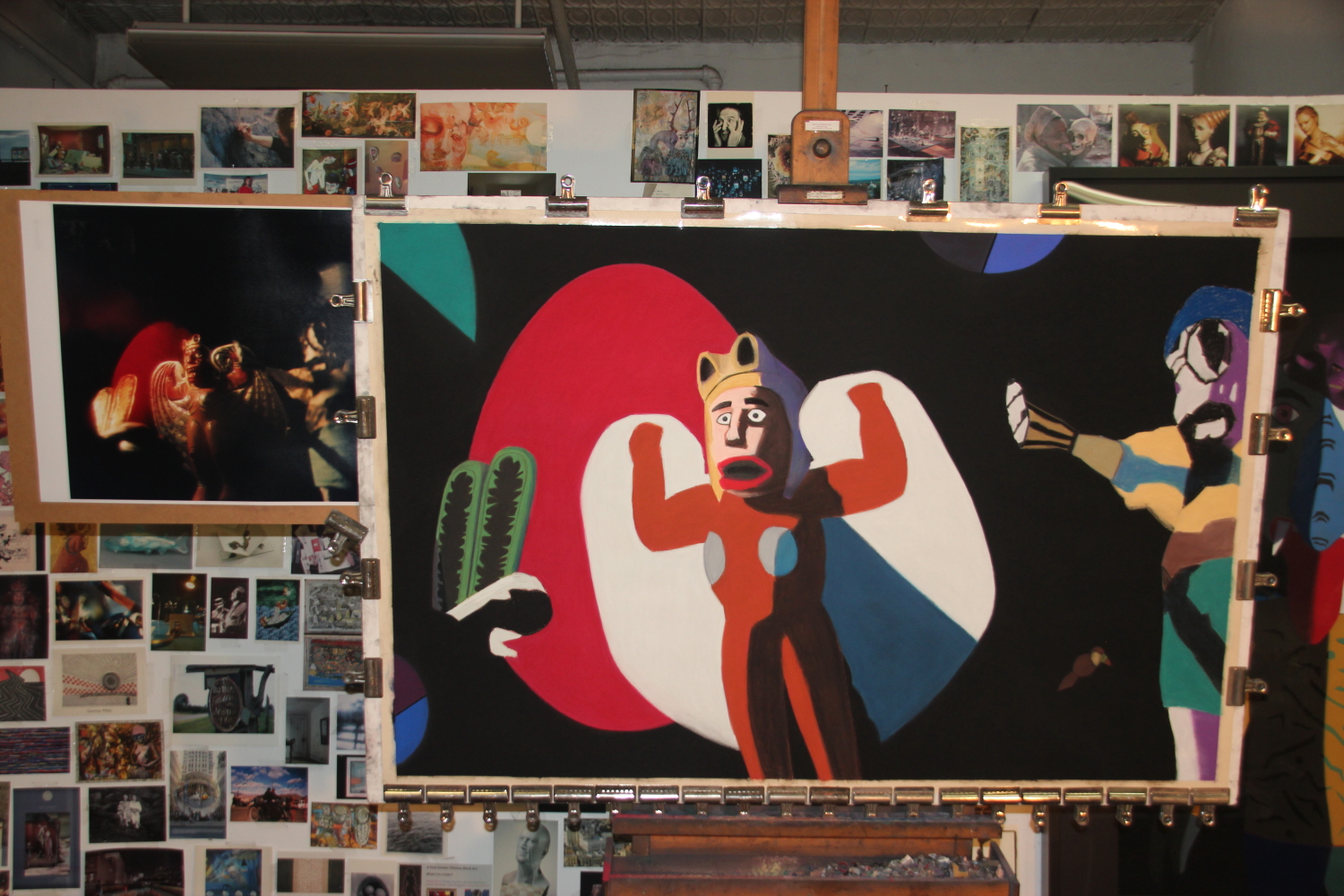
Work in pogress
A: I am working on a 38″ x 58″ pastel painting. Rather than create and photograph a new setup each time, I sometimes search through older photographs to find ones that might spark a compelling painting. Photos that I haven’t seen in a while often have new lessons to teach. The one clipped to my easel above is from 2009.
Comments are welcome!
Q: Does your work look different to you on days when you are sad, happy, etc.?
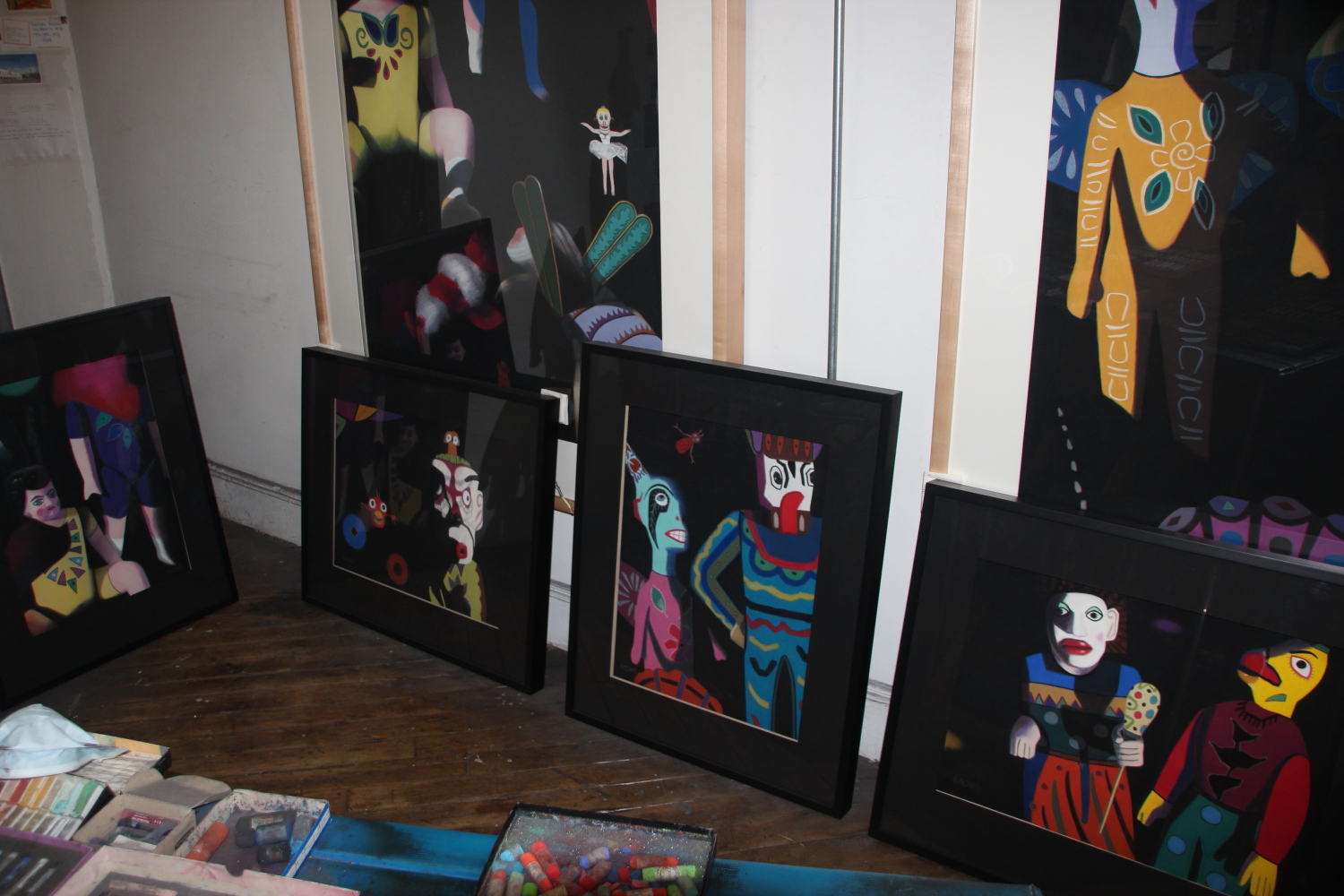
Recent work
A: I’m more critical on days when I am sad so that the faults, imperfections, and things I wish I had done better stand out. Fortunately, all of my work is framed behind plexiglas so I can’t easily go back in to touch up newly-perceived faults. It reminds me of the expression, “Always strive to improve, whenever possible. It is ALWAYS possible!” However, I’ve learned that re-working a painting is a bad idea. You are no longer deeply involved in making it and the zeitgeist has changed. The things you were concerned with are gone: some are forgotten, others are less urgent. For most artists the work is autobiography. Everything is personal. When I look at a completed pastel painting, I usually remember exactly what was happening in my life as I worked on it. Each piece is a snapshot – maybe even a time capsule, if anyone could decode it – that reflects and records a particular moment. When I finally pronounce a piece finished and sign it, that’s it, THE END. It’s as good as I can make it at that point in time. I’ve incorporated everything I was thinking about, what I was reading, how I was feeling, what I valued, art exhibitions I visited, programs that I heard on the radio or watched on television, music that I listened to, what was going on in New york, in the country, in the world, and so on. It is still a mystery how this heady mix finds its way into the work. During the time that I spend on it, each particular painting teaches me everything it has to teach. A painting requires months of looking, reacting, correcting, searching, thinking, re-thinking, revising. Each choice is made for a reason and as an aggregate these decisions dictate what the final piece looks like. On days when I’m sad I tend to forget that. On happier days I remember that the framed pastel paintings that you see have an inevitability to them. If all art is the result of one’s having gone through an experience to the end, as I believe it is, then the paintings could not, and should not, look any differently.
Comments are welcome.
Pearls from artists* # 9

Lower Manhattan
* an ongoing series of quotations – mostly from artists, to artists – that offers wisdom, inspiration, and advice for the sometimes lonely road we are on.
ART when really understood is the province of every human being. It is simply a question of doing things, anything, well. It is not an outside, extra thing.
When the artist is alive in any person, whatever his kind of work may be, he becomes an inventive, searching, daring, self-expressing creature. He disturbs, upsets, enlightens, and he opens ways for a better understanding. Where those who are not artists are trying to close the book, he opens it, shows there are still more pages possible.
The world would stagnate without him, and the world would be beautiful with him; for he is interesting to himself and he is interesting to others. He does not have to be a painter or sculptor to be an artist. He can work in any medium. He simply has to find the gain in the work itself, not outside it.
Museums of art will not make a country an art country. But where there is the art spirit there will be precious works to fill museums. Better still, there will be the happiness that is in the making. Art tends toward balance, order, judgment or relative values, the laws of growth, the economy of living – very good things for anyone to be interested in.
Robert Henri, The Art Spirit
Comments are welcome.


 barbararachkoscoloreddust.com