Blog Archives
Pearls from artists* # 8
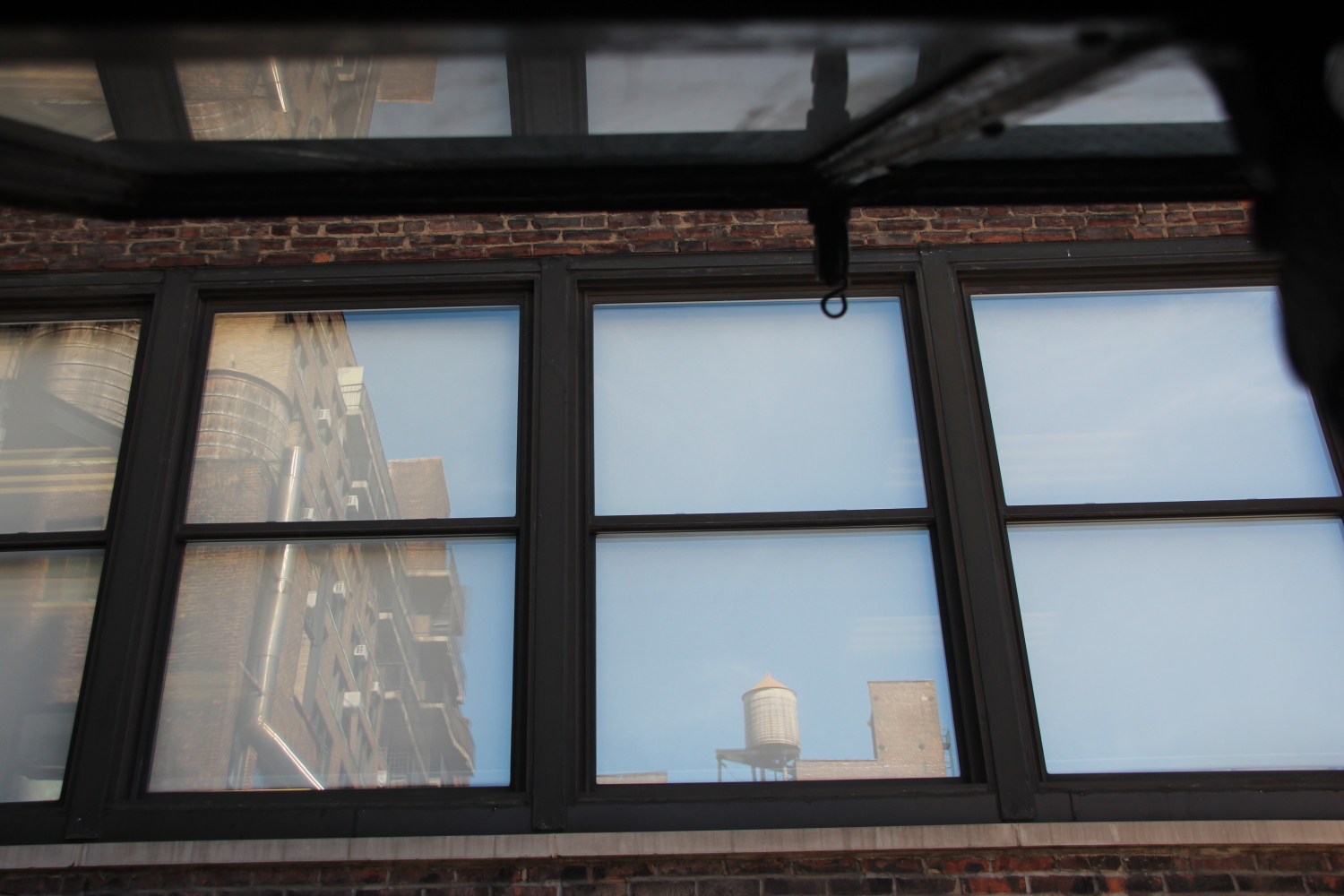
A view from the studio
* an ongoing series of quotations – mostly from artists, to artists – that offers wisdom, inspiration, and advice for the sometimes lonely road we are on.
Here is a fairly sober version of what happens in the small room between the writer and the work itself. It is similar to what happens between a painter and the canvas.
First you shape the vision of what the projected work of art will be. The vision, I stress, is no marvelous thing: it is he work’s intellectual structure and aesthetic surface. It is a chip of mind, a pleasing intellectual object. It is a vision of the work, not of the world. It is a glowing thing, a blurred thing of beauty. Its structure is at once luminous and translucent; you can see the world through it. After you receive the initial charge of this imaginary object, you add to it at once several aspects, and incubate it most gingerly as it grows into itself.
Many aspects of the work are still uncertain, of course; you know that. You know that if you proceed you will change things and learn things, that the form will grow under your hands and develop new and richer lights. But that change will not alter the vision or its deep structures; it will only enrich it. You know that and you are right.
But you are wrong if you think that in the actual writing or in the actual painting, you are filling in the vision. You cannot fill in the vision. You cannot even bring the vision to light. You are wrong if you think that you can in any way take the vision and tame it to the page. The page is jealous and tyrannical; the page is made of time and matter; the page always wins. The vision is not so much destroyed, exactly, as it is, by the time you have finished, forgotten. It has been replaced by this changeling, this bastard, this opaque lightless chunky ruinous work.
Here is how it happens. The vision is, sub specie aeternitatis, a set of mental relationships, a coherent series of formal possibilities. In the actual rooms of time, however, it is a page or two of legal paper filled with words and questions; it is a terrible diagram, a few books’ names in a margin, an ambiguous doodle, a corner folded down in a library book. There are memos from the thinking brain to witless hope.
Nevertheless, ignoring the provisional and pathetic nature of these scraps, and bearing the vision itself in mind – having it before your sights like the very Grail – you begin to scratch out the first faint marks on the canvas, on the page. You begin the work proper. Now you have gone and done it. Now the thing is no longer a vision: it is paper.
Words lad to other words and down the garden path. You adjust the paints’ values and hues not to the world, not to the vision, but to the rest of the paint. The materials are stubborn and rigid; push is always coming to shove. You can fly – you can fly higher than you thought possible – but you can never get off the page. After every passage another passage follows, more sentences, more everything on drearily down. Time and materials hound the work; the vision recedes ever farther into the dim realms.
And so you continue the work, and finish it. Probably by now you have been forced to toss the most essential part of the vision. But this is a concern for mere nostalgia now: for before your eyes, and stealing your heart, is this fighting and frail finished product, entirely opaque. You can see nothing through it. It is only itself, a series of well-known passages, some colored paint. Its relationship to the vision that impelled it is the relationship between any energy and any work, anything unchanging to anything temporal.
The work is not the vision itself, certainly. It is not the vision filled in, as if it had been a coloring book. It is not the vision reproduced in time; that were impossible. It is rather a simulacrum and a replacement. It is a golem. You try – you try every time – to reproduce the vision, to let your light so shine before men. But you can only come along with your bushel and hide it.
Annie Dillard, The Writing Life
Comments are welcome.
Pearls from artists* # 7
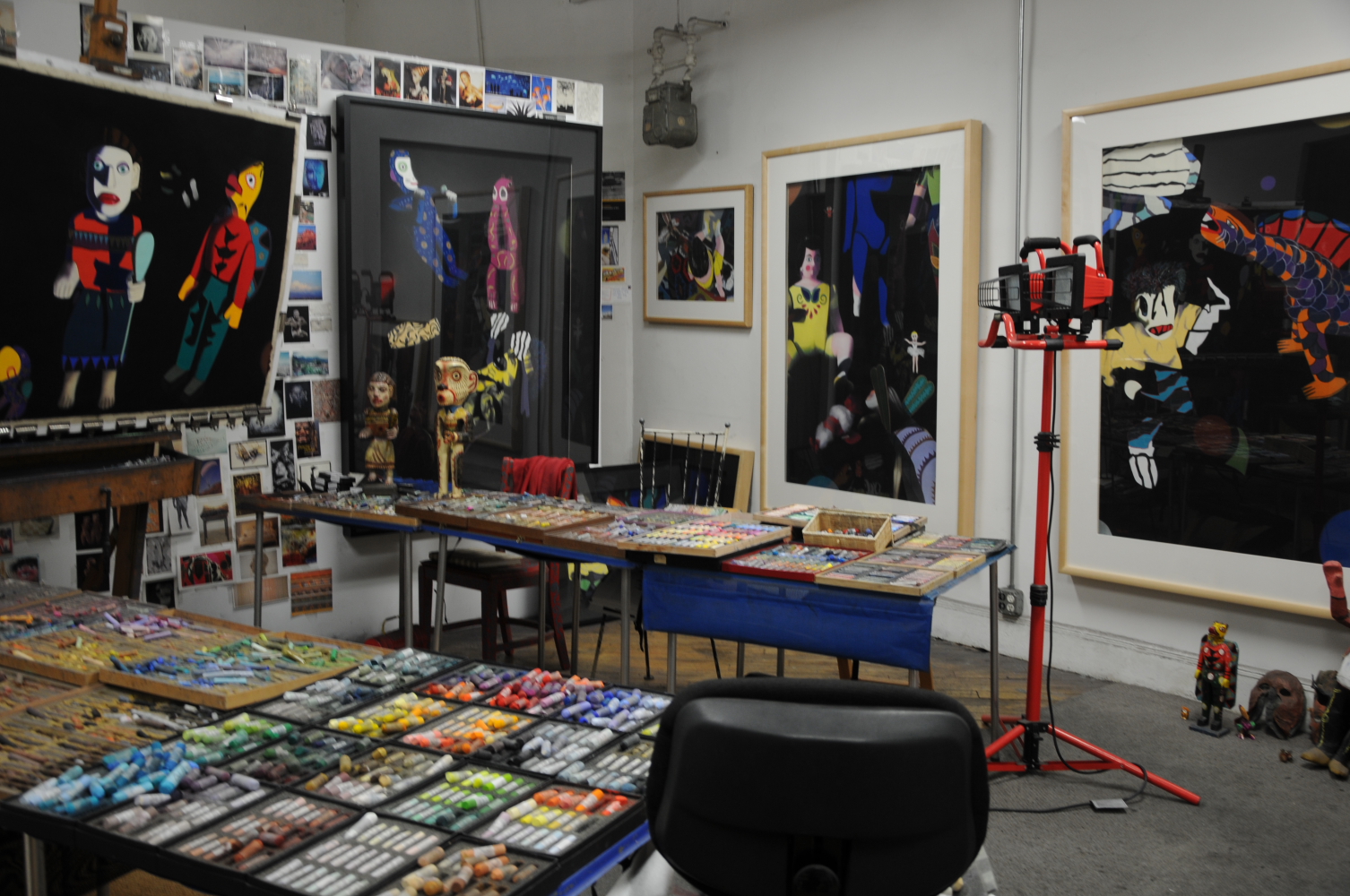
Barbara’s studio
* an ongoing series of quotations – mostly from artists, to artists – that offers wisdom, inspiration, and advice for the sometimes lonely road we are on.
It’s painful to think of the number of paintings that don’t work, not only my own, but also what I see in galleries and museums. Such failures may be adequately painted but they don’t sing. They left the studio but they aren’t happy about it. It’s simple and inevitable: there’s work we artists do that doesn’t come together. And for each of us there’s only one solution to this problem. You just continue to make paintings, and you make more paintings, and then for no particular reason all of a sudden you start to click and all the pieces that you’ve been working with, the direction you’ve been perceiving “as if through a glass darkly” is now open and clear, in all its glory. We paint and everything falls into place. That expression of “being in the zone” expresses the experience perfectly. There is a momentum you’ve built up which was essential to this work. If you had been waiting for inspiration, waiting for that flow to begin, it would have caught you too flat-footed to notice. It arrived out of the readiness that all the previous work created in you. Regardless of how sluggish that process may have seemed at the time, things were lining up in preparation, ideas were formulating.
Ian Roberts, Creative Authenticity: 16 Principles to Deepen Your Artistic Vision
Comments are welcome.


 barbararachkoscoloreddust.com