Category Archives: Travel
Pearls from artists* # 5
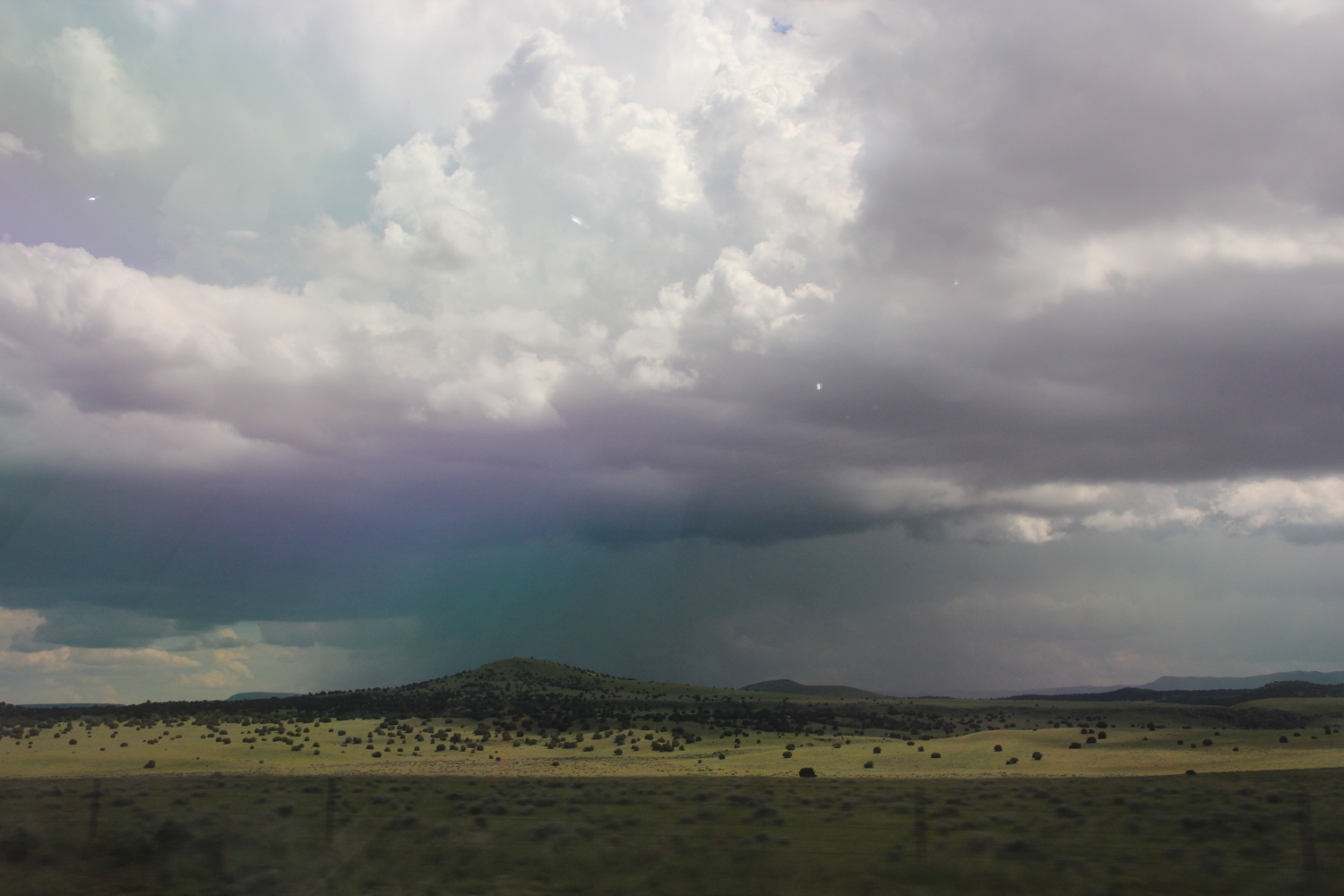
Arizona storm
* an ongoing series of quotations – mostly from artists, to artists – that offers wisdom, inspiration, and advice for the sometimes lonely road we are on.
Flying over the desert yesterday, I found myself lifted out of my preoccupations by noticing suddenly that everything was curved. Seen whole from the air, circumscribed by its global horizon, the earth confronted me bluntly as a context all its own, echoing that grand sweep. I had the startling impression that I was looking at something intelligent. Every delicate pulsation of color was met, matched, challenged, repulsed, embraced by another, none out of proportion, each at its own unique and proper part of the whole. The straight lines with which human beings have marked the land are impositions of a different intelligence, abstract in this area of the natural. Looking down at these facts, I began to see my life as somewhere between these two orders of the natural and the abstract, belonging entirely neither to one nor to the other.
In my work as an artist I m accustomed to sustaining such tensions: A familiar position between my senses, which are natural, and my intuition of an order they both mask and illuminate. When I draw a straight line or conceive of an arrangement of tangible elements all my own, I inevitably impose my own order on matter. I actualize this order, rendering it accessible to my senses. It is not so accessible until actualized.
An eye for this order is crucial for an artist. I notice that as I live from day to day, observing and feeling what goes on both inside and outside myself, certain aspects of what is happening adhere to me, as if magnetized by a center of psychic gravity. I have learned to trust this center, to rely on its acuity and to go along with its choices although the center itself remains mysterious to me. I sometimes feel as if I recognize my own experience. It is a feeling akin to that of unexpectedly meeting a friend in a strange place, of being at once startled and satisfied – startled to find outside myself what feels native to me, satisfied to be so met. It is exhilarating.
I have found that this process of selection, over which I have virtually no control, isolates those aspects of my experience that are most essential to me in my work because they echo my own attunement to what life presents me. It is as if there are external equivalents for truths which I already in some mysterious way know. In order to catch these equivalents, I have to stay “turned on” all the time, to keep my receptivity to what is around me totally open. Preconception is fatal to this process. Vulnerability is implicit in it; pain, inevitable.
Anne Truitt, Daybook: The Journal of an Artist
Comments are welcome.
Q: What are you working on now?
A: I am continuing with the “Black Paintings,” a series started a few years ago. Compared with “Domestic Threats,” these paintings are stripped of everything – walls, furniture, rugs – except the actors, who appear on a stark black background. As I’ve continued working over the years, I’ve learned to communicate better. I’ve stripped away all the extraneous stuff and gradually have been able to do more with less. There is wisdom in simplifying the work to reveal the essential vision. It is an artist’s life work.
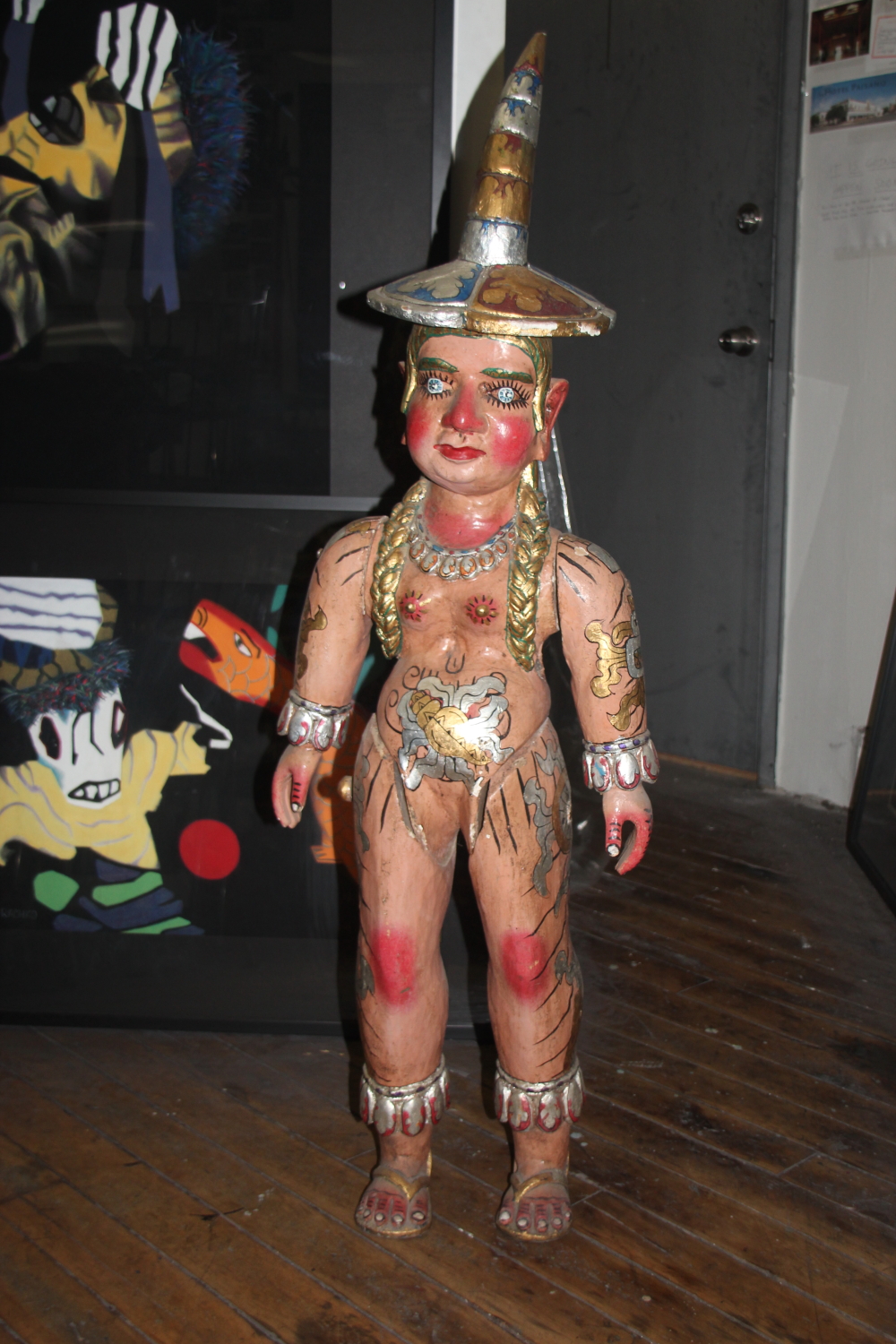
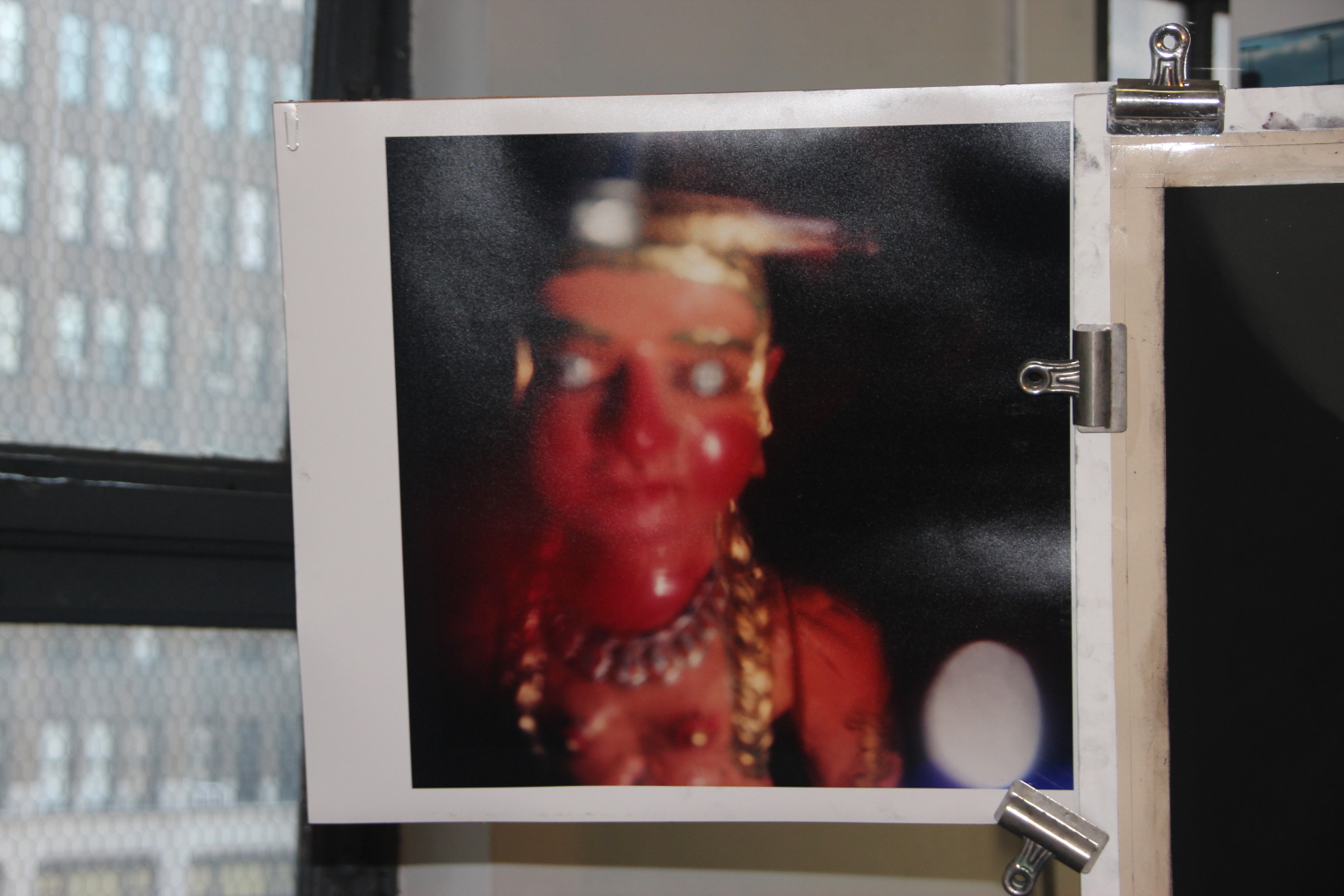
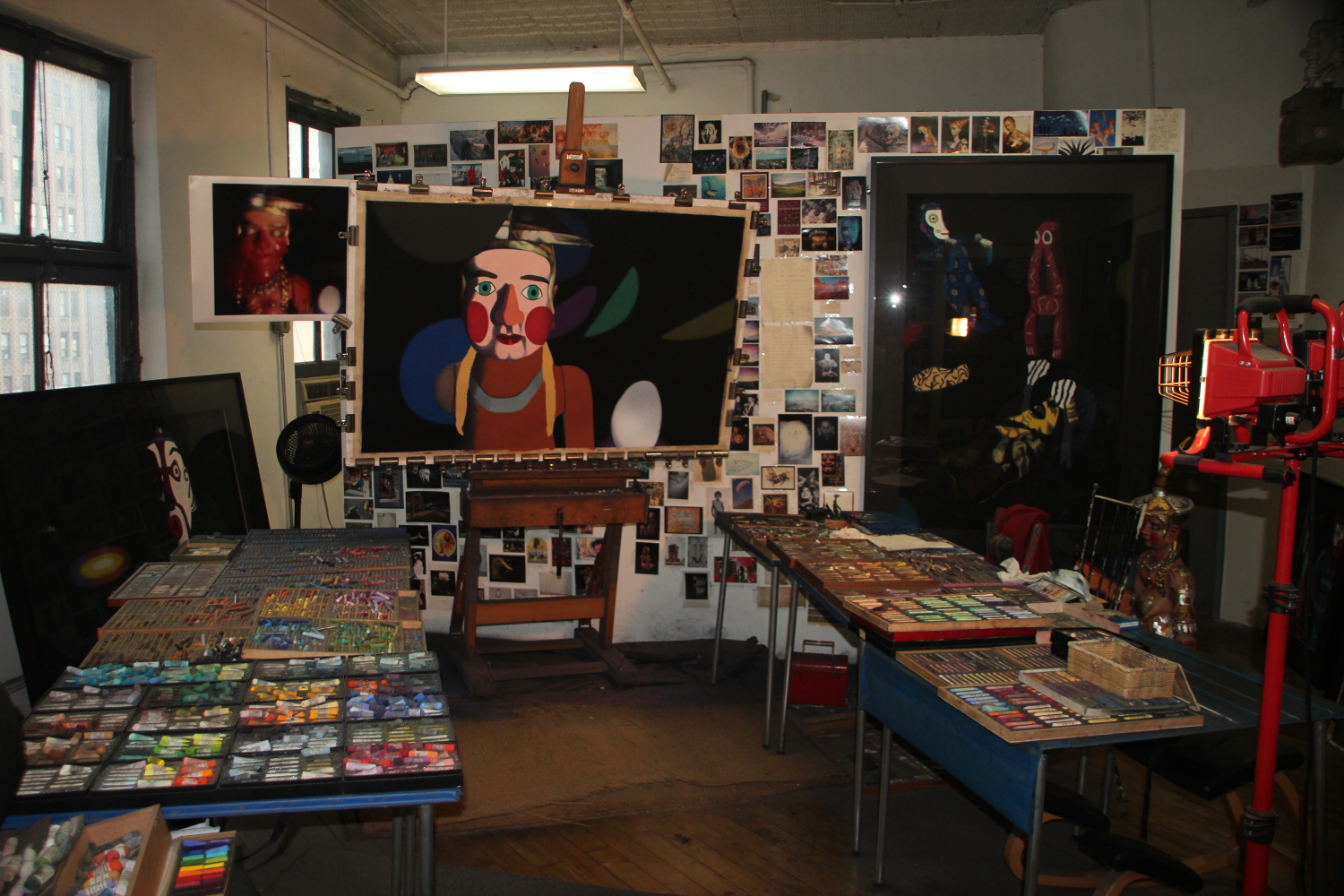
The first photograph below is of a carved wooden figure found in Mexico City at Eugenio’s, my favorite mask store in Mexico. She is part of a male-female pair. The second image is my 20″ x 24″ photograph of her, the starting point and reference for the painting. The next five photographs, I think, are self-explanatory. Questions are welcome, as always.
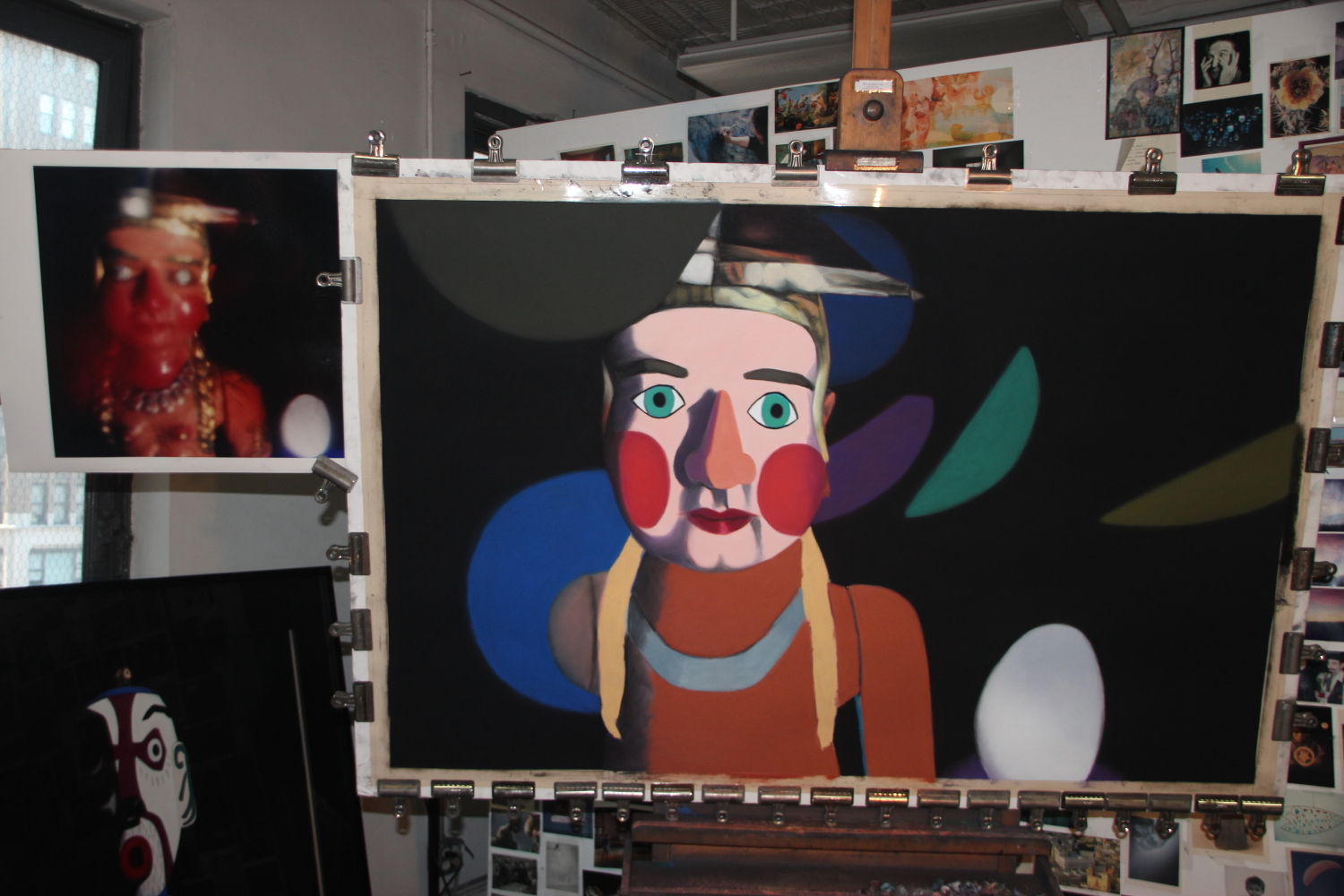
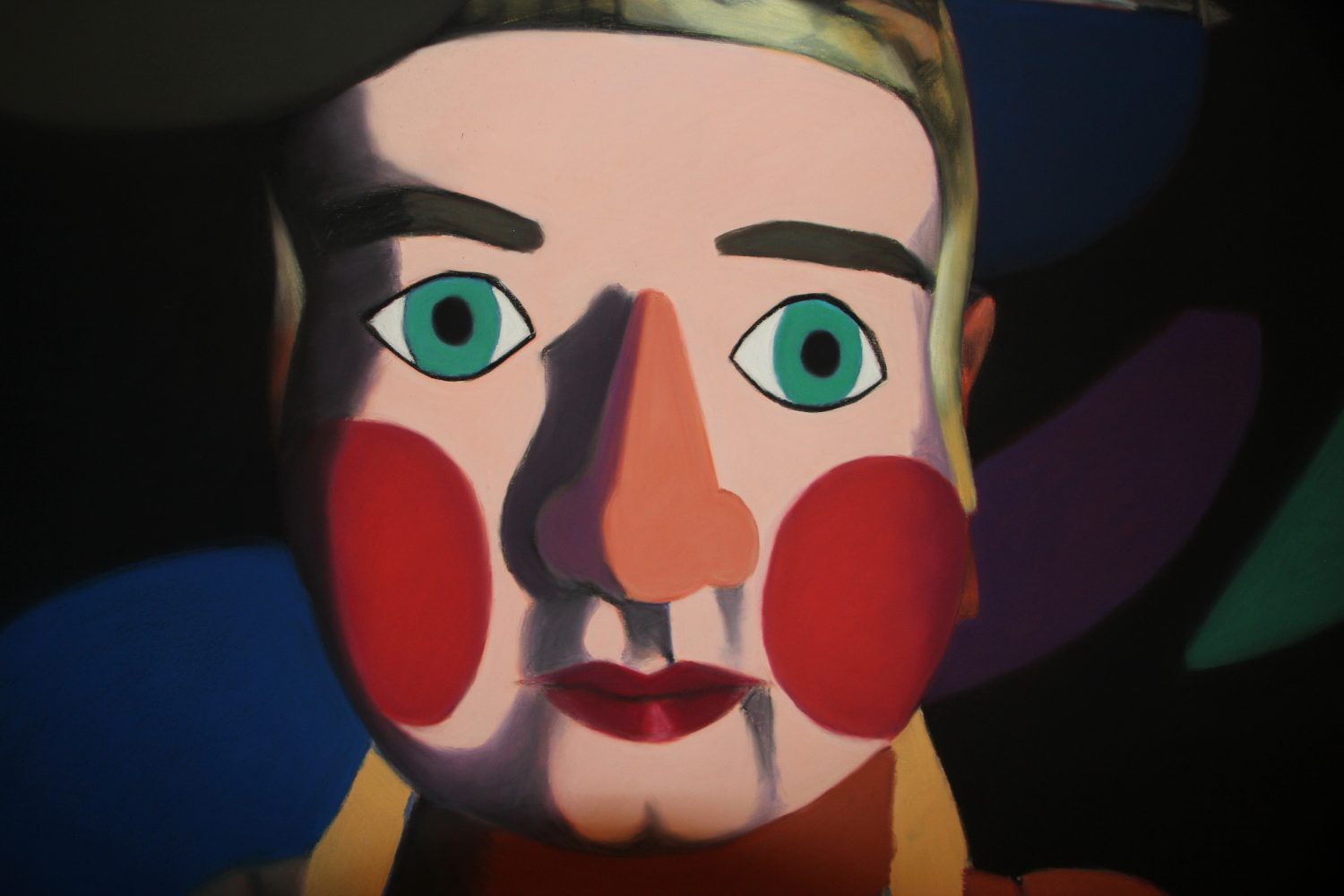
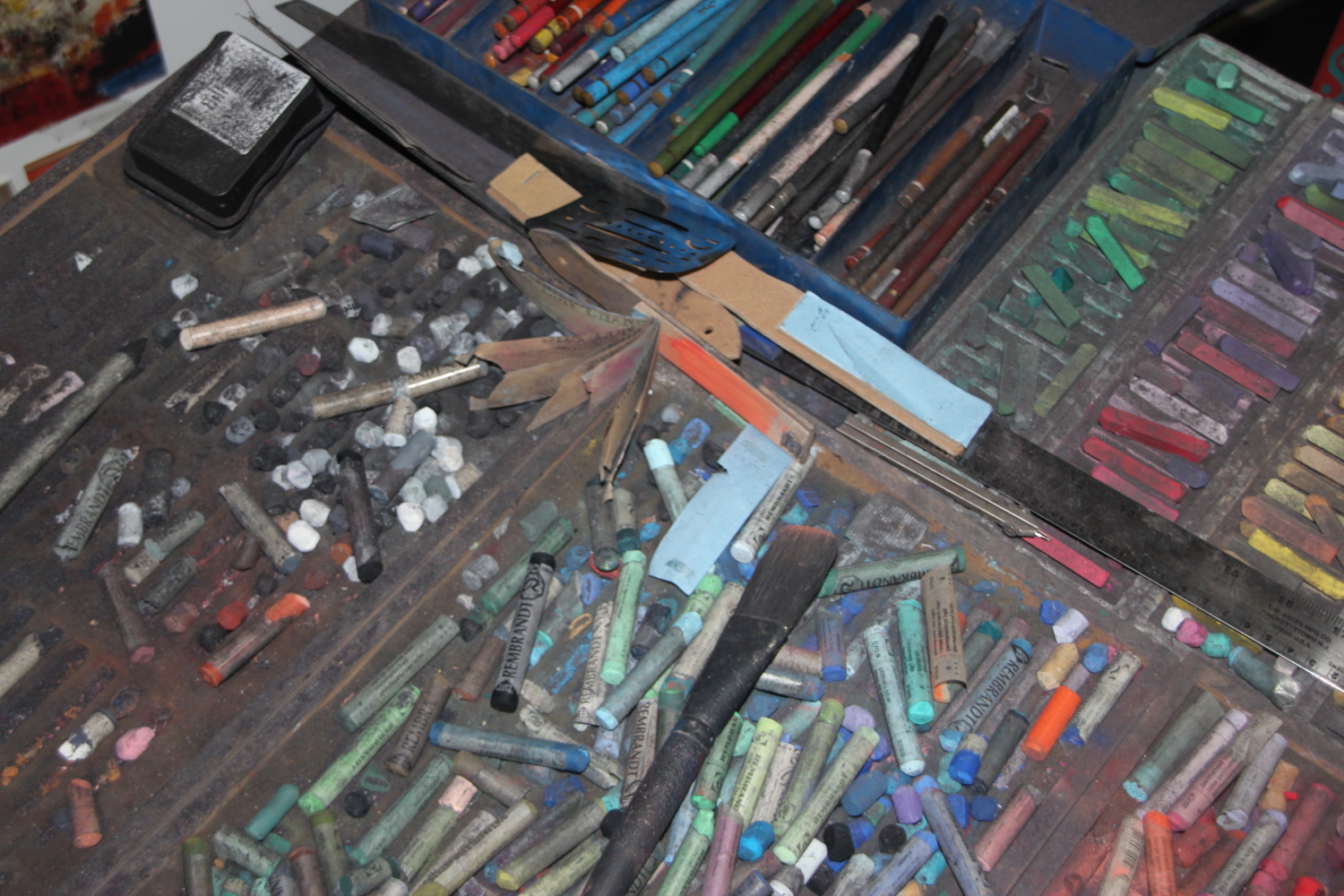
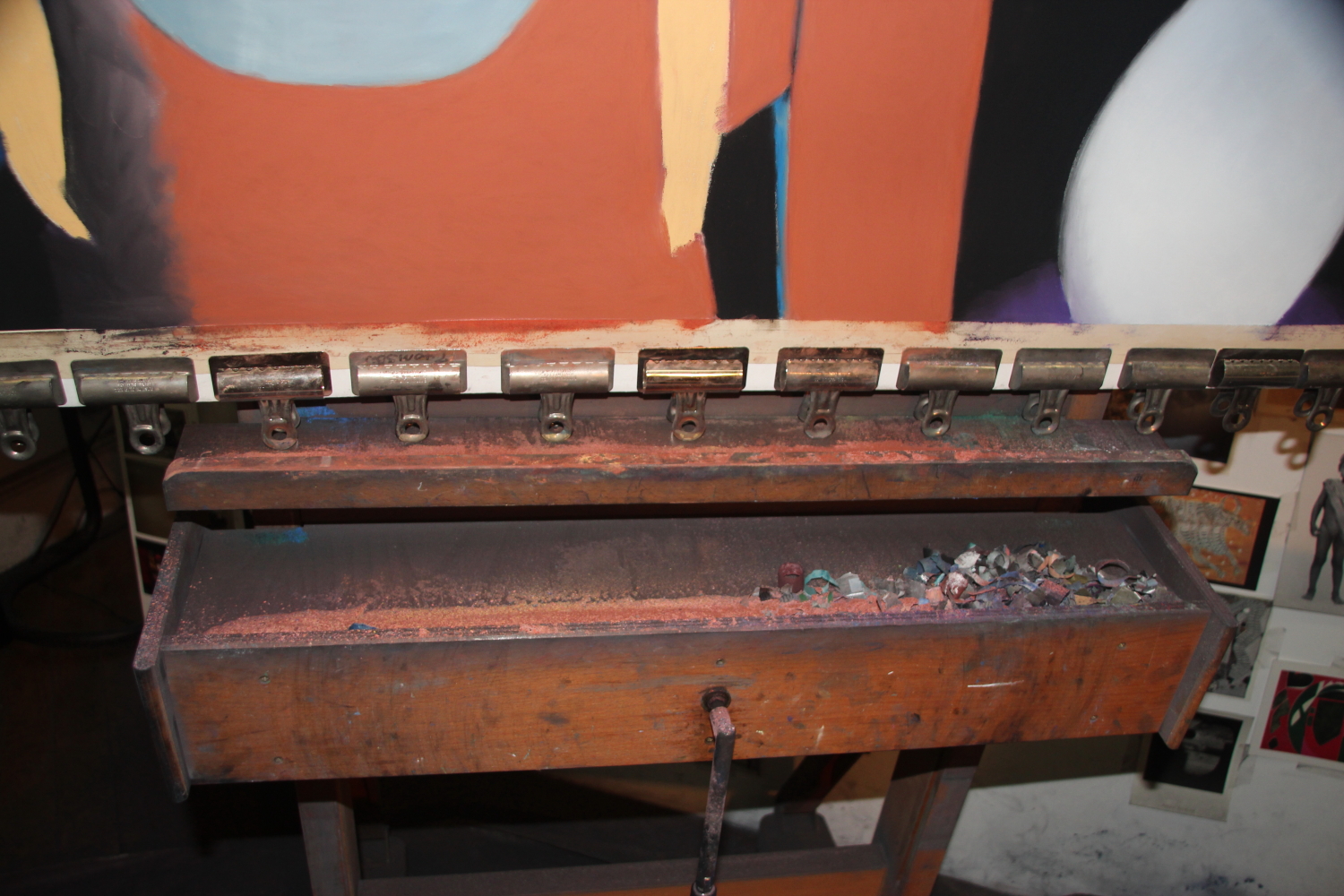
Q: In your earlier “Domestic Threats” series, you liken your paintings to scenes in a movie. Is there an audition process? What qualities must a figure possess to be cast in one of your paintings?

Negotiating with Tomas in Panajachel, Guatemala; photo by Donna Tang
A: There’s not an audition process, but I do feel like the masks and figures call out to me when I’m searching the markets of Mexico and Guatemala. Color is very important – the brighter and the more eye-catching the better – plus they must have lots of “personality.” I try not to buy anything mass-produced or obviously made for tourists. How and where these objects come into my life is an important part of the process. Getting them back to the U.S. is always an adventure. For example, in 2010 I was in Panajachel on the shores of Lake Atitlan in Guatemala. After returning from a boat ride across the lake, my friends and I were walking back to our hotel when we noticed a mask store. This store contained many beautiful things so I spent a long time looking around. Finally, I made my selections and was ready to buy five standing wooden figures, when I learned that Tomas, the store owner, did not accept credit cards. Not having enough cash, I was heart-broken and thought, “Oh, no. I can’t bring these home.” However, thanks to my friend, Donna, whose Spanish was much more fluent than mine, Tomas and she came up with a plan. I would pay for the figures at a nearby hotel and once the owner was paid by the credit card company, he would pay Tomas. Fabulous! Tomas, Donna, and I walked to the hotel, where the transaction was completed. Packing materials are not so easy to find in remote parts of Guatemala so the packing and shipping arrangements took another hour. During the negotiations Tomas and I became friends. We exchanged telephone numbers (he didn’t have a telephone so he gave me the phone number of the post office next door, saying that when I called, he could easily run next door). When I returned to New York ten days later, the package was waiting for me.
While setting up a scene for a painting, I work very intuitively so how the objects are actually “cast” is difficult to say. Looks count a lot – I select an object and put it in a particular place, move it around, and develop a storyline. I spend time arranging lights and looking for interesting cast shadows. I shoot two exposures with a 4 x 5 view camera and order a 20″ x 24″ photograph to use for reference. I also work from the “live” objects. My series, “Domestic Threats,” was initially set in my Virginia house, but in 1997, I moved to a six floor walk-up in New York. For the next few years the paintings were set there, until 2001 when I moved to my current apartment. In a sense the series is a visual autobiography that hints at what my domestic surroundings were like.
Q: How large is your collection of Mexican folk art objects?
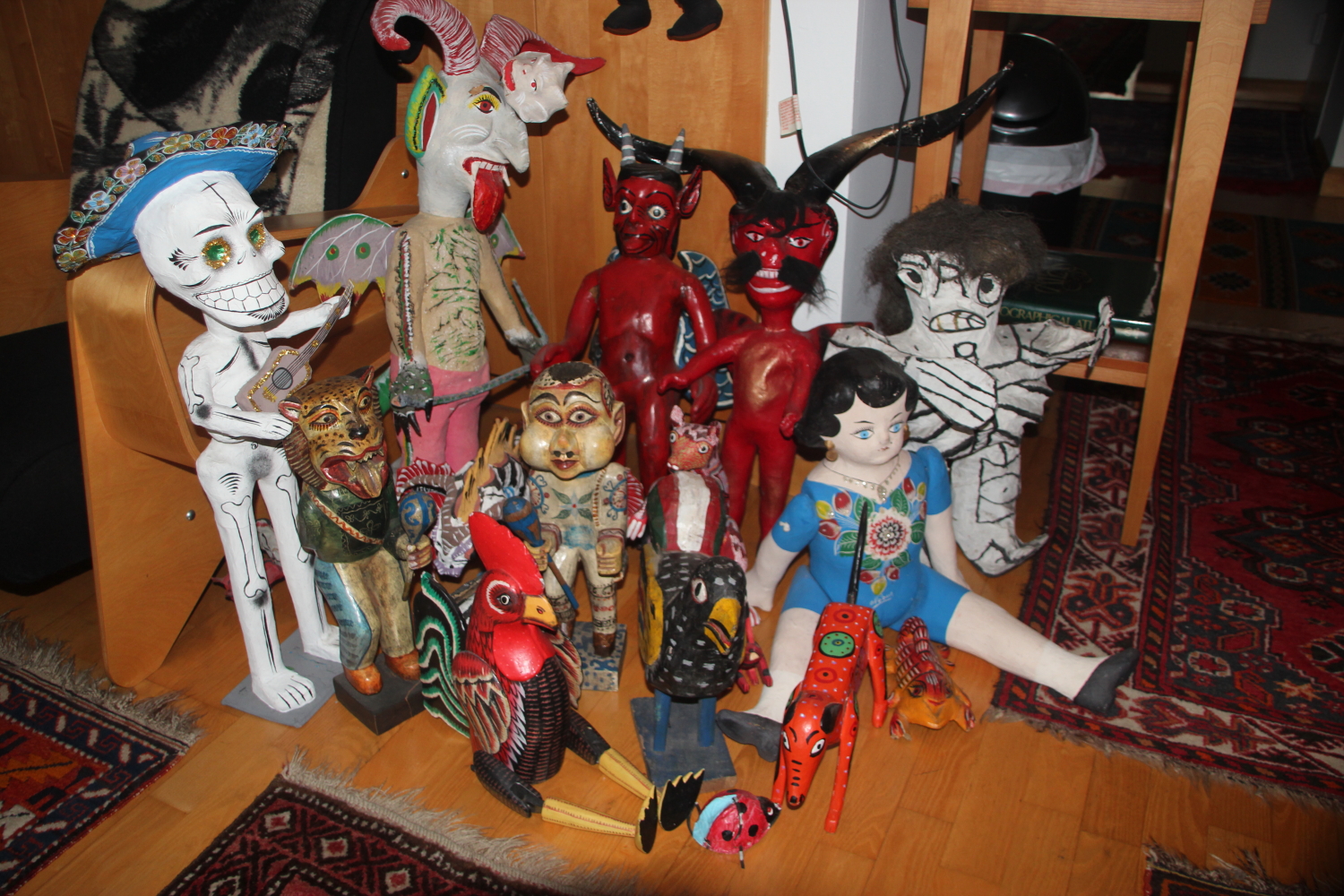
Part of the collection
A: I haven’t counted them, but my guess is 200 pieces of various sizes. This includes the Guatemalan figures. I went to Guatemala in 2009 and 2010. Since I divide my time between a house in Alexandria, VA, an apartment in Manhattan, and a studio in Chelsea, part of my folk art collection is in each of these places.
Q: Mexico has been a big influence on your work. What first drew you to Mexican folk art – masks, carved wooden animals, papier mâché figures, and toys?

A corner of Barbara’s studio
A: In 1991 my future sister-in-law sent, as a Christmas present, two brightly painted wooden figures from Oaxaca. One was a large, blue and white polka dot flying horse, the other a bear, painted with red, white, and black dots and lines.
At the time I was living in Alexandria, Virginia, studying at the Art league School there, and working as a full-time artist. I had resigned from the Navy after seven years on active duty, although I still worked one weekend a month at the Pentagon as a reservist. I was looking for something new to paint with soft pastel, having found portraits deeply unsatisfying.
I had never seen anything like these Oaxacan figures and was intrigued. I started asking friends about Oaxaca and soon learned that the city has a unique style of painting, the self-titled Oaxacan school, and that the painter, Rufino Tamayo, and husband and wife photographers, Manuel and Lola Alvarez Bravo, were from Oaxaca. (Manuel Alvarez Bravo founded an important photography museum there).
I had been a fan of Frida Kahlo, Diego Rivera, Leonora Carrington, Remedios Varo and other artists associated with Mexico, and had a long-standing interest in pre-Columbian civilizations. I knew some Spanish, having studied it in high school. I began reading everything I could find about Oaxaca and Mexico and soon became fascinated with the Day of the Dead.
In 1992 my future husband, Bryan, and I made our first trip to Mexico, spending a week in Oaxaca to see Day of the Dead observances and to study the Mixtec and Zapotec ruins (Monte Alban, Yagul, Mitla, etc.), and another week in Mexico City to visit Diego Rivera’s murals at the Ministry of Education, Frida Kahlo’s Casa Azul, and nearby ancient archeological sites (the Templo Mayor, Teotihuacan, etc.).
I began collecting Mexican folk art on that first trip. I still have fond memories of buying my first mask, a big wooden dragon with a Conquistador’s face on its back. Bryan and I found it high on a wall in a dusty Oaxacan shop. The dragon was three and a half feet long and three feet wide. Because it was fragile, we hand-carried it onto the plane and were able to store it in the first class cabin (this was pre-9/11). I chuckle to remember that we covered its finely carved toes with rolled up socks to prevent them from breaking!
I have been back to Mexico many times, mainly visiting the central and southern states. I travel there to study pre-Columbian history, archaeology, mythology, culture, and the arts. It is an endlessly fascinating country that has long been an inspiration for artists.
Q: What did you buy in Bali to use in your work?
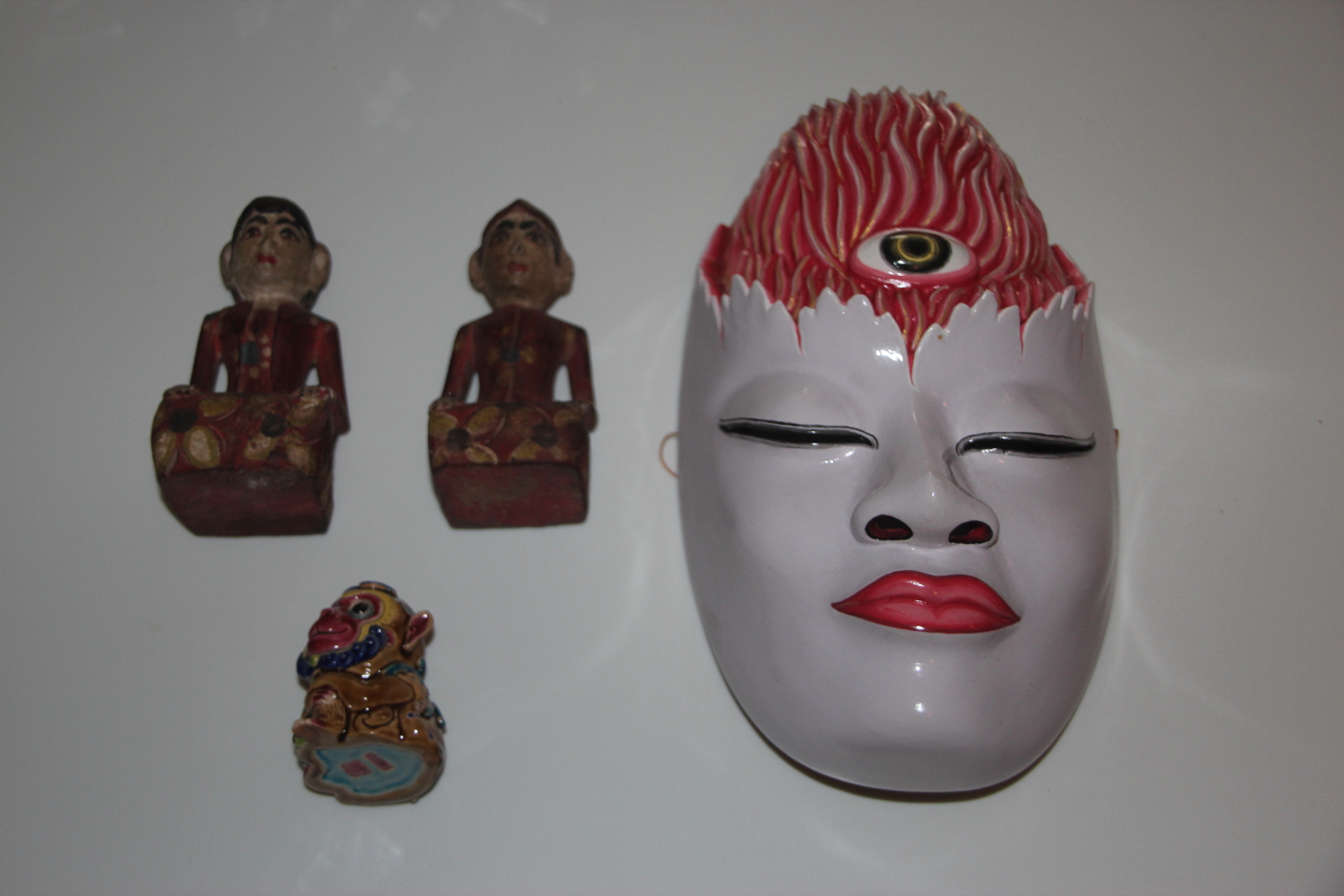
Objects from Bali and Taiwan
A: I bought a few small things: a mask, a carved wooden “wedding pair,” and a ceramic monkey (from a Taiwan airport shop) that will most likely be subject matter for future photographs and pastel paintings.
Q: How do you think your time in Bali will affect your work?
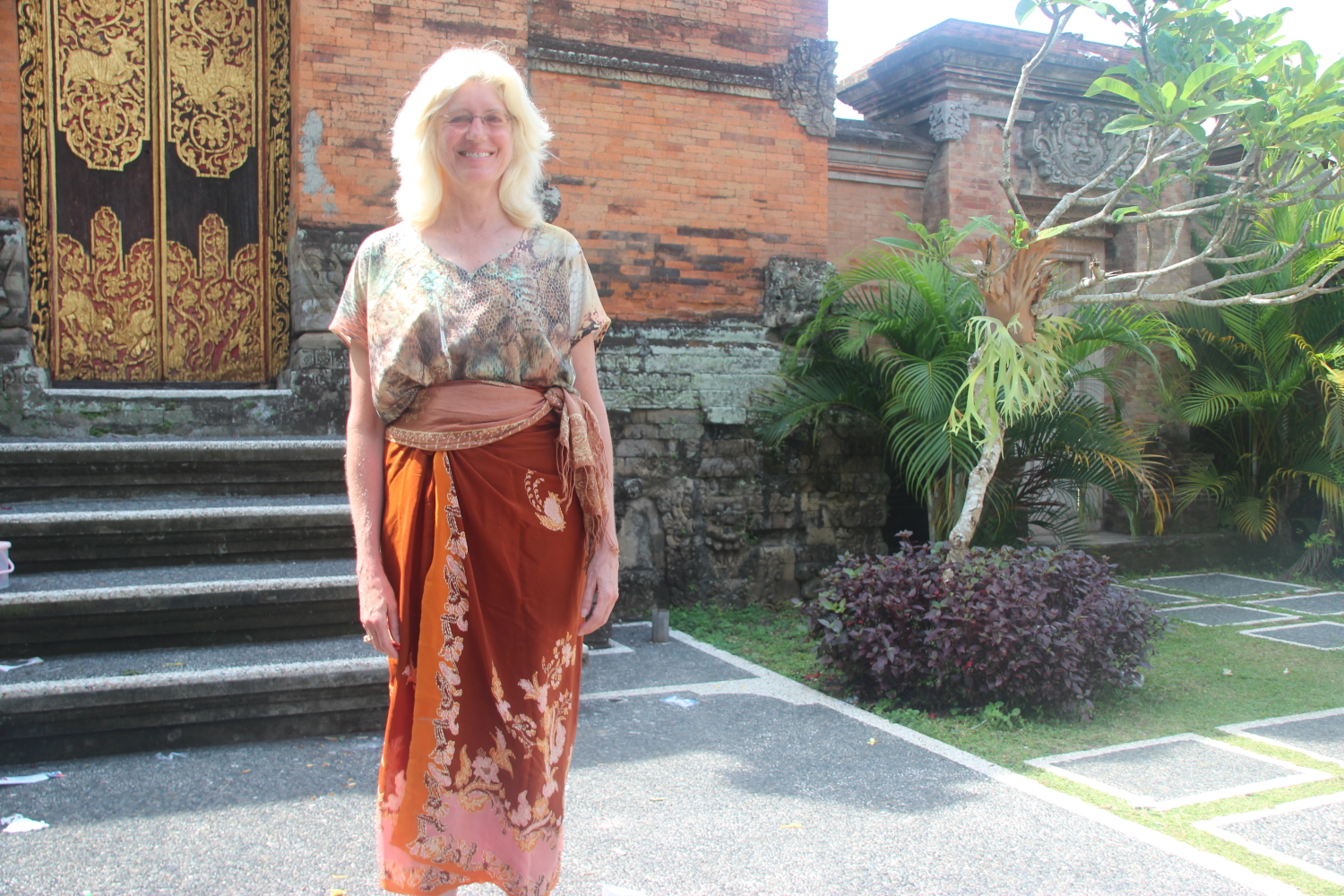
Barbara in her favorite sarong; photo by Donna Tang
A: There is always a long gestation period as I reflect on the new experiences, sights, sounds, etc. after a trip. Bali is a fascinating place – the only Hindu outpost in the world’s most populous Muslim country – so I’m reading everything I can find. I’ve finished an historical novel, Love and Death in Bali, about the 1906 mass suicide of the royal family during the Dutch invasion. I’m slowly making my way through Bali: Sekala and Niskala, a densely packed book about the intricacies of Hinduism, rituals, and art, written with the help of our guide, Budi. In the short term I’m using more green pastels in my paintings. Amidst all of the tropical lushness, I must have seen thousands of shades of green. The volcano shapes in “Absence,” a pastel painting completed last week (see post of JUL 20), resulted from this trip. Other, more pronounced effects will probably show up later.
Q: Would you share a few more photos from your trip to Bali?
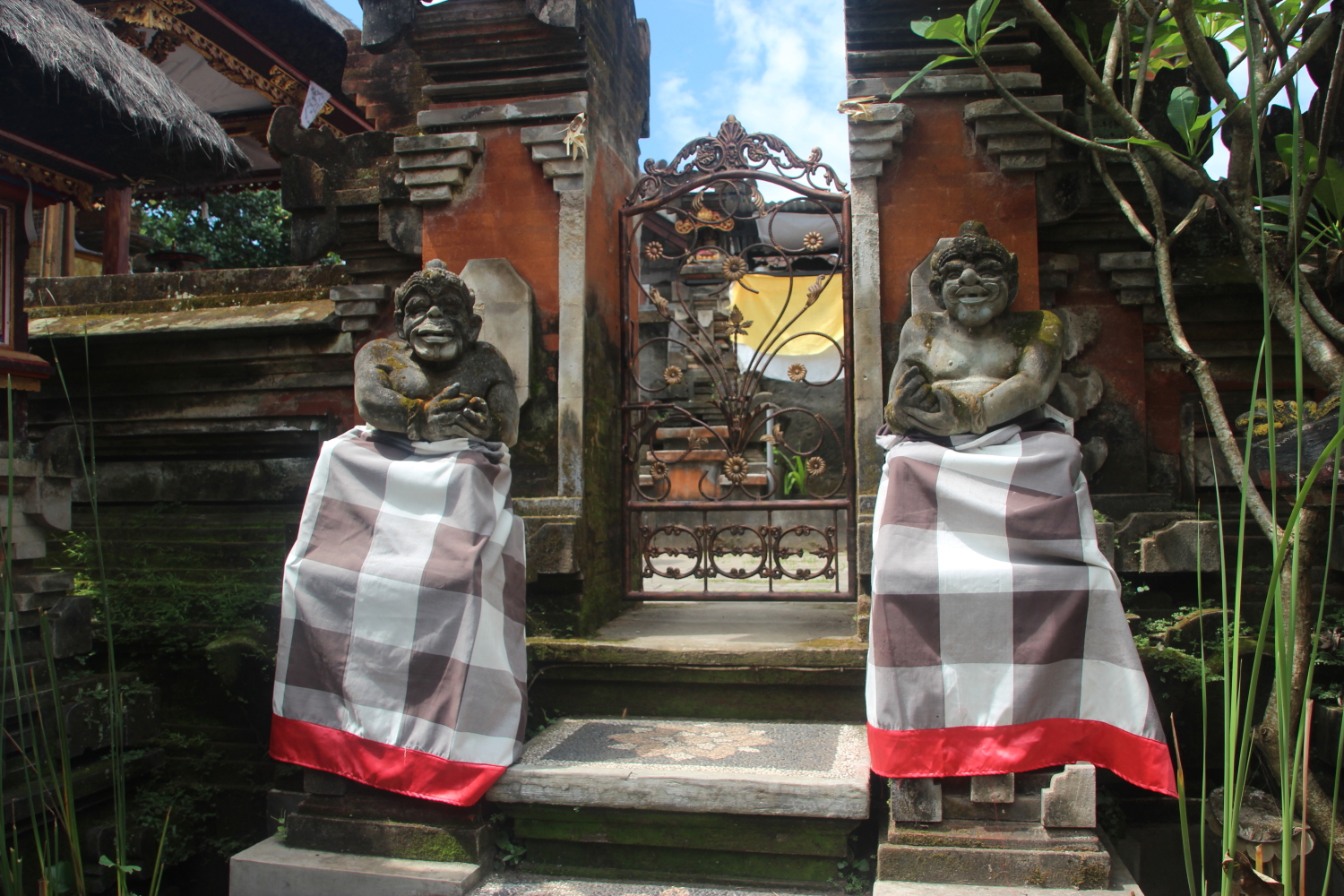
Temple entrance in a private house compound
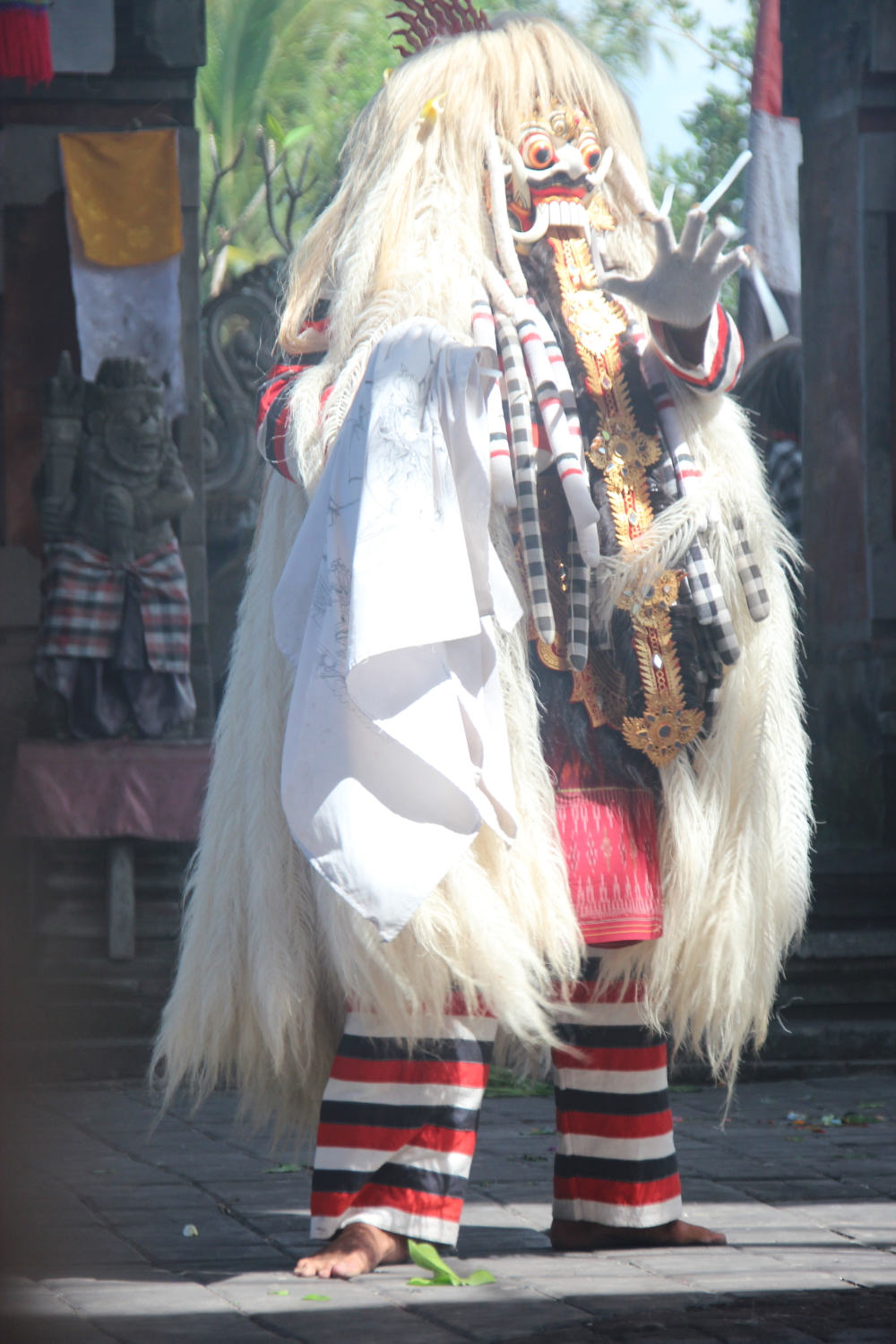
Barong dancer in Batabulan Village
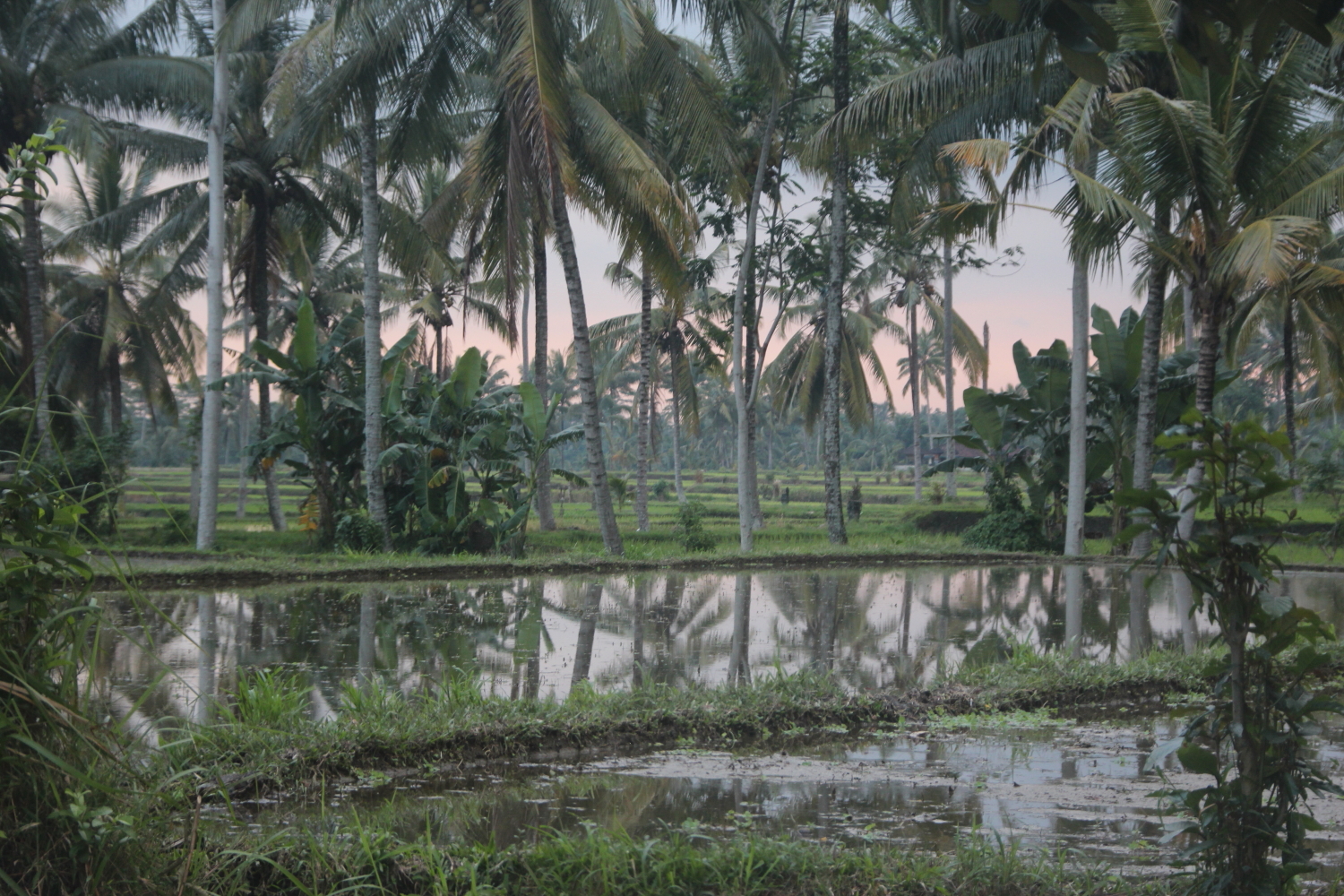
Rice paddies

Rinsing dye from double-ikat weavings in Tenganan

Kitchen
Q: I understand that you recently traveled to Bali. What did you see and do there?
A: Bali is such a fascinating place and I have so many great memories! I shot lots of photographs on this trip. Here are a few of my favorites.

A floating Hindu temple
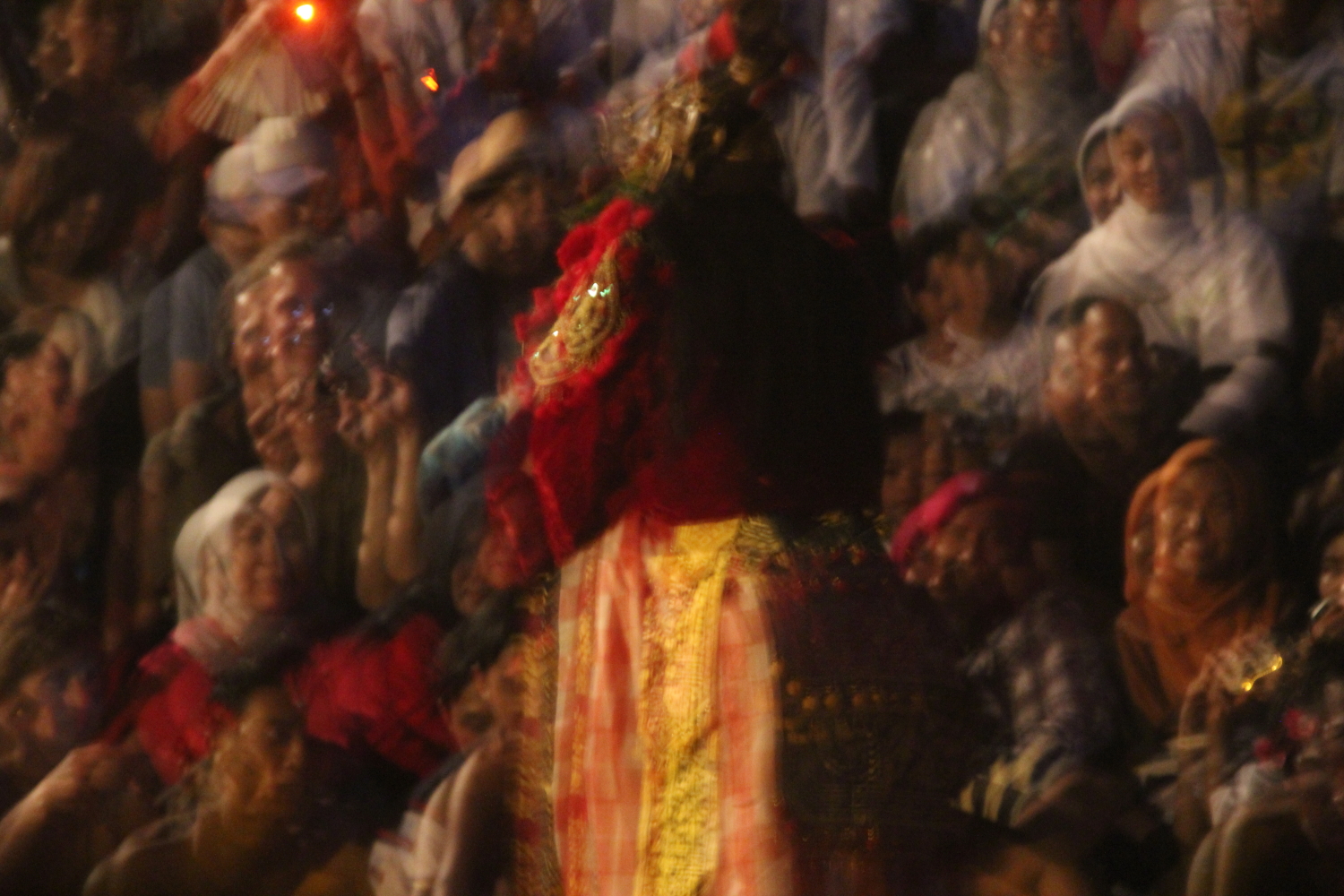
Kecak dance performance under the full moon in Uluwatu
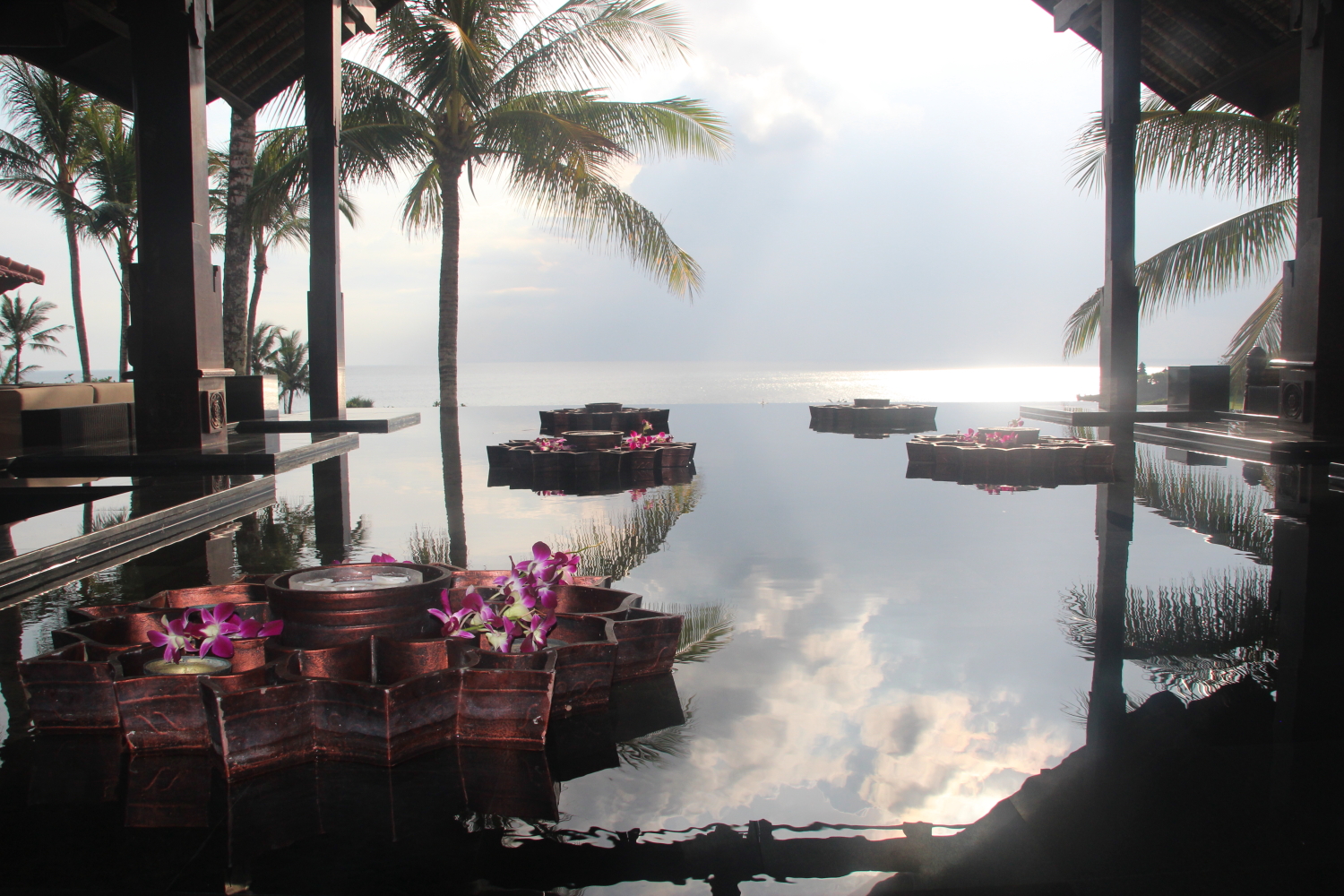
Hotel on the Indian Ocean in Tanah Lot

Boy in traditional Hindu dress at a fifty year festival in Blahbatuh

Ancient rice field terraces in Jatiiluwih
Q: Are you close to finishing any pastel paintings?
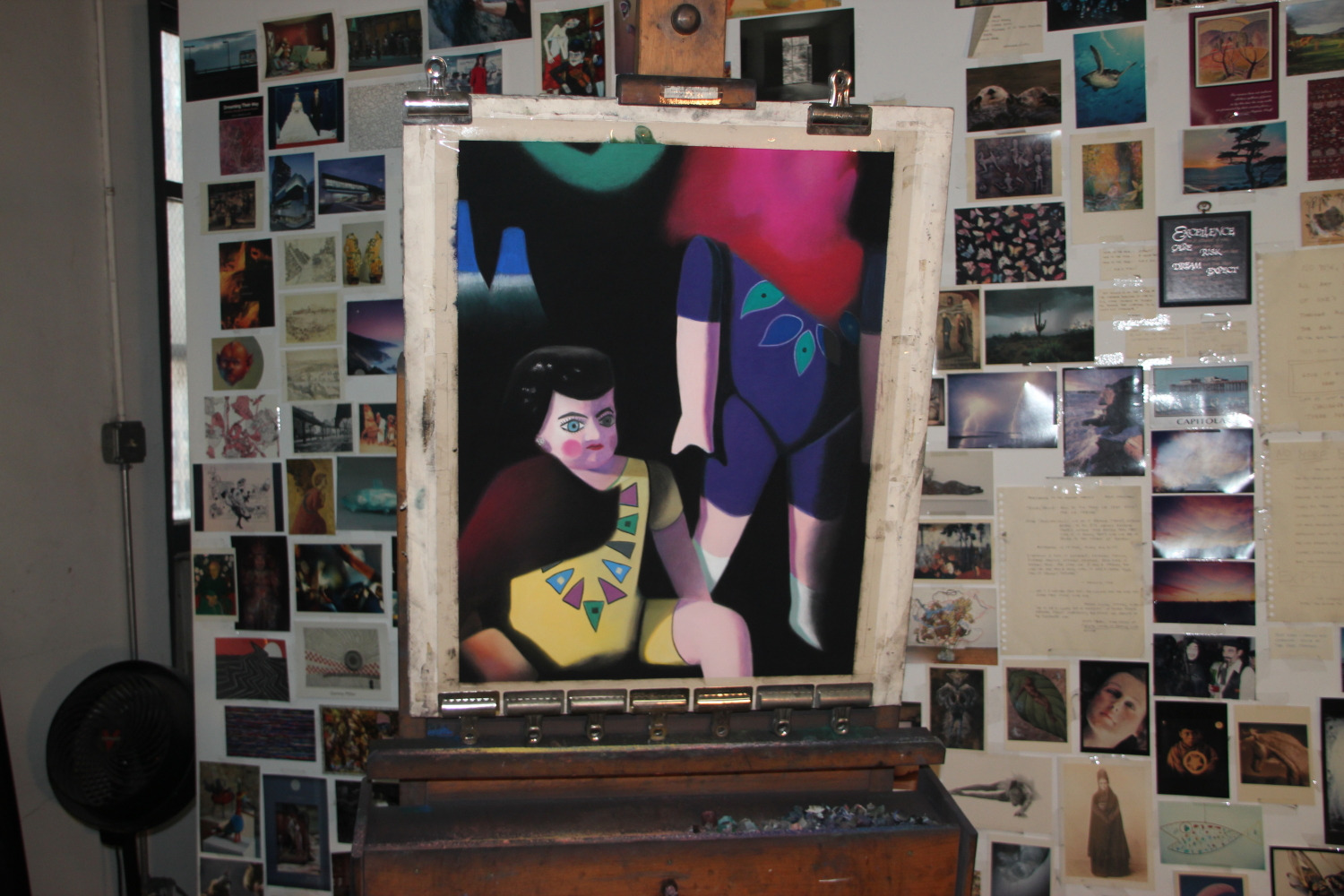
“Absence” not quite finished
A: I’m putting finishing touches on a small one, “Absence,” which is 26″ x 20″ unframed. It depicts paper mache figures that I bought some years ago in Oaxaca and Mexico City. I added those two blue and white “volcano” shapes on the left after my recent trip to Bali. Check out the dust (and torn pastel wrappers) on the easel. That’s what inspired the name of my blog.


 barbararachkoscoloreddust.com