Category Archives: An Artist’s Life
Pearls from artists* # 271
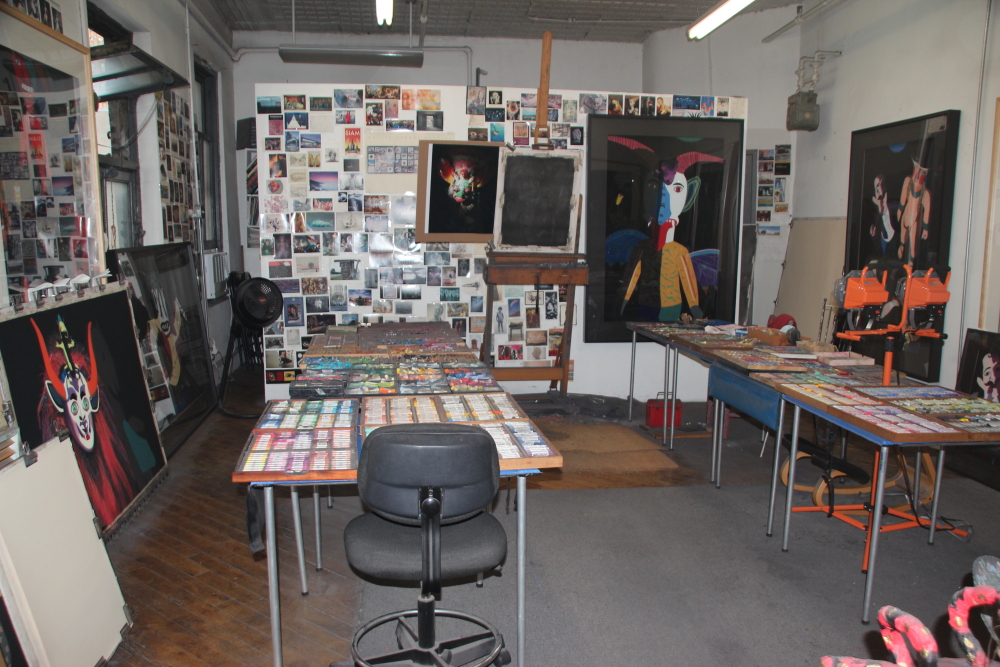
Barbara’s studio
* an ongoing series of quotations – mostly from artists, to artists – that offers wisdom, inspiration, and advice for the sometimes lonely road we are on.
The following quote is so true for artists also!
Without a powerful emotional commitment, scientists could not summon up the enormous energy needed for pursuing an idea for years, working day and night in the lab or at their desks doing calculations, often sacrificing the rest of their lives. It is little wonder that such a personal commitment sometimes causes the scientist to defend his or her beliefs regardless of facts.
Alan Lightman in A Sense of the Mysterious: Science and the Human Spirit
Comments are welcome!
Pearls from artists* # 270
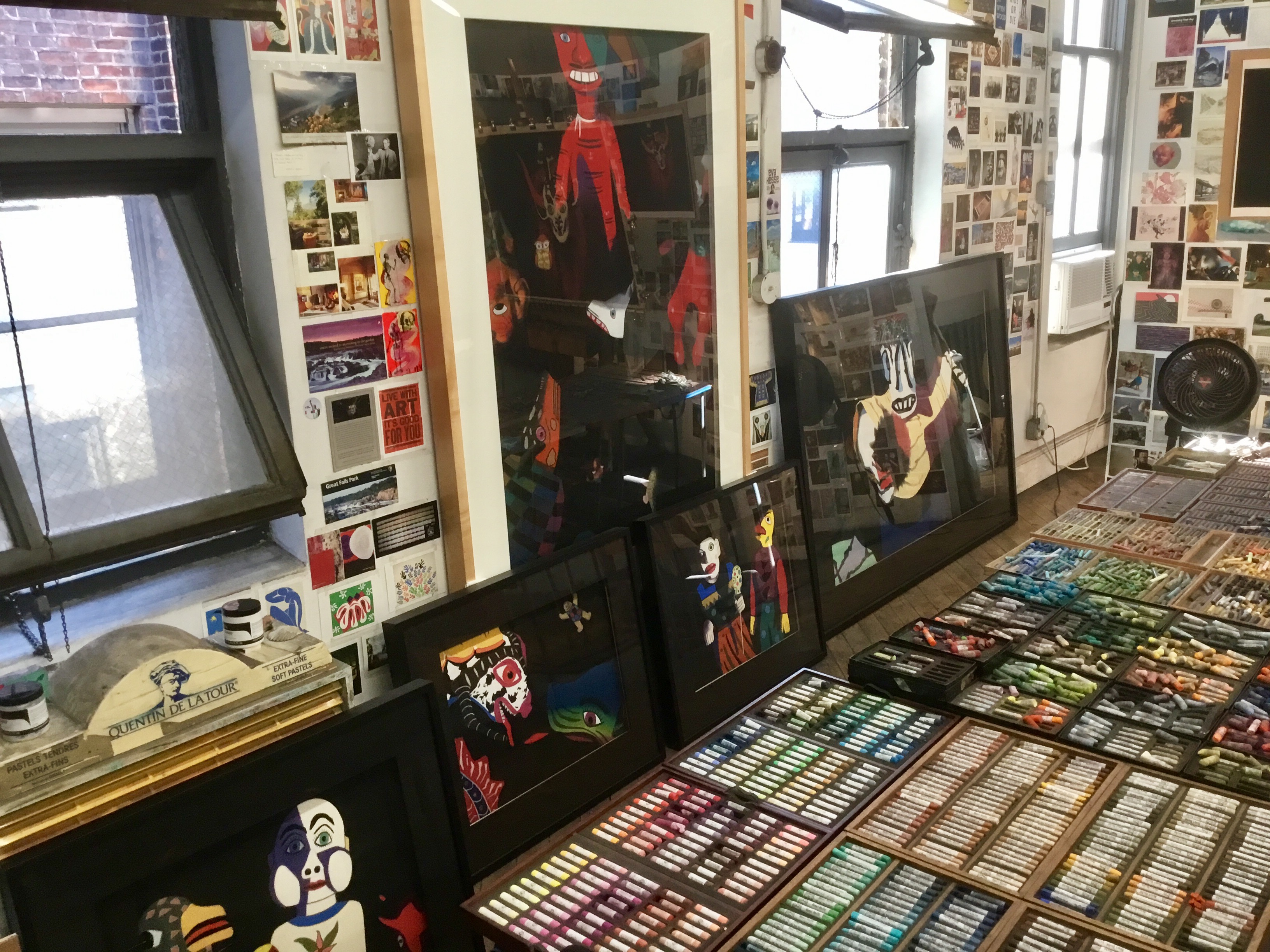
Barbara’s studio
* an ongoing series of quotations – mostly from artists, to artists – that offers wisdom, inspiration, and advice for the sometimes lonely road we are on.
As Charlie Parker quipped, “If you don’t live it, it won’t come out of your horn.” And it won’t register in your bearing: this is the earned credit for trying to walk the daily tightrope and tell your story when you get to the other side.
Joel Dinerstein in The Origins of Cool in Postwar America
Comments are welcome
Q: When you are in your studio working on a pastel painting and pause to consider what you have done, do you ask yourself, “Is it good?”
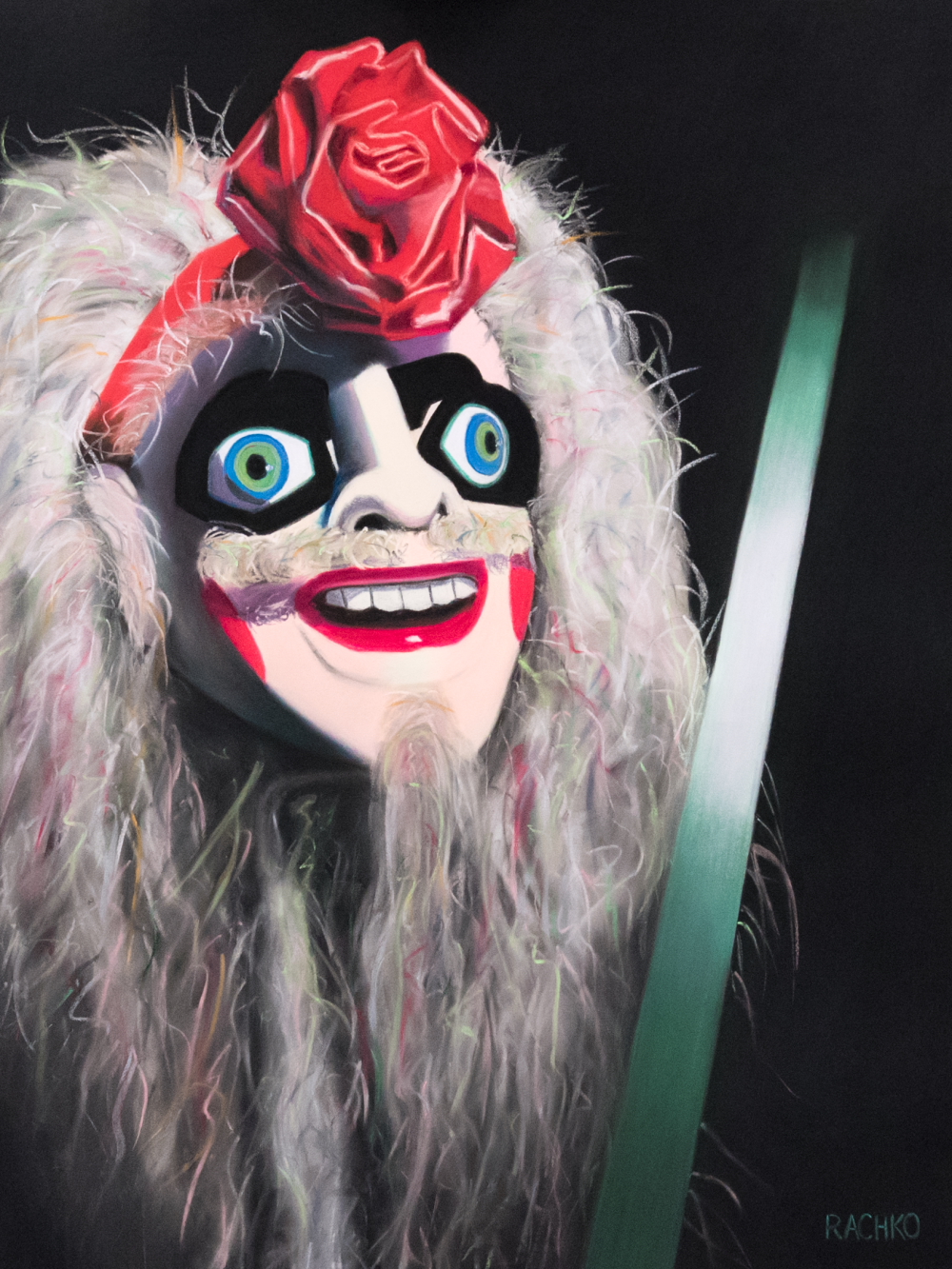
“The Champ,” soft pastel on sandpaper, 26″ x 20″ image, 35″ x 28 1/2″ framed
A: Certainly, I do. In addition, I ask myself some other important questions:
Is it the best I can do?
Is it exciting?
Is it surprising?
Is it idiosyncratic and unique to me?
Is there anything I can do to improve it?
Does it meet (or hopefully exceed) the exacting technical and formal standards I have set for my work?
Will I be proud to finally see my signature on it?
Comments are welcome!
Pearls from artists* # 269
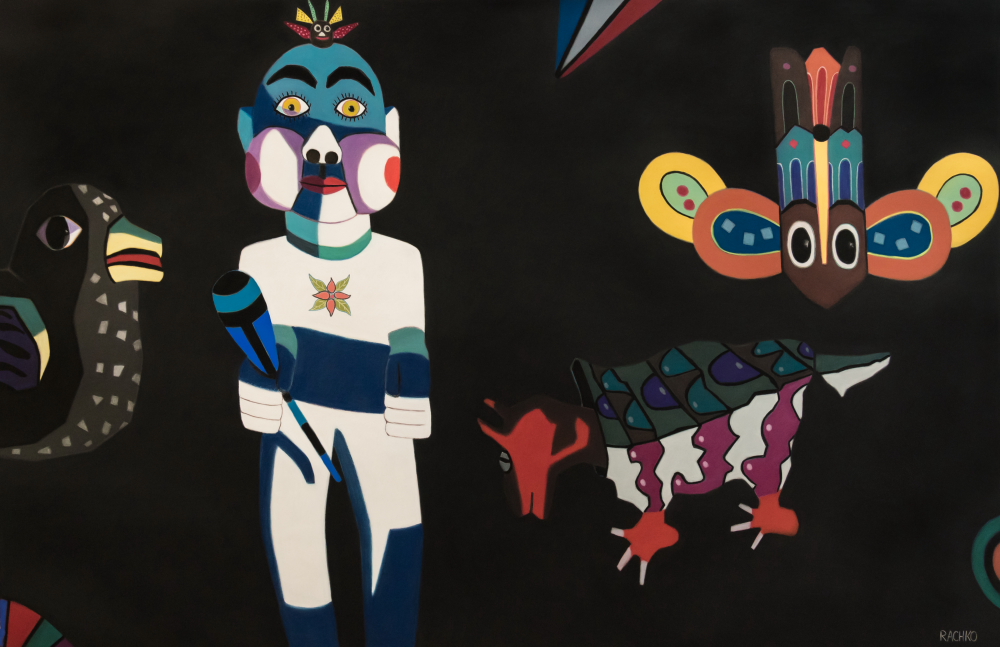
“White Star,” soft pastel on sandpaper, 38″ x 58″
* an ongoing series of quotations – mostly from artists, to artists – that offers wisdom, inspiration, and advice for the sometimes lonely road we are on.
In an artistic sense, cool came to refer to someone with a signature artistic style so integral as to exude an authentic mode-of-being in the world: Miles, Bogart, Brando, Eastwood, Greco, Elvis, Lady Day, Sinatra. Such a person created something from nothing and gave the world some new artistic or psychological “equipment for living,” to use a phrase of Kenneth Burke’s. A signature style is yours and can only be carried by you: it cannot be abstracted except through dilution and commodification since it reflects an individual’s complex personal experience.
Joel Dinerstein in The Origins of Cool in Postwar America
Comments are welcome
Q: How do you deal with the loneliness of working in a studio?
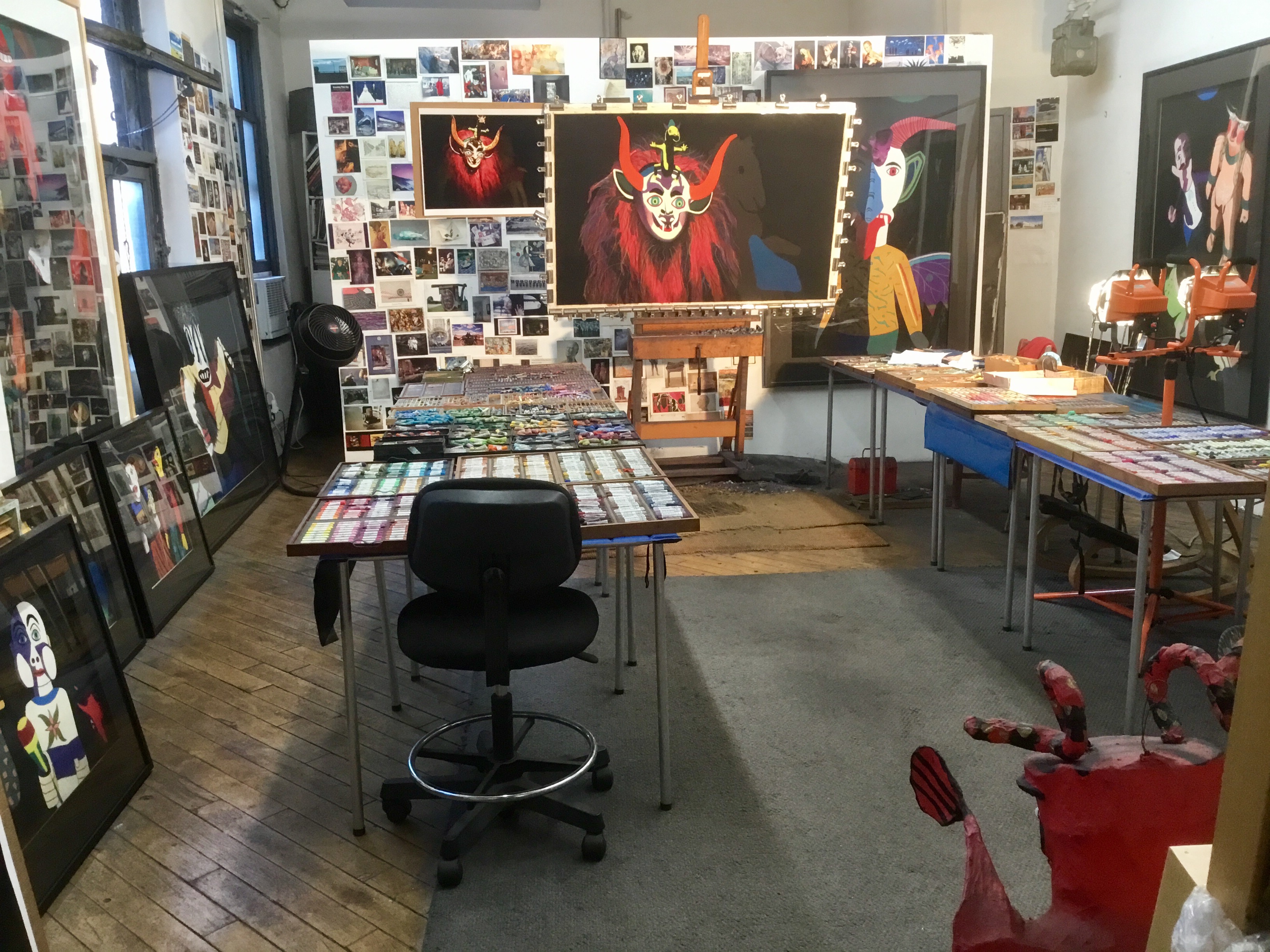
Barbara’s studio
A: I never feel lonely when I’m working. I love being in my studio and even after thirty years, still find the whole process of making a pastel painting completely engaging.
Painting is the one activity that not only uses all of my mental and physical abilities, but challenges me to push further. I am at my best in the studio.
Because there is always more to learn and process into the work, creating art is endlessly fascinating! Most artists probably feel the same way. It’s one of the reasons we persist.
Comments are welcome!
Pearls from artists* # 268

The Lightning Field, Quemado, NM
* an ongoing series of quotations – mostly from artists, to artists – that offers wisdom, inspiration, and advice for the sometimes lonely road we are on.
Visit 1: October 18 and 19, 2003, continued
The long drive through the New Mexico landscape from Albuquerque to Quemado to The Lightning Field is a gradual slide towards emptiness, a prelude. Or a subtle preparation for the eyes and mind. The practicalities of the cabin provide simple accommodations that address basic needs to maximize focus and minimize distraction.
At The Lightning Field, my experience of space began with the rational structure of the grid, which was eventually exposed by less rational behavior.
The artwork locates the physical environment in space, and my perception of the work began with the regularity of the grid. The repeated unit of the pole was not significant, only its holistic engagement between human scale and the landscape of the sky. Then the effects of light, the anticipation of cycles of change through the course of the day and night, the possibility of the unpredictable.
Laura Raicovich in At The Lightning Field
Comments are welcome!
Pearls from artists* # 267

The Lightning Field, Quemado, NM
* an ongoing series of quotations – mostly from artists, to artists – that offers wisdom, inspiration, and advice for the sometimes lonely road we are on.
In 1968, art critic David Bourdon wrote (before The Lightning Field was built): “De Maria is after a deeper commitment on the part of the spectator, who is asked to become an agent or catalyst in the fulfillment of the work… the burden of response is placed not on the sculpture but on the spectator.
Laura Raicovich in At The Lightning Field
Comments are welcome!
Pearls from artists* # 265
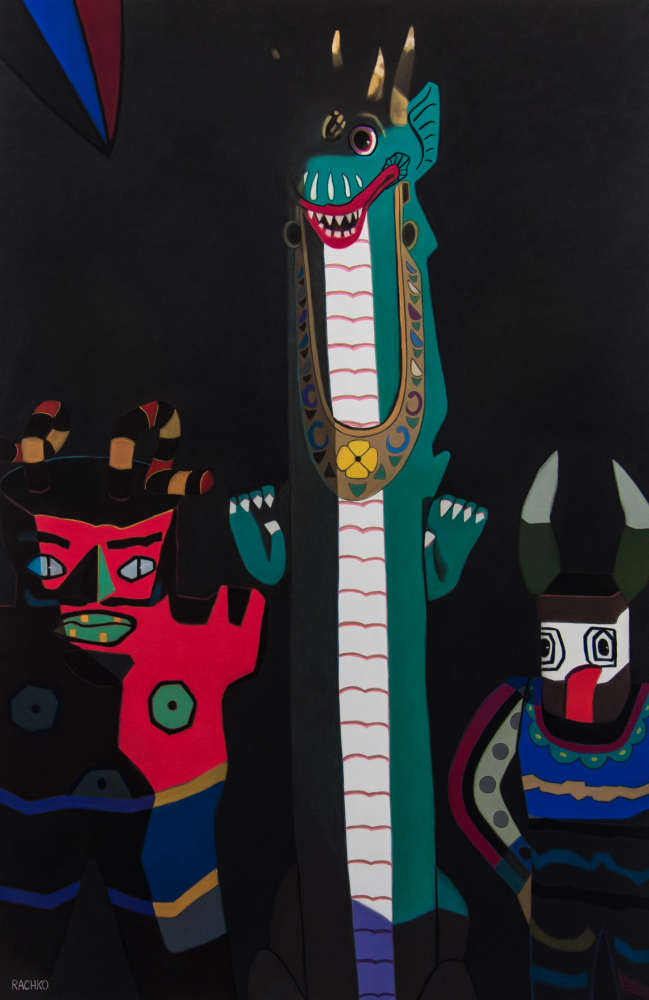
“Colloquium,” soft pastel on sandpaper, 58″ x 38″ image, 70″ x 50″ framed
* an ongoing series of quotations – mostly from artists, to artists – that offers wisdom, inspiration, and advice for the sometimes lonely road we are on.
I remember hearing Adolph Gottlieb on a panel once at NYU, and Adolph said, in effect – I’m not quoting him directly – “I don’t paint for the masses. I paint for the elite. The masses are not interested in what I do. They won’t understand this kind of painting that I do, and it won’t come through to them.”
I understood perfectly what he meant, and I was totally sympathetic. But the audience, which was not quite an audience of proletariat workers, but an audience of school of education, art teachers, or art teachers to be, were going out of their heads with rage just at the mention of the elite.
I think there is an elite, and there always was an elite for painting or good music or for good literature. For a long time there has been, and I don’t see anything wrong with it. What it means to a lot of people, the elite is the wealthy or something like that. Adolph, I don’t think, was referring to an elite of the wealthy, where the people run the government or something like that, but to those people who are concerned and interested in the most sophisticated, meaningful painting there is.
The Art Life: On Creativity and Career by Stuart Horodner
Comments are welcome!
Q: Would you speak about how important it was to get back to work after losing your husband on 9/11?

“She Embraced It and Grew Stronger,” 2003, the first pastel painting I completed after Bryan was killed
A: On September 11, 2001, my husband Bryan, a high-ranking federal government employee, a brilliant economist (with an IQ of 180 he is still the smartest man I’ve ever met) and a budget analyst at the Pentagon, was en route to Monterrey, CA to give his monthly guest lecture for an economics class at the Naval Postgraduate College. He had the horrible misfortune of flying out of Dulles airport and boarding the plane that was high-jacked and crashed into the Pentagon, killing 189 people. Losing Bryan was the biggest shock of my life and devastating in every possible way.
The following summer I was ready to – I HAD to – get back to work. Learning about photography and pastel painting became avenues to my well-being. I use reference photos for my paintings, so my first challenge was to learn how to use Bryan’s 4 x 5 view camera (Bryan always took these reference photos for me).
In July 2002 I enrolled in a one-week view camera workshop at the International Center of Photography in New York. Much to my surprise, I had already acquired substantial technical knowledge from watching Bryan. Still, after the initial workshop, I threw myself into this new medium and continued studying photography at ICP for several years. I began with Photography I and enrolled in many more classes until I gradually learned how to use Bryan’s extensive camera collection, to properly light my setups, and to print large chromogenic photographs in a darkroom.
In October 2009 it was very gratifying to have my first solo photography exhibition with HP Garcia in New York. (Please see http://barbararachko.art/images/PDFS/BarbaraRachko-HPGargia.pdf). I vividly remember tearing up at the opening as I imagined Bryan looking down at me with his beautiful smile, beaming as he surely would have, so proud of me for having become a respected photographer.
Continuing to make art had seemed an impossibility after Bryan’s death. However, the first large pastel painting that I created using a self-made reference photograph proved my life’s work could continue. The title of that painting, “She Embraced It and Grew Stronger,” is certainly autobiographical. “She” is me, and “it” means continuing on without Bryan and living life for both of us.
Comments are welcome!
Pearls from artists* # 263
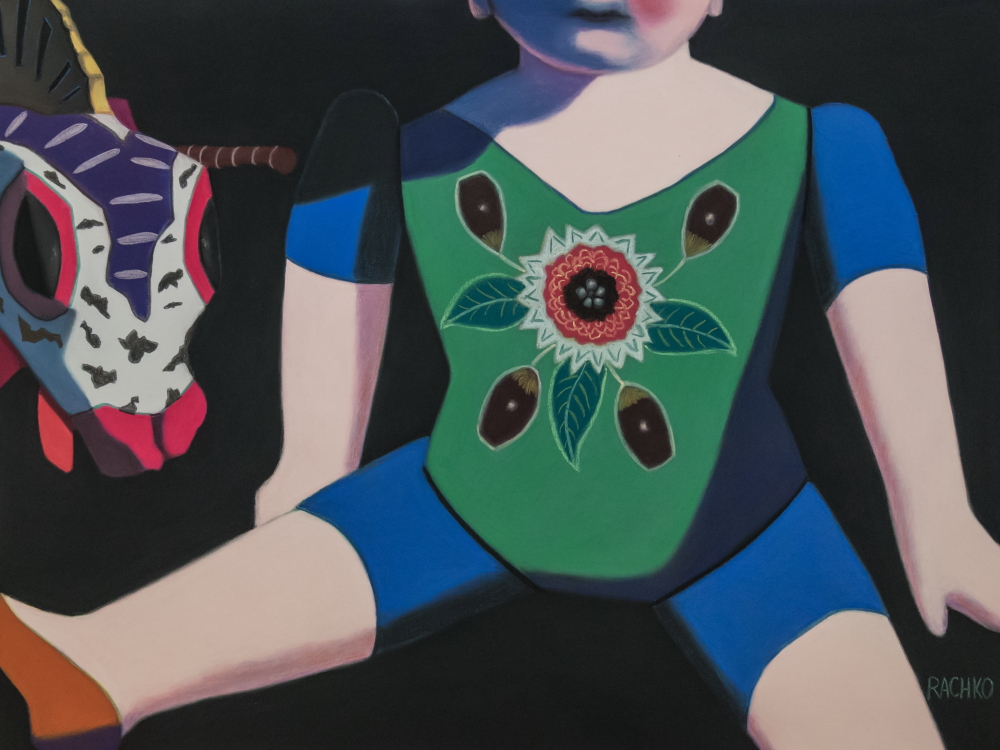
“Alone Together,” soft pastel on sandpaper, 20″ x 26″
* an ongoing series of quotations – mostly from artists, to artists – that offers wisdom, inspiration, and advice for the sometimes lonely road we are on.
Making art and viewing art are different at their core. The sane human being is satisfied that the best he/she can do at any given moment is the best he/she can do at any given moment. That belief, if widely embraced, would make this book unnecessary, false, or both. Such sanity is, unfortunately, rare. Making art provides uncomfortably accurate feedback about the gap that inevitably exists between what you intended to do, and what you did. In fact, if artmaking did not tell you (the maker) so enormously much about yourself, then making art that matters to you would be impossible. To all viewers but yourself, what matters is the product: the finished artwork. The viewers’ concerns are not your concerns (although it’s dangerously easy to adopt their attitudes). Their job is whatever it is: to be moved by art, to be entertained by it, to making a killing off it, whatever. Your job is to learn to work on your work.
David Bayles and Ted Orlando in Art & Fear: Observations On the Perils (and Rewards) of ARTMAKING
Comments are welcome!



