Blog Archives
Q: How do you know when a pastel painting is finished?
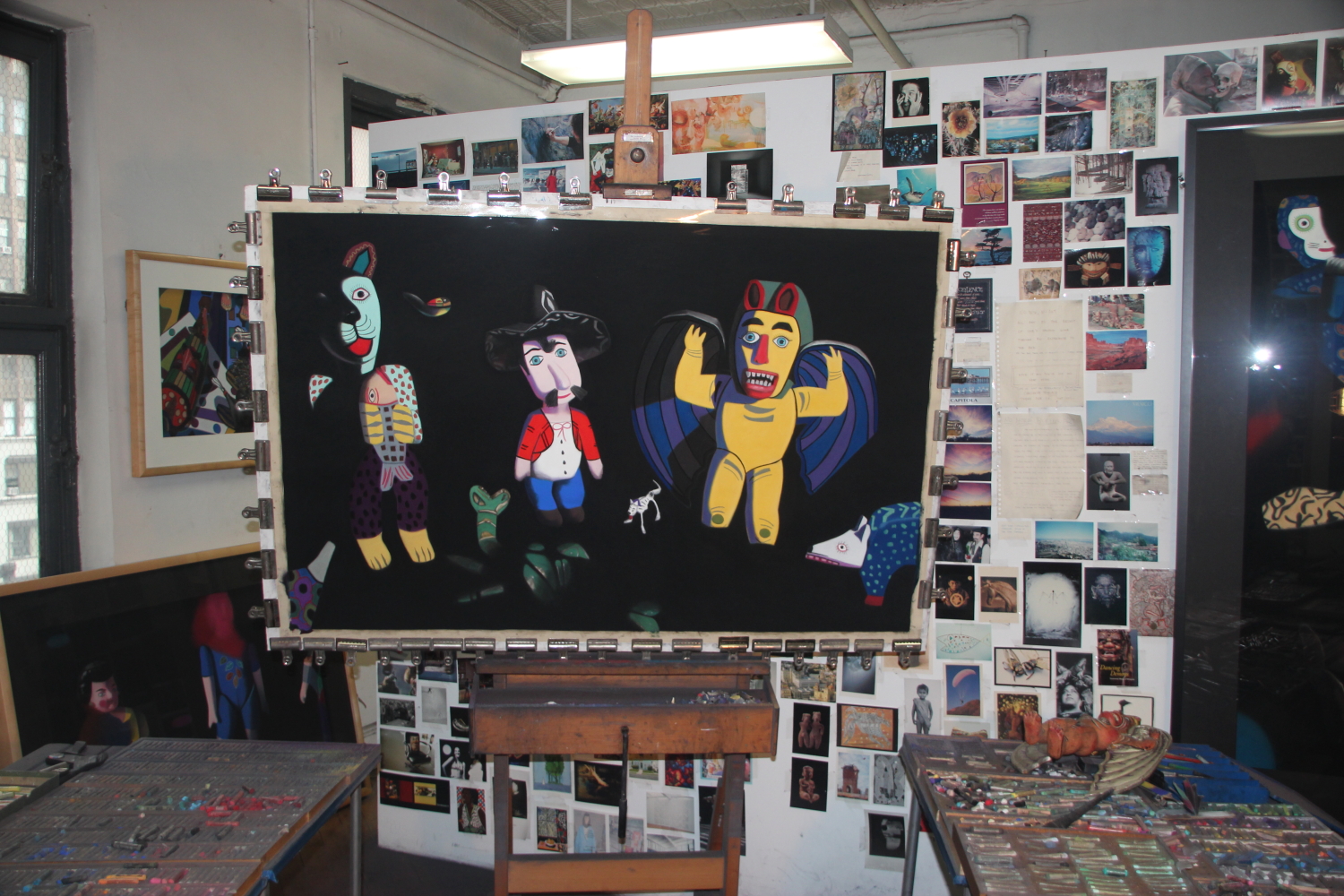
“Big Wow,” soft pastel on sandpaper
A: During the several months that I work on a pastel painting, I search for the best, most eye-popping colors, as I build up and blend together as many as 25 to 30 layers of pigment. I am able to complete some areas, like the background, fairly easily – maybe with six or seven layers – but the more realistic parts take more applications because I am adding details. Details always take time to perfect. No matter how many pastel layers I apply, however, I never use fixatives. It is difficult to see this in reproductions of my work, but the finished surfaces achieve a texture akin to velvet. My technique involves blending each layer with my fingers, pushing pastel deep into the tooth of the sandpaper. The paper holds plenty of pigment and because the pastel doesn’t flake off, there is no need for fixatives.
I consider a given painting complete when it is as good as I can make it, when adding or subtracting anything would diminish what is there. I know my abilities and I know what each individual stick of pastel can do. I continually try to push myself and my materials to their limits.
Comments are welcome.
Q: Do you have air filters in your work space?
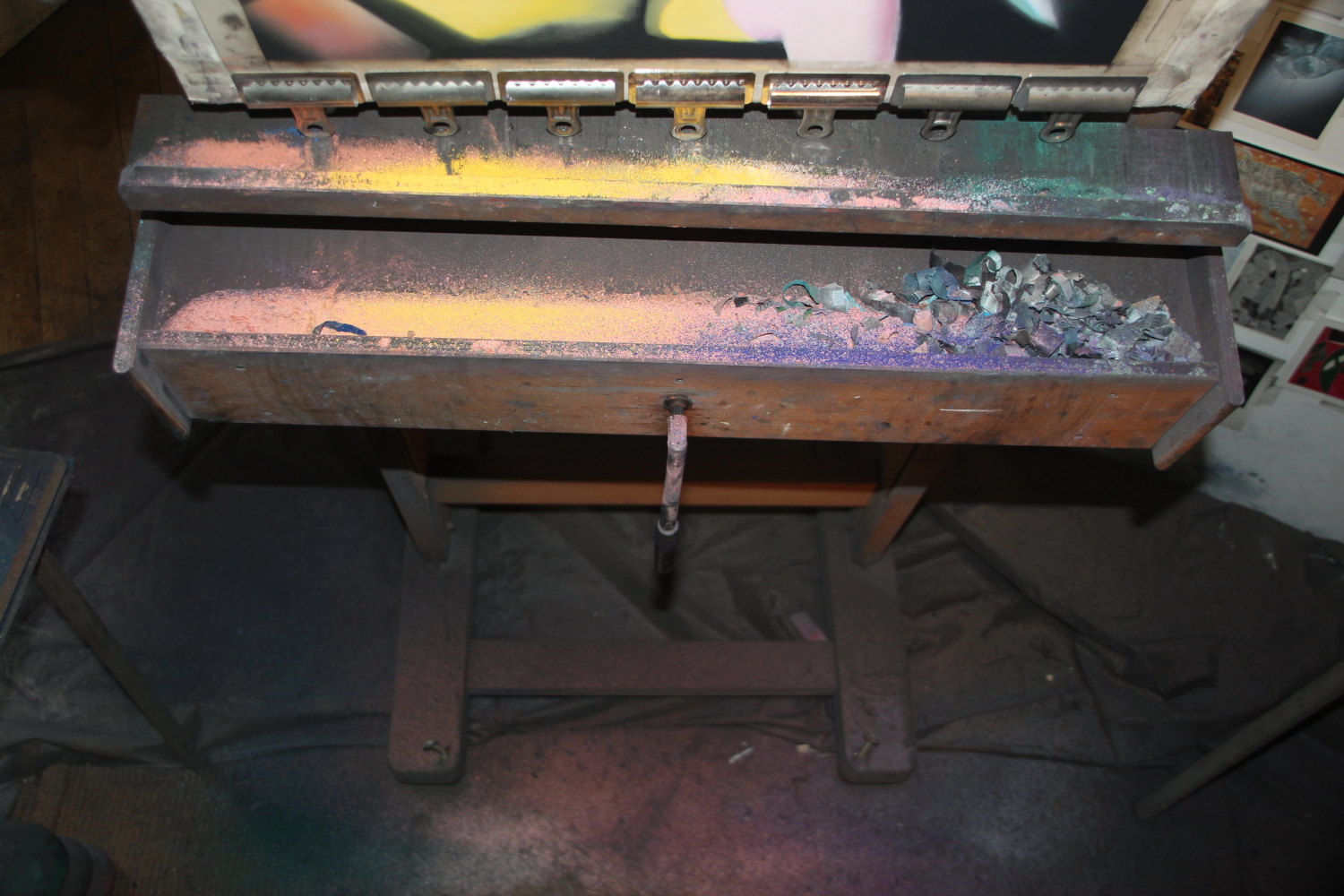
Pastel dust
A: No, but I wear a surgical mask when I work, to prevent breathing the pastel dust. Also, on my hands I use a barrier cream, called Artgard, to prevent pigment being absorbed into my skin through cuts. I take care that my head is always higher than my hand as I work, so the dust is below my mouth and nose. It may be hard to tell from the photo but my easel is tilted forward, allowing pastel dust to fall onto the easel and floor. I am well aware of the toxicity of pastel and believe I take the proper precautions. After twenty-six years working with soft pastel, so far I’ve managed to stay healthy.
Comments are welcome.



