Blog Archives
Q: Can we see some of your early potraits?
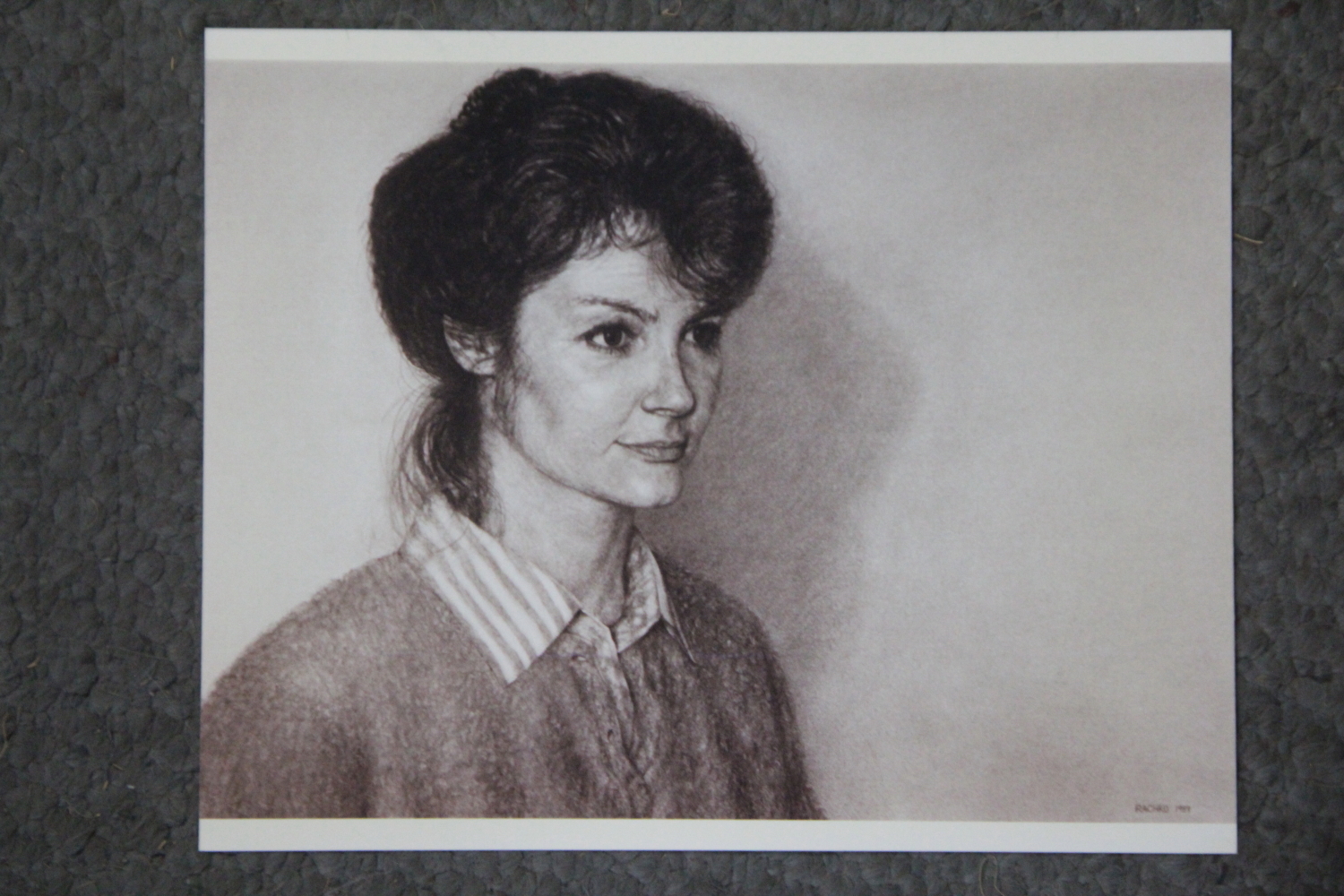
“Krystyn,” charcoal, 22″ x 30″, 1989
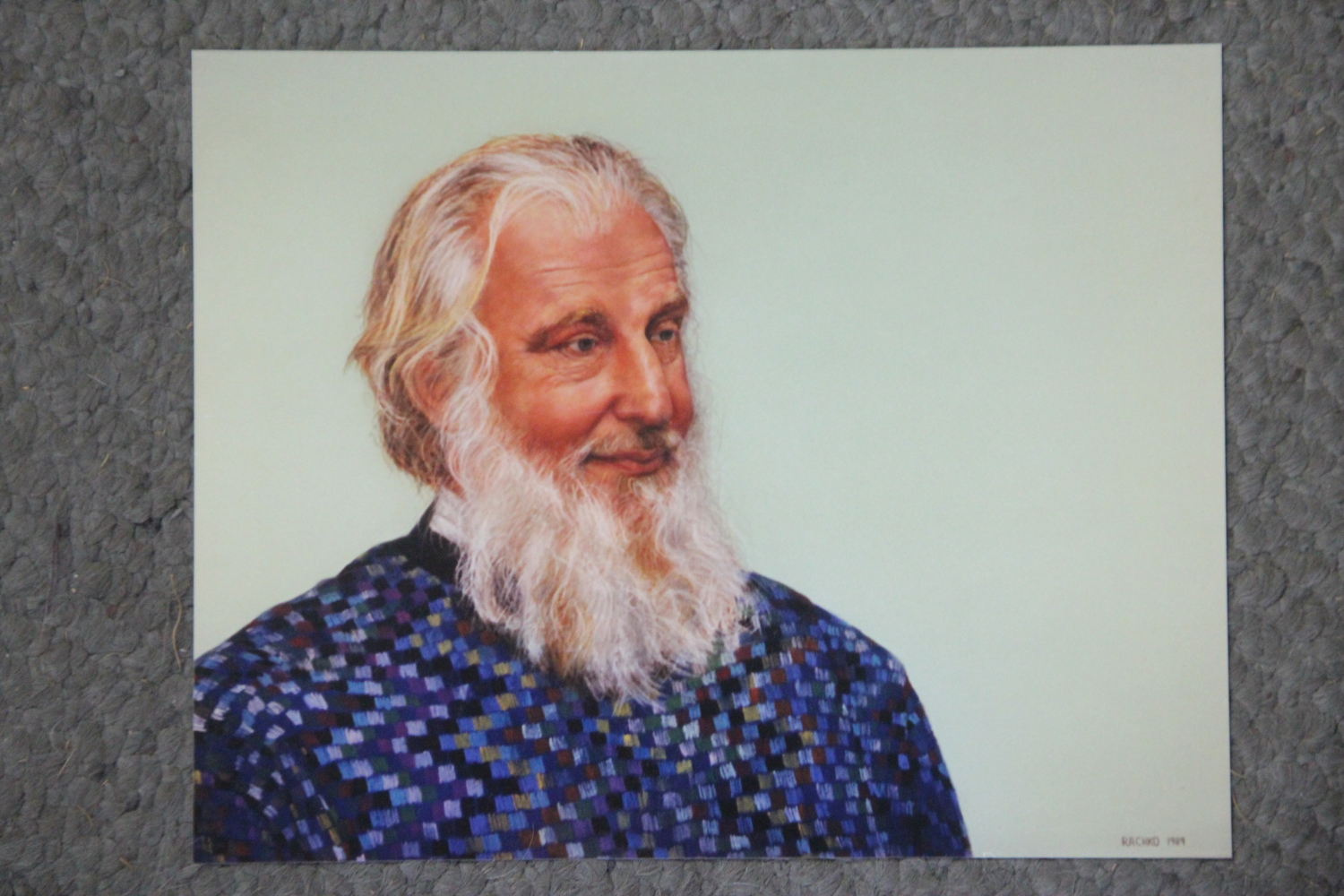
“John,” soft pastel on sandpaper, 22″ x 28″, 1989
A: The reproductions above are two of my earliest. The portrait of Bryan (see last week’s post) is hanging at the school that was named for him, Dr. Bryan C. Jack Elementary School, in Tyler, Texas. Krystyn’s portrait is hanging in my dining room in Alexandria, VA – I liked it too much to part with it. I have no idea where the one of John is now.
Note that the actual paintings are more vibrant than the 8 x 10’s shown above. For example, the background of John’s painting is a brilliant green. To obtain the images above I re-photographed photos from my portfolio book. These photos, unlike the originals, have faded over the years. That’s one more reason that my originals need to be seen in person.
Comments are welcome!
Q: Why the chromogenic process above all others?
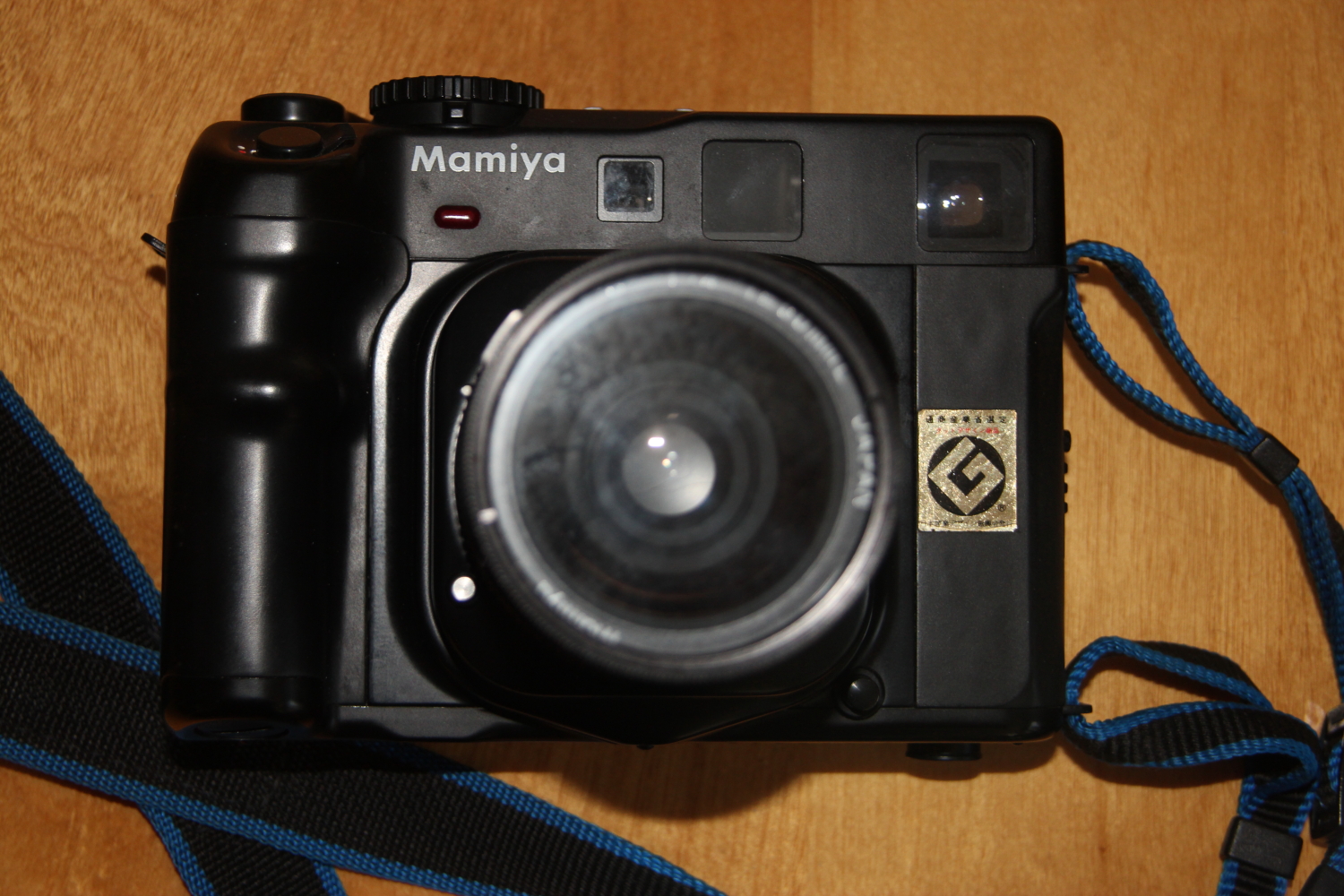
Mamiya 6 camera
A: First, the cameras that I inherited from Bryan in 2001 were all pre-digital film cameras. Second, I can make chromogenic prints myself, which cuts down on their production cost. Third, I love working with my hands and enjoy the process of making prints in a darkroom. Fourth, I make photographs on days that I don’t go to the studio. It’s a way to take a day off and still make art, a very productive use of my time. At the end of a darkroom session I have a new edition of 5 chromogenic prints, ready to spot and frame.
Comments are welcome.
Q: When did you begin seriously studying photography?
Exhibition catalogue, 2009 solo exhibition at HP Garcia Gallery, NYC; click
“Exhibition catalogue” under Blogroll to view inside pages
A: After I lost my husband, Bryan, on 9/11 – as I’ve discussed elsewhere, Bryan photographed most of the setups for my “Domestic Threats” series – I needed to find a way to continue making art. In June 2002 I began studying photography at the International Center of Photography (ICP) in New York. I took a one week 4 x 5 view camera workshop because Bryan had photographed the setups with a Toyo-Omega view camera. I was surprised to discover that I had absorbed quite a bit of technical information just by watching him. Once I completed the workshop, I decided to start over and to learn as much as I could about photography. So I enrolled in Photography I. Over the next several years I completed about a dozen courses at ICP, eventually learning to make my own large-scale chromogenic prints. Around 2007 I began working seriously as a photographer, creating my photographic series, “Gods and Monsters,” with Bryan’s Mamiya 6 camera. In October 2009 HP Garcia Gallery in New York gave me my first solo photography exhibition (see “Exhibition catalogue” under Blogroll).
I’m busy getting ready for my next solo show there in October. This exhibition will be fairly comprehensive and will include recent photographs (diptychs and single images), new work from the “Black Paintings” series, and a selection of Mexican and Guatemalan figures. There will be an exhibition catalogue and later in the fall, the gallery will publish the first book about my work. I am particularly thrilled about the book, a new, but long overdue, career milestone!
Q: Mexico has been a big influence on your work. What first drew you to Mexican folk art – masks, carved wooden animals, papier mâché figures, and toys?

A corner of Barbara’s studio
A: In 1991 my future sister-in-law sent, as a Christmas present, two brightly painted wooden figures from Oaxaca. One was a large, blue and white polka dot flying horse, the other a bear, painted with red, white, and black dots and lines.
At the time I was living in Alexandria, Virginia, studying at the Art league School there, and working as a full-time artist. I had resigned from the Navy after seven years on active duty, although I still worked one weekend a month at the Pentagon as a reservist. I was looking for something new to paint with soft pastel, having found portraits deeply unsatisfying.
I had never seen anything like these Oaxacan figures and was intrigued. I started asking friends about Oaxaca and soon learned that the city has a unique style of painting, the self-titled Oaxacan school, and that the painter, Rufino Tamayo, and husband and wife photographers, Manuel and Lola Alvarez Bravo, were from Oaxaca. (Manuel Alvarez Bravo founded an important photography museum there).
I had been a fan of Frida Kahlo, Diego Rivera, Leonora Carrington, Remedios Varo and other artists associated with Mexico, and had a long-standing interest in pre-Columbian civilizations. I knew some Spanish, having studied it in high school. I began reading everything I could find about Oaxaca and Mexico and soon became fascinated with the Day of the Dead.
In 1992 my future husband, Bryan, and I made our first trip to Mexico, spending a week in Oaxaca to see Day of the Dead observances and to study the Mixtec and Zapotec ruins (Monte Alban, Yagul, Mitla, etc.), and another week in Mexico City to visit Diego Rivera’s murals at the Ministry of Education, Frida Kahlo’s Casa Azul, and nearby ancient archeological sites (the Templo Mayor, Teotihuacan, etc.).
I began collecting Mexican folk art on that first trip. I still have fond memories of buying my first mask, a big wooden dragon with a Conquistador’s face on its back. Bryan and I found it high on a wall in a dusty Oaxacan shop. The dragon was three and a half feet long and three feet wide. Because it was fragile, we hand-carried it onto the plane and were able to store it in the first class cabin (this was pre-9/11). I chuckle to remember that we covered its finely carved toes with rolled up socks to prevent them from breaking!
I have been back to Mexico many times, mainly visiting the central and southern states. I travel there to study pre-Columbian history, archaeology, mythology, culture, and the arts. It is an endlessly fascinating country that has long been an inspiration for artists.


 barbararachkoscoloreddust.com