Blog Archives
Pearls from Artists* # 313

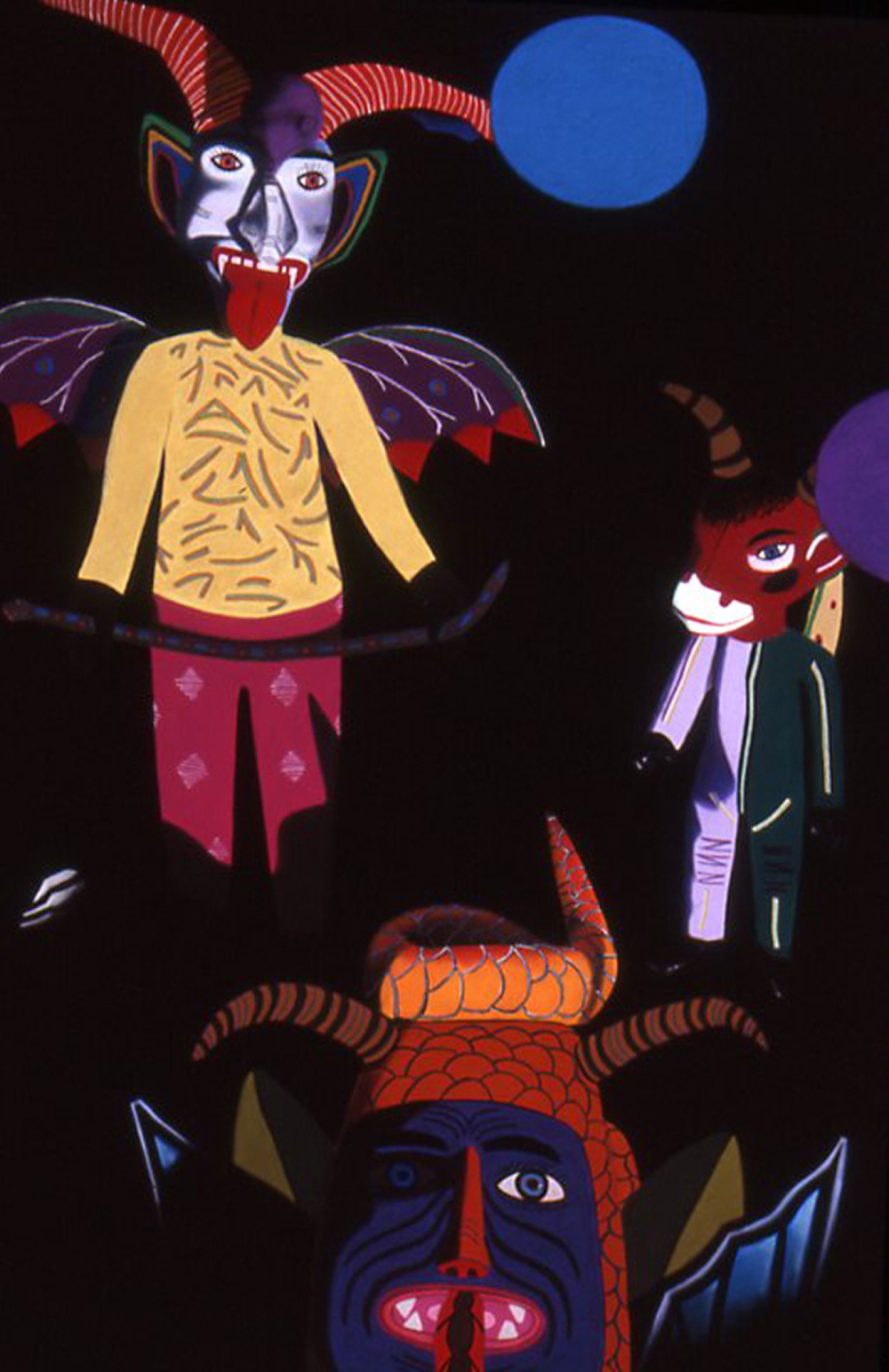
Barbara and Tomas in Panajachel, Guatemala
*an ongoing series of quotations – mostly from artists, to artists – that offers wisdom, inspiration, and advice for the sometimes lonely road we are on.
Proclaiming that the object in Surrealism was fundamental, [Andre] Breton suggests a radical transition in surrealist creation, one that liberated the poet-artist from all constraints in the making of the artistic object. Breton’s text calls for a “revolution of the object,” suggesting that in the placing of an object into a new context, and thus attributing it with a new meaning – also called a “detournement” – which takes precedence. Drawing in his interpretation of Hegelian subject-object relations, Breton describes the “object” as a work of art that relies on a philosophical procedure, affirming the surrealist process as one that is realized in the experience of apprehending the object through a dialectical method. Citing the work of Marcel Duchamp and Max Ernst, Breton explains that an object may become a product of surrealist creation through the simple “manipulation” of it. Here ”manipulation“ is defined as a procedure which reveals the object in its original and new state at the same time. If taking an object out of its original context and placing it in a new space creates the potential for a creative act, then this text seems to validate the surrealist practice of collecting. As the collector acquired objects and unites them in a gallery or a home, they assume new significance contingent upon their physical juxtaposition to other objects.
Moon Dancers: Yup’ik Masks and the Surrealists, edited by Jennifer Field, Introduction by Christina Rudofsky
Comments are welcome!
Pearls from artists # 146
“The Sovereign,” soft pastel on sandpaper, 58″ x 38″
* an ongoing series of quotations – mostly from artists, to artists – that offers wisdom, inspiration, and advice for the sometimes lonely road we are on.
I try to remember that painting at its best is a form of communication, that it is constantly reaching out to find response from an ideal and sympathetic audience. This I know is not accomplished by pictorial rhetoric nor by the manipulation of seductive paint surfaces. Nor is a good picture concocted out of theatrical props, beautiful subjects, or memories of other paintings. All these might astound but they will never communicate the emotional content or exaltation of life, which I believe an artist, by definition, has to accept as his task.
Julian Levi: Before Paris and After in The Creative Process, edited by Brewster Ghiselin
Comments are welcome!


 barbararachkoscoloreddust.com