Pearls from artists* #239

At work on “False Friends”; photo by Diana Feit
* an ongoing series of quotations – mostly from artists, to artists – that offers wisdom, inspiration, and advice for the sometimes lonely road we are on.
It is a silver morning like any other. I am at my desk. Then the phone rings, or someone raps at the door. I am deep in the machinery of my wits. Reluctantly I rise, I answer the phone or I open the door. And the thought which I had in hand, or almost in hand, is gone.
Creative work needs solitude. It needs concentration, without interruptions. It needs the whole sky to fly in, and no eye watching until it comes to that certainty which it aspires to, but does not necessarily have at once. Privacy, then. A place apart – to pace, to chew pencils, to scribble and erase and scribble again.
Mary Oliver in Upstream: Selected Essays
Comments are welcome!
Start/Finish of “The Storyteller,” 20″ x 26″ image, 28 1/2″ x 35″ framed

Charcoal underdrawing
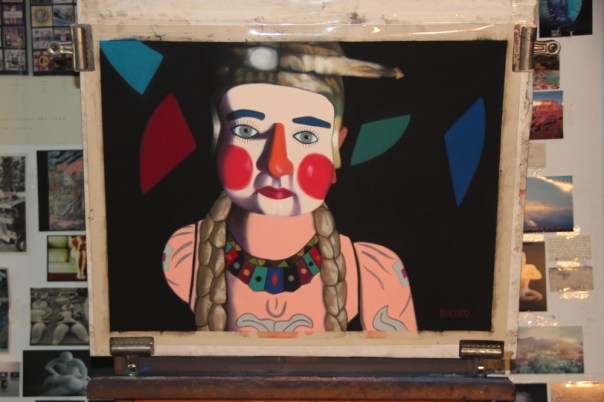
Completed and signed
Comments are welcome!
Pearls from artists* # 238

Self-portrait with “Blue Misterioso”
* an ongoing series of quotations – mostly from artists, to artists – that offers wisdom, inspiration, and advice for the sometimes lonely road we are on.
Form is certainty. All nature knows this, and we have no greater advisor. Clouds have forms, porous and shape-shifting, bumptious, fleecy. They are what clouds need to be, to be clouds. See a flock of them come, on the sled of the wind, all kneeling above the blue sea. And in the blue water, see the dolphin built to leap, the sea mouse skittering; see the ropy kelp with its air-filled bladders tugging it upward; see the albatross floating day after day on its three-jointed wings. Each form sets a tone, enables a destiny, strikes a note in the universe unlike any other. How can we ever stop looking? How can we ever turn away?
Mary Oliver in Upstream: Selected Essays
Comments are welcome!
Q: What’s on the easel today?

Work in progress
A: I am working on a small 20″ x 26″ pastel painting that doesn’t have a title yet.
Comments are welcome!
Pearls from artists* # 237
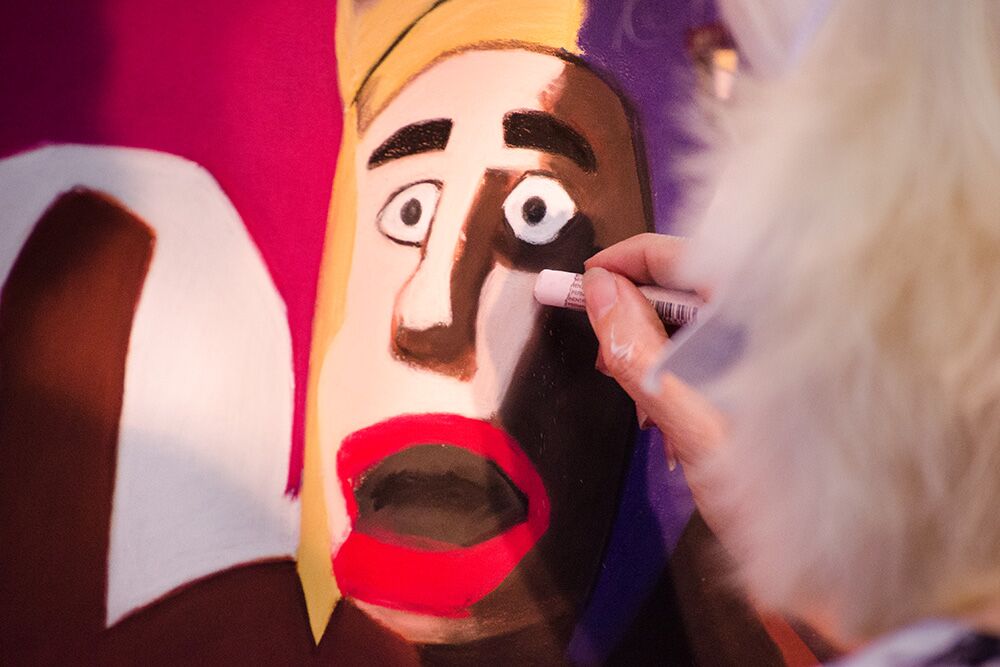
Barbara at work, Photo: Marianne Barcellona
* an ongoing series of quotations – mostly from artists, to artists – that offers wisdom, inspiration, and advice for the sometimes lonely road we are on.
You must not ever stop being whimsical.
And you must not, ever, give anyone else the responsibility for your life.
I don’t mean it’s easy or assured; there are stubborn stumps of shame, grief that remains unsolvable after all the years, a bag of stones that goes with one wherever one goes and however the hour may call for dancing and for light feet. But there is, also, the summoning world, better than anger, better than bitterness, and because more interesting, more alleviating. And there is the thing that one does, the needle one plies, the work, and within that work a chance to take thoughts that are hot and formless and to place them slowly and with meticulous effort into some shapely heat-retaining form, even as the gods, or nature, or the soundless wheels of time have made forms all across the soft, curved universe – that is to say, having chosen to claim my life, I have made for myself, out of work and living, a handsome life.
Mary Oliver in Upstream: Selected Essays
Comments are welcome!
Q: Your path into the arts was less than conventional. For many years you were an active duty Naval officer before you retired as a Commander. Oh, and not forgetting the pilot’s licenses you hold! Tell us more about yourself and why you decided to continue your journey into the arts.
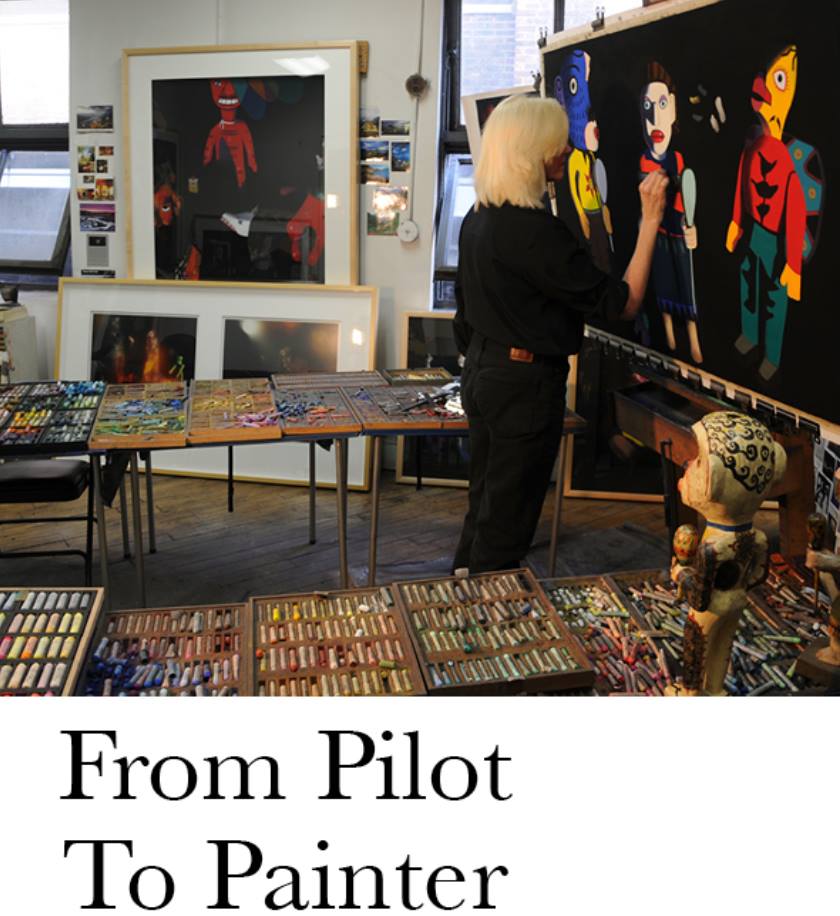
Barbara’s eBook cover
A: When I was 25 I earned my private pilot’s license and spent the next two years amassing other licenses and ratings, culminating in a Boeing-727 flight engineer’s certificate. Two years later I joined the Navy. As an accomplished civilian pilot with thousands of flight hours, I expected to fly jets. However, there were few women Navy pilots at the time and they were restricted to training male pilots. There were no women pilots on aircraft carriers and there were no female Blue Angels (the latter is still true).
So in the mid-1980s I was in my early 30s, a lieutenant on active duty in the Navy, working a soul-crushing job as a computer analyst on the midnight shift in a Pentagon basement. It was literally and figuratively the lowest point of my life. Remembering the joyful Saturdays of my youth when I had taken art classes with a local New Jersey painter, I enrolled in a drawing class at the Art League School in Alexandria, Virginia. Initially I wasn’t very good, but it was wonderful to be around other women and a world away from the “warrior mentality” of the Pentagon. And, I was having fun! Soon I enrolled in more classes and became a very motivated full-time art student who worked nights at the Pentagon. As I studied and improved my skills, I discovered my preferred medium – soft pastel on sandpaper.
Although I knew I had found my calling, for more than a year I agonized over whether or not to leave the financial security of the Navy. Once I did decide, there was a long delay. The Navy was experiencing a manpower shortage so Congress had enacted a stop-loss order, which prevented officers from resigning. I could only do what was allowed under the order. I submitted my resignation effective exactly one year later: on September 30, 1989. With Bryan’s (my late husband’s) support, I left the Navy.
I designate October 1, 1989 as the day I became a professional artist. Fortunately, I have never again needed a day job. However, I remained in the Navy Reserve for the next 14 years, working primarily at the Pentagon for two days every month and two weeks each year. I commuted to Washington, DC after I moved to Manhattan in 1997. Finally on November 1, 2003, I officially retired as a Navy Commander.
Comments are welcome!
Pearls from artists* # 236
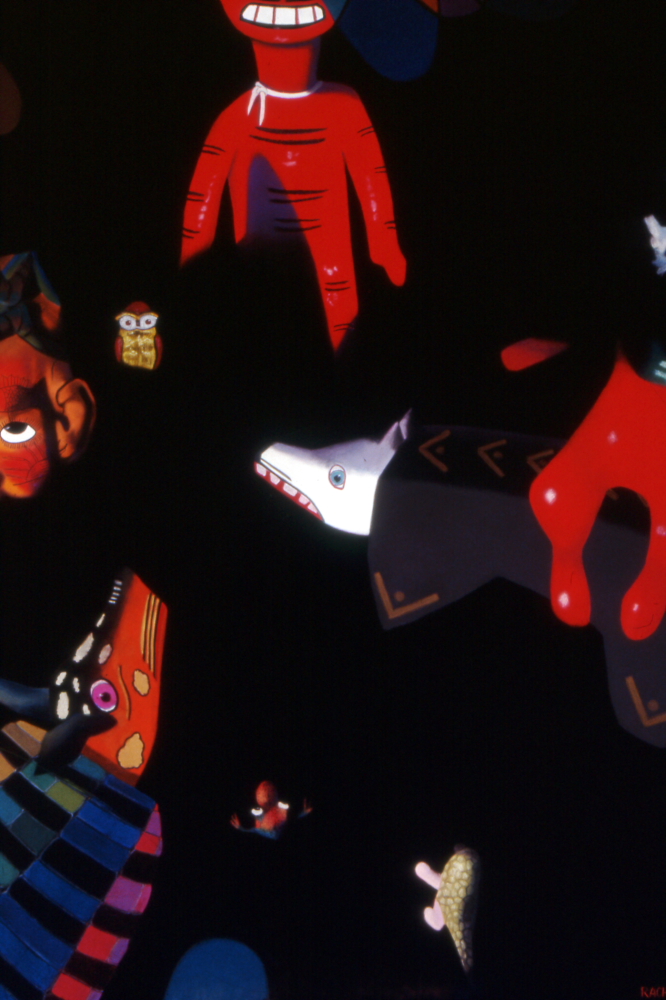
“Some Things We Regret,” soft pastel on sandpaper, 58″ x 38″
* an ongoing series of quotations – mostly from artists, to artists – that offers wisdom, inspiration, and advice for the sometimes lonely road we are on.
There are so many things that art can’t do. It can’t bring the dead back to life, it can’t mend arguments between friends, or cure AIDS, or halt the pace of climate change. All the same, it does have some extraordinary functions, some odd negotiating ability between people, including people who never meet and yet who infiltrate and enrich each other’s lives, it does have a capacity to create intimacy; it does have a way of healing wounds, and better yet of making it apparent that not all wounds need healng and not all scars are ugly.
Olivia Laing in The Lonely City: Adventures in the Art of Being Alone
Comments are welcome!
Q: One can’t help but make connections between the devastating effects of 9/11 and your series, “Domestic Threats.” Would they be right?

“No Cure for Insomnia,” soft pastel on sandpaper, 58″ x 38″
A: Well, not exactly, since I began this work in 1991.
All of the paintings in this series are set in places where I reside or used to live, either a Virginia house or two New York apartments, i.e., my personal domestic environments. Each painting typically contains a conflict of some sort, at least one figure that is being menaced or threatened by a group of figures. For example, in “No Cure for Insomnia (above) the threatened figure is me. So it was an easy decision to name the series “Domestic Threats.” My idea was that these paintings were psychological dramas: surrealistic, metaphoric depictions of human fears, anxieties, inner conflicts, demons, etc.
But depending on what is/was going on in the country at a particular moment, people make other associations. Since my husband was killed on 9/11, people think the title, “Domestic Threats,” was prescient and ascribed all kinds of domestic terrorism associations to the work. For a time viewers thought I was hinting at scenes of domestic violence, but that also is not what I intended. The title “Domestic Threats” has proven to be fraught with associations that I never considered.
However, I am fine with any interpretations that are elicited because it means my paintings are getting a response. That’s important. I have been working, studying, and thinking about art for thirty years and hopefully, that’s reflected in the work I create. It’s natural that it takes time for people to ponder all the complexities in a work of art.
Maybe this comment by the late Gerrit Henry, a New York critic, is more true now than when he wrote it sixteen years ago: “What we bring to a Rachko, in other words, we get back, bountifully.”
Comments are welcome!
Pearls from artists* # 235
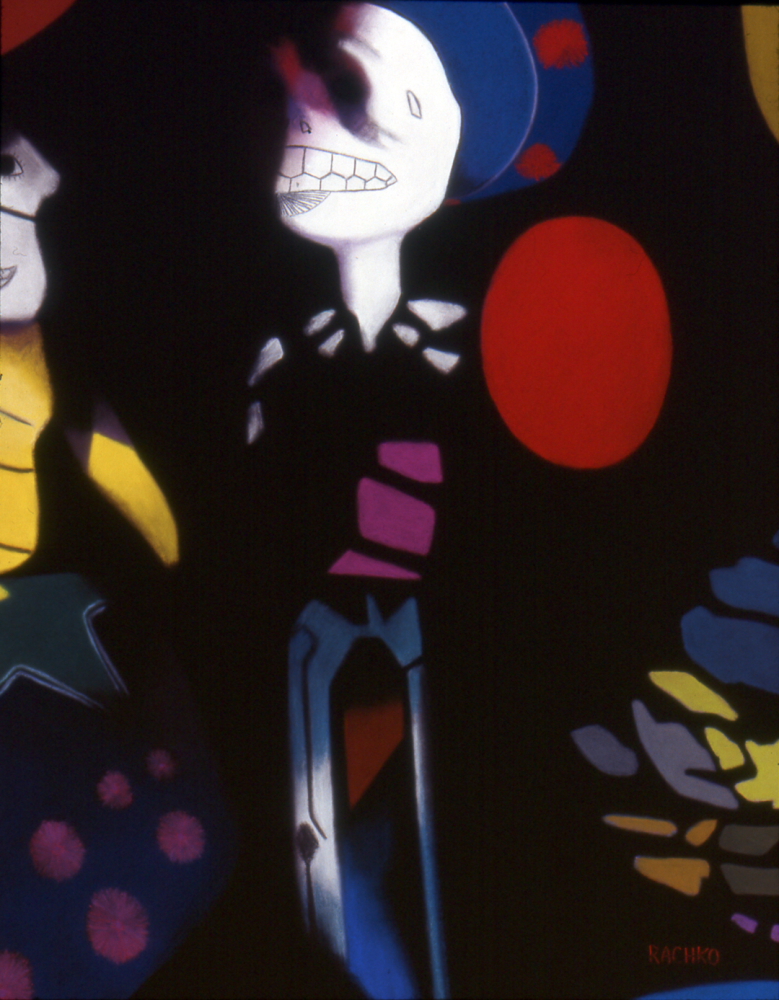
“Effigy,” soft pastel on sandpaper, 26″ x 20″
* an ongoing series of quotations – mostly from artists, to artists – that offers wisdom, inspiration, and advice for the sometimes lonely road we are on.
People make things – make art or things that are akin to art – as a way of expressing their need for contact, or their fear of it; people make objects as a way of coming to terms with shame, with grief. People make objects to strip themselves down, to survey their scars, and people make objects to resist oppression, to create a space in which they can move freely. Art doesn’t have to have a reparative function, any more than it has a duty to be beautiful or moral.
Olivia Laing in The Lonely City: Adventures in the Art of Being Alone
Comments are welcome!



 barbararachkoscoloreddust.com