Category Archives: Creative Process
Pearls from artists* # 219
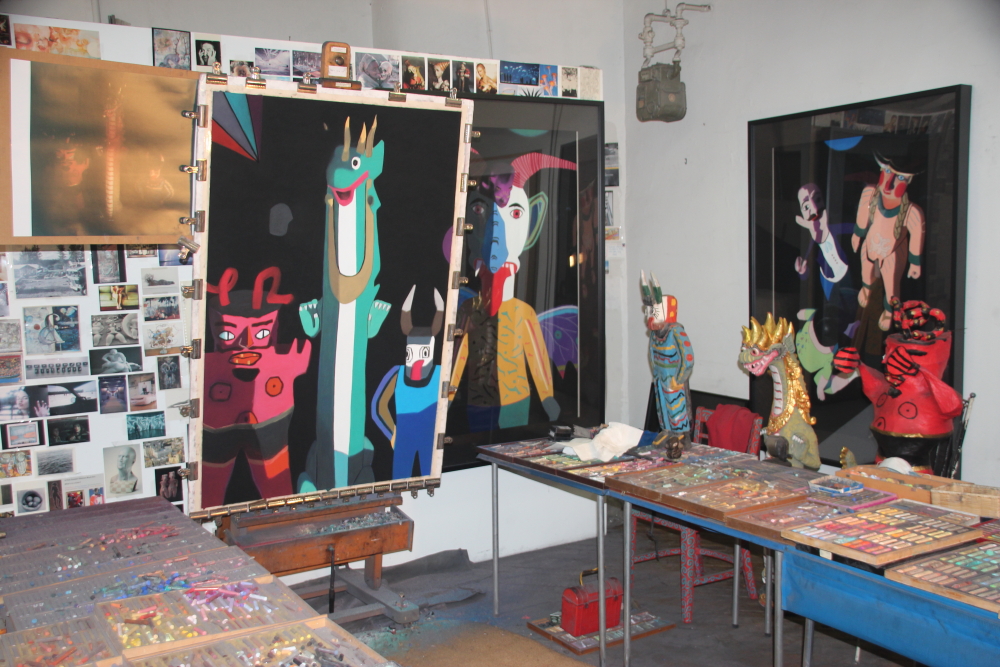
Barbara’s studio
* an ongoing series of quotations – mostly from artists, to artists – that offers wisdom, inspiration, and advice for the sometimes lonely road we are on.
There is a vitality, a life force, a quickening that is translated through you into action. And because there is only one of you in all time, the expression is unique. If you block it, it will never exist through any other medium and be lost. The world will not hear it. It is not your business to determine how good it is; nor how valuable it is; nor how it compares with other expressions. It is your business to keep it yours, clearly and directly, to keep the channel open. You do not even need to believe in yourself or your work. You have to keep open and aware directly to the urges that motivate you. Keep the channel open. No artist is pleased. There is no satisfaction whatever at any time. There is only a queer, divine satisfaction, a blessed unrest that keep us marching and makes us more alive than the others.
Martha Graham to Agnes de Mille in Still Writing: The Perils and Pleasures of a Creative Life by Dani Shapiro
Comments are welcome!
Pearls from artists* # 218
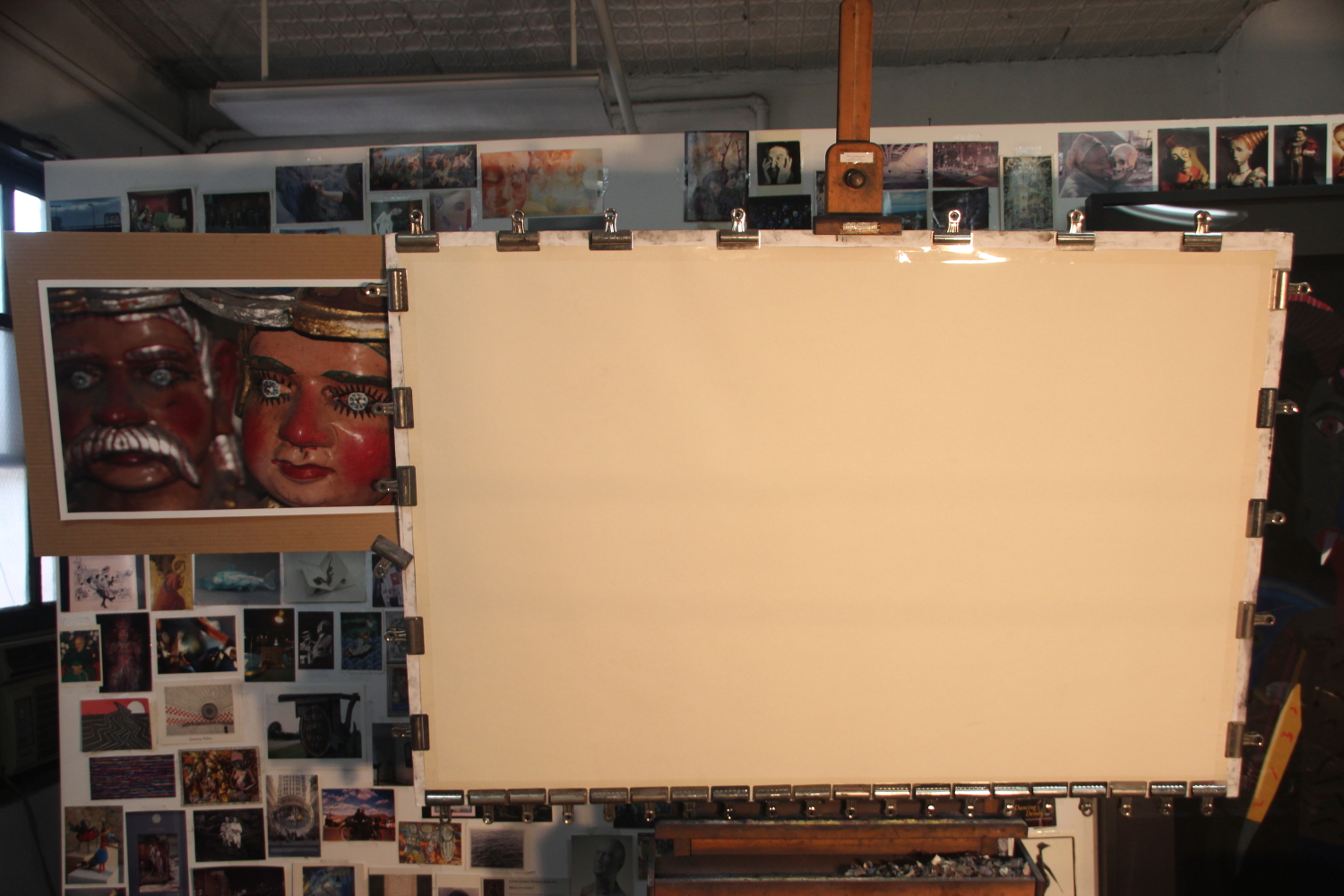
Untouched sandpaper
* an ongoing series of quotations – mostly from artists, to artists – that offers wisdom, inspiration, and advice for the sometimes lonely road we are on.
Let go of every should or shouldn’t running through your mind when you start. Be willing to stand at the base of a new mountain, and with humility and grace, bow to it. Allow yourself to understand that it’s bigger than you, or anything you can possibly imagine. You’re not sure of your path. You’re not even sure where the next step will take you. When you begin, whisper to yourself: I don’t know.
Dani Shapiro in Still Writing: The Perils and Pleasures of a Creative Life
Comments are welcome!
Q: Start/Finish of “Epiphany,” soft pastel on sandpaper, 38″ x 58″ image, 50″ x 70″ framed
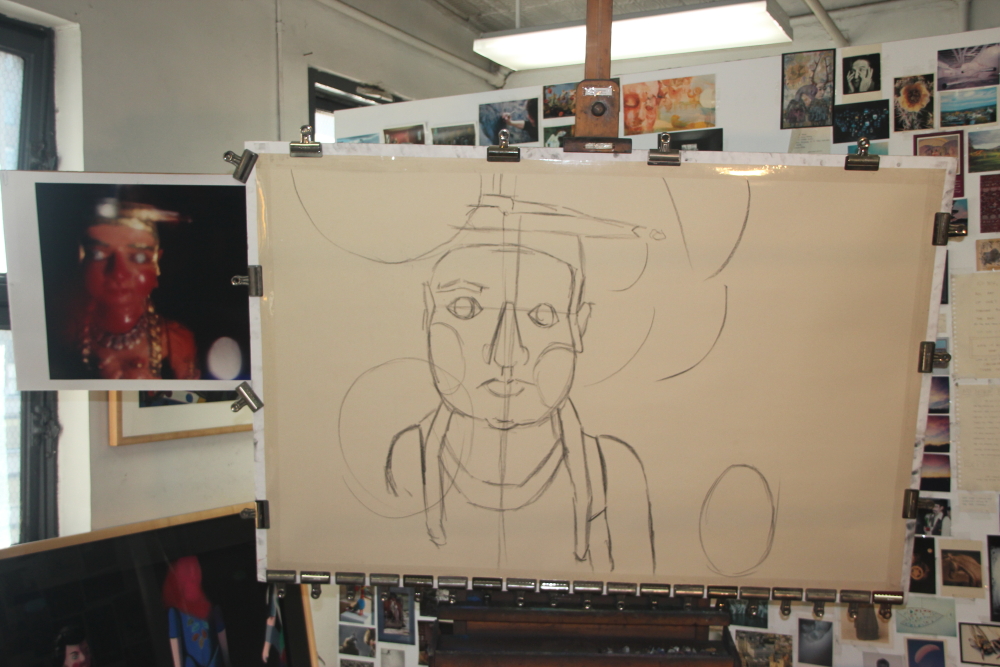
Roughed out in charcoal
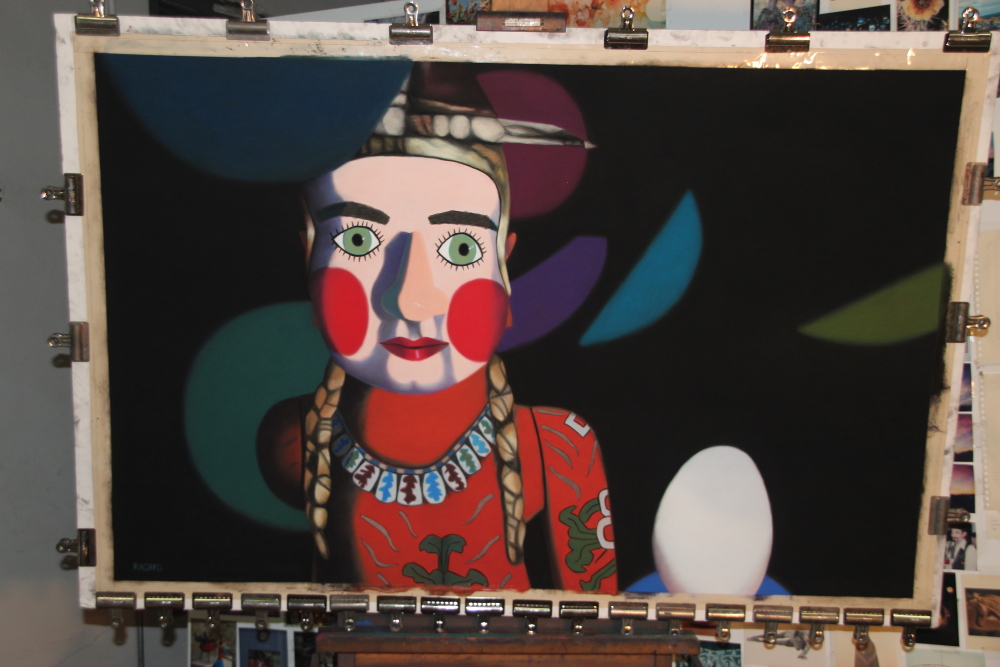
Finished, signed lower left
Pearls from artists* # 217
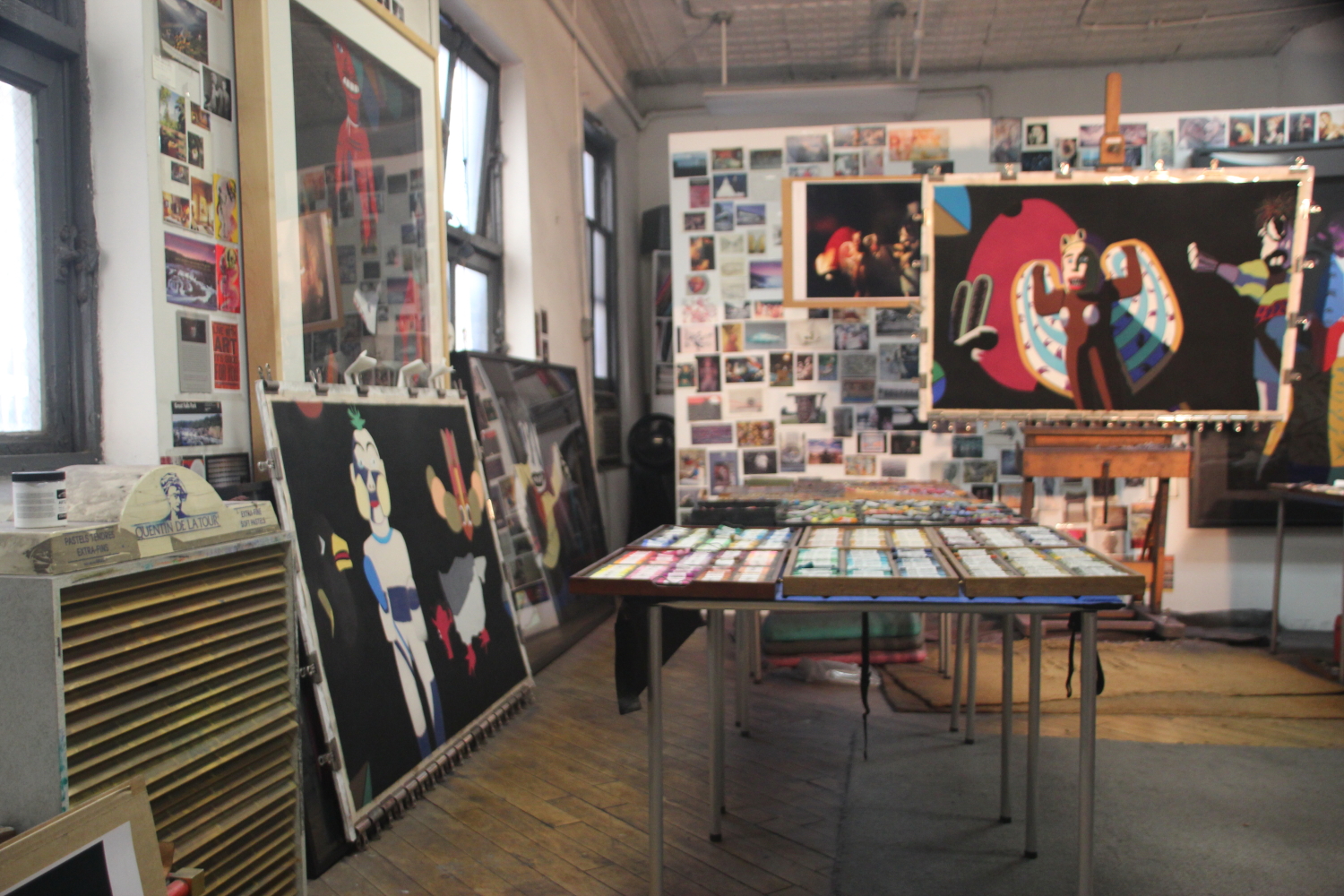
Barbara’s studio
* an ongoing series of quotations – mostly from artists, to artists – that offers wisdom, inspiration, and advice for the sometimes lonely road we are on.
This is true for most artists, not only writers.
What I do know – what I’ve spent the past couple of decades learning about myself – is that if I’m not writing, I’m not well. If I’m not writing, the world around me is slowly leached of its color. I am crabby with my husband, short-tempered with my kid and more inclined to see small things wrong with my house (the crack in the ceiling, the smudge prints along the staircase wall) than look out the window at the blazing maple tree, the family of geese making its way across our driveway. If I’m not writing, my heart hardens, rather than lifts.
Dani Shapiro in Still Writing: The Perils and Pleasures of a Creative Life
Comments are welcome!
Q: What’s on the easel today?
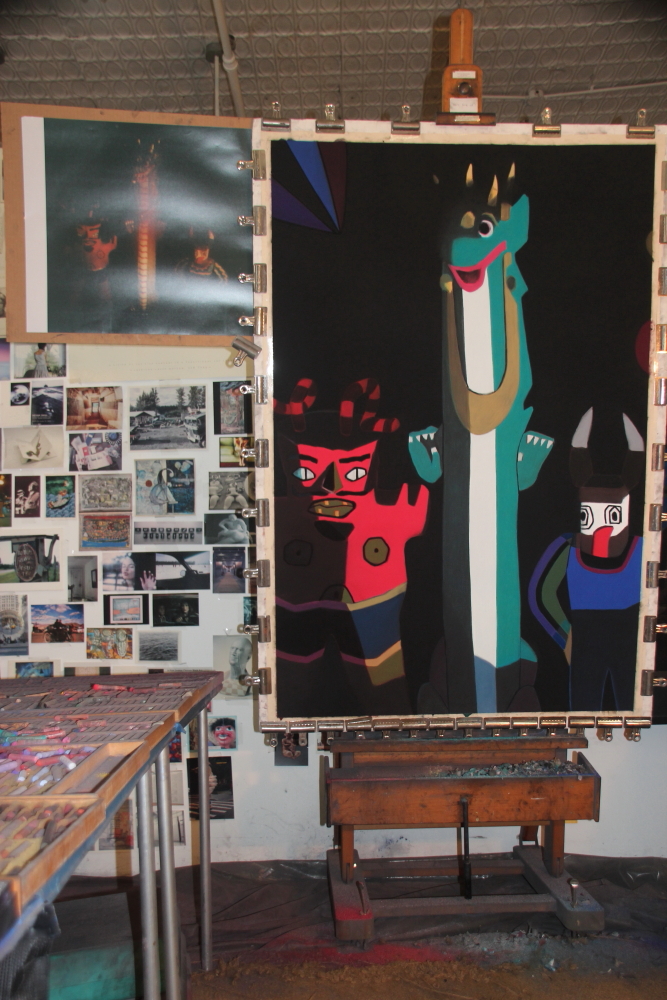
Work in progress
A: I am continuing work on a large (58″ x 38″) pastel painting tentatively titled, “Blocked.”
Comments are welcome!
Pearls from artists* # 215
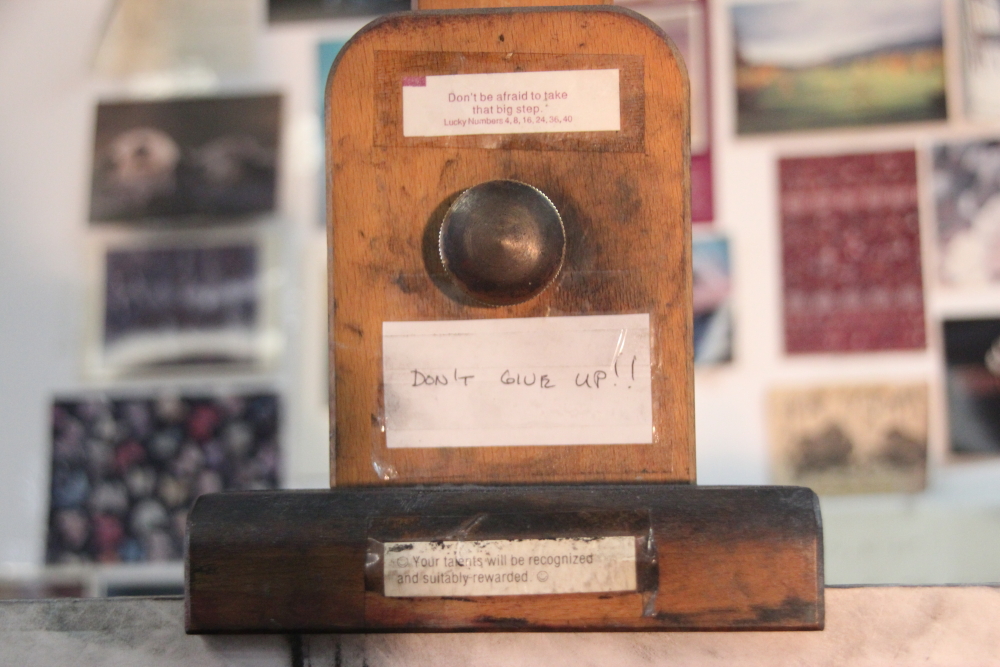
Barbara’s easel
* an ongoing series of quotations – mostly from artists, to artists – that offers wisdom, inspiration, and advice for the sometimes lonely road we are on.
Instead of a clean narrow pathway to a goal, creators take risks, seek out new experiences, and reconcile contradictions. Indeed this dance of contradictions is exactly what may give rise to the intense inner drive to create. As the journalist Carolyn Gregoire and I put it in our recent book Wired to Create: Unraveling the Mysteries of the Creative Mind, creative people have “messy minds.”
We wouldn’t have it any other way. Without these rebellious experts, these passionate meaning-makers, these doers and dreamers, we would be bereft of some of humanity’s greatest creative accomplishments. Creative geniuses reveal what is within human reach, what we may all be capable of achieving with the drive to make meaning and the courage to create.
Scott Barry Kaufman in “A Capacity for Genius,” Lincoln Center’s Mostly Mozart 50th Anniversary, July 22 – August 27, 2016 Playbill
Comments are welcome!
Q: How do you decide what to paint next?
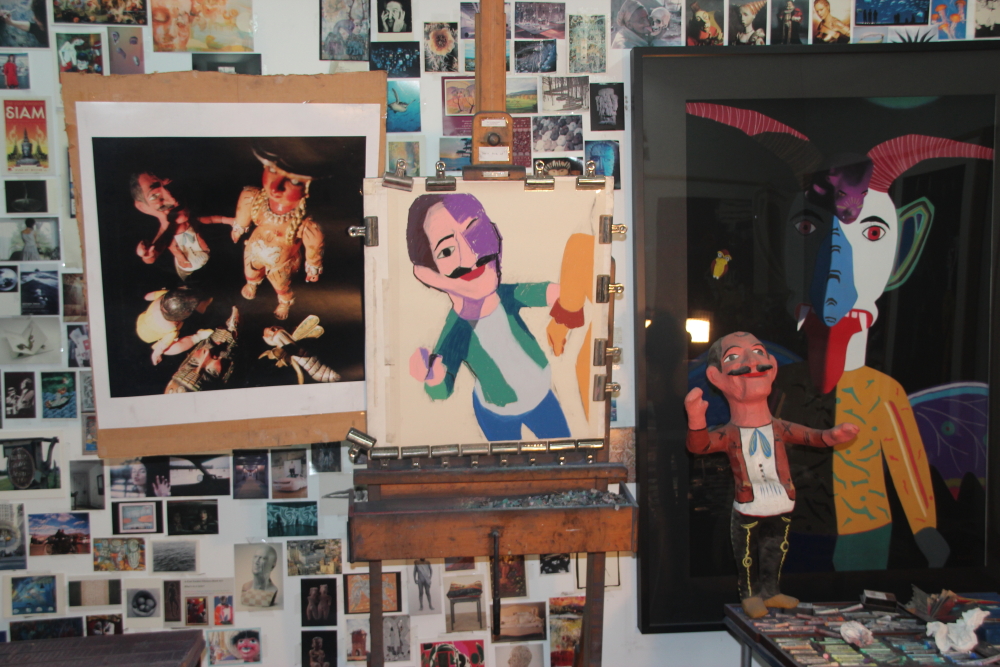
Work in progress
A: It’s interesting how my creative process is simplifying the longer I work at this. For my most recent piece, I looked at my old 20″ x 24″ c-prints until a particular image seemed to call out. It became my next project.
Comments are welcome!
Start/Finish of “Incognito,” soft pastel on sandpaper, 38″ x 58″ image, 50″ x 70″ framed
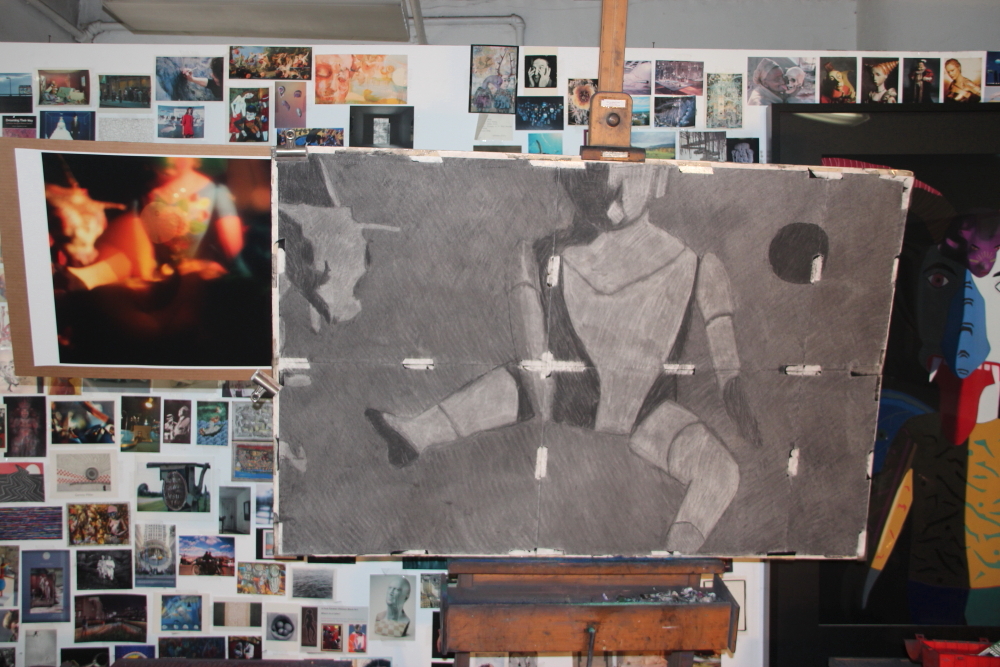
C-print and preliminary charcoal sketch
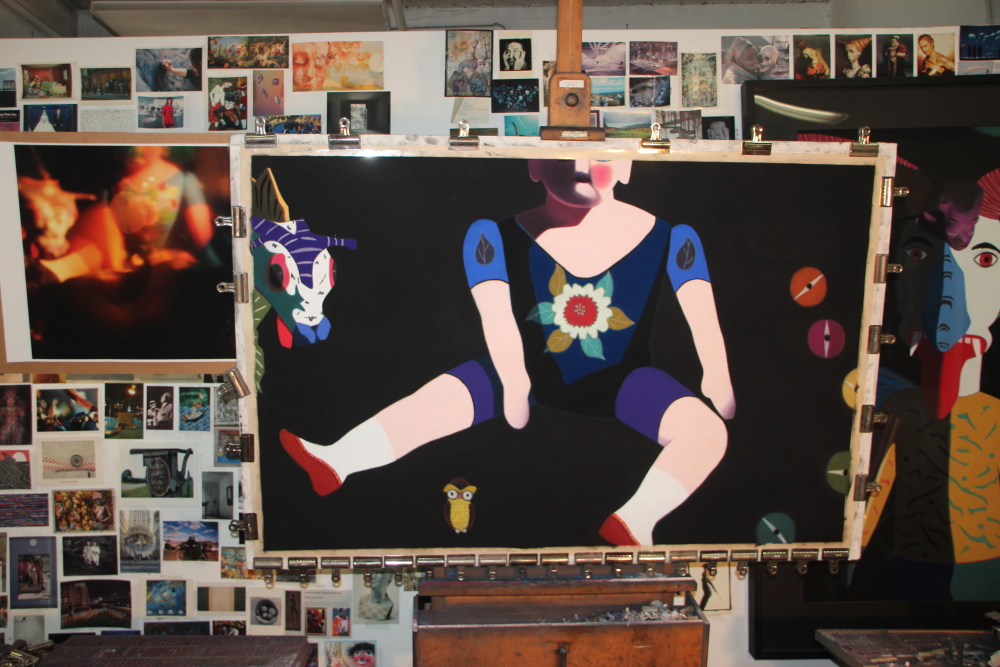
Finished
Comments are welcome!
Start/Finish of “Blind Faith,” soft pastel on sandpaper, 38″ x 58″ image, 50″ x 70″ framed

Beginnings

Finished and signed (lower left)
Comments are welcome!
Pearls from artists* # 210
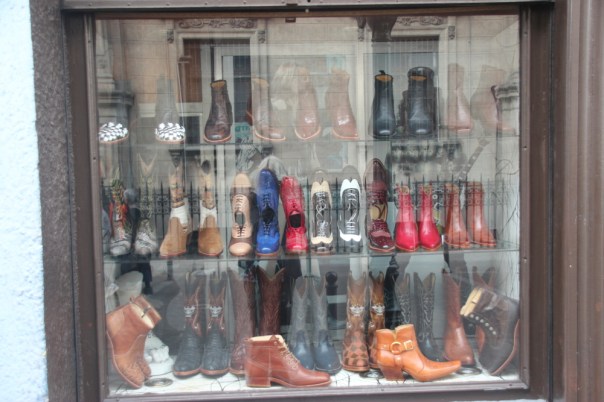
Lima, Peru (with self-portrait)
* an ongoing series of quotations – mostly from artists, to artists – that offers wisdom, inspiration, and advice for the sometimes lonely road we are on.
Much that is said about beauty and its importance in our lives ignores the minimal beauty of an unpretentious street, a nice pair of shoes or a tasteful piece of wrapping paper, as though these things belonged to a different order of value from a church by Bramante or a Shakespeare sonnet. Yet these minimal beauties are far more important to our daily lives, and far more intricately involved in our own rational decisions, than the great works which (if we are lucky) occupy our leisure hours. They are part of the context in which we live our lives, and our desire for harmony, fittingness and civility expressed and confirmed in them. Moreover, the great works of architecture often depend for their beauty on the humble context that these lesser beauties provide. Longhena’s church on the Grand Canal would lose its confident and invocatory presence, were the modest buildings which nestle in its shadow to be replaced with cast-concrete office blocks, of the kind that ruin the aspect of St. Paul’s.
Beauty: A Very Short Introduction, by Roger Scruton
Comments are welcome!



