Category Archives: Creative Process
Q: Why the chromogenic process above all others?
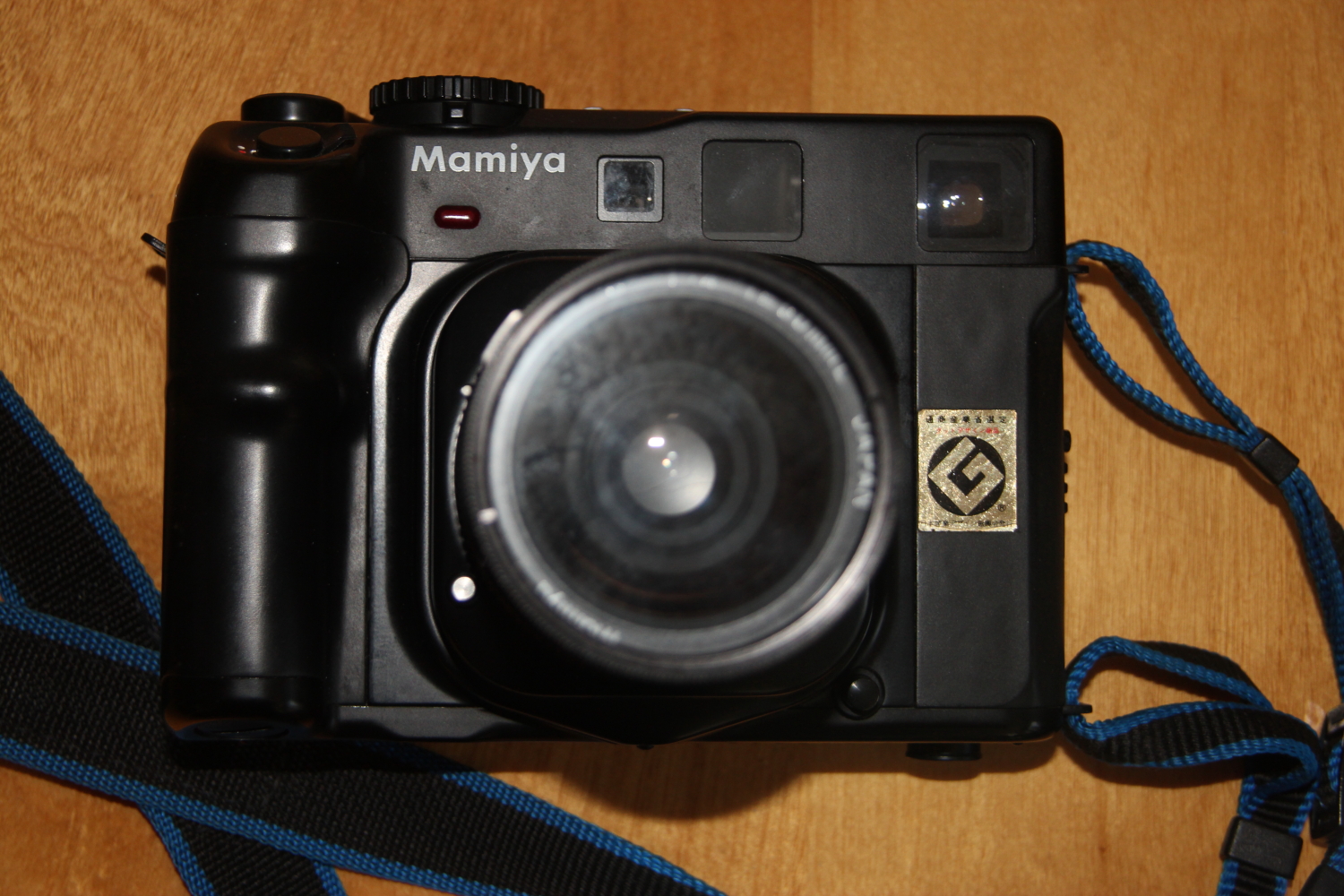
Mamiya 6 camera
A: First, the cameras that I inherited from Bryan in 2001 were all pre-digital film cameras. Second, I can make chromogenic prints myself, which cuts down on their production cost. Third, I love working with my hands and enjoy the process of making prints in a darkroom. Fourth, I make photographs on days that I don’t go to the studio. It’s a way to take a day off and still make art, a very productive use of my time. At the end of a darkroom session I have a new edition of 5 chromogenic prints, ready to spot and frame.
Comments are welcome.
Pearls from artists* # 3
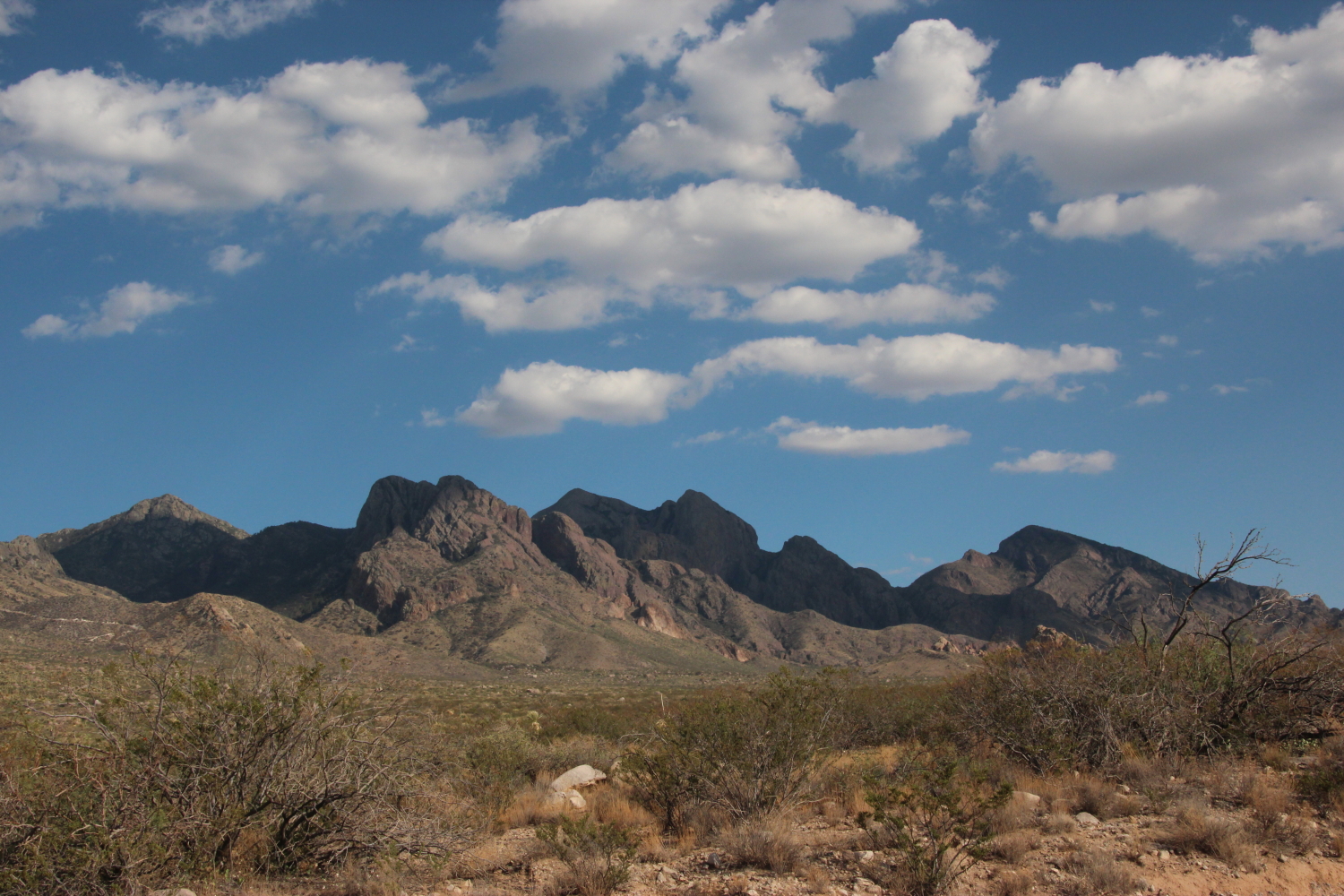
Las Cruces, NM
* an ongoing series of quotations – mostly from artists, to artists – that offers wisdom, inspiration, and advice for the sometimes lonely road we are on.
You are responding all the time to your own path of discovery. Yet at the same time we usually find we are questioning it and even discounting it. Making art demands attention so we don’t pull ourselves off track. Following our paths is in effect a kind of going off the path, through open country. There is a certain early stage when we are left to camp out in the wilderness, alone, with few supporting voices.
Ian Roberts, Creative Authenticity: 16 Principles to Deepen Your Artistic Vision
Comments are welcome.
Q: What do you like to do in the darkroom that brings a print up to perfection?
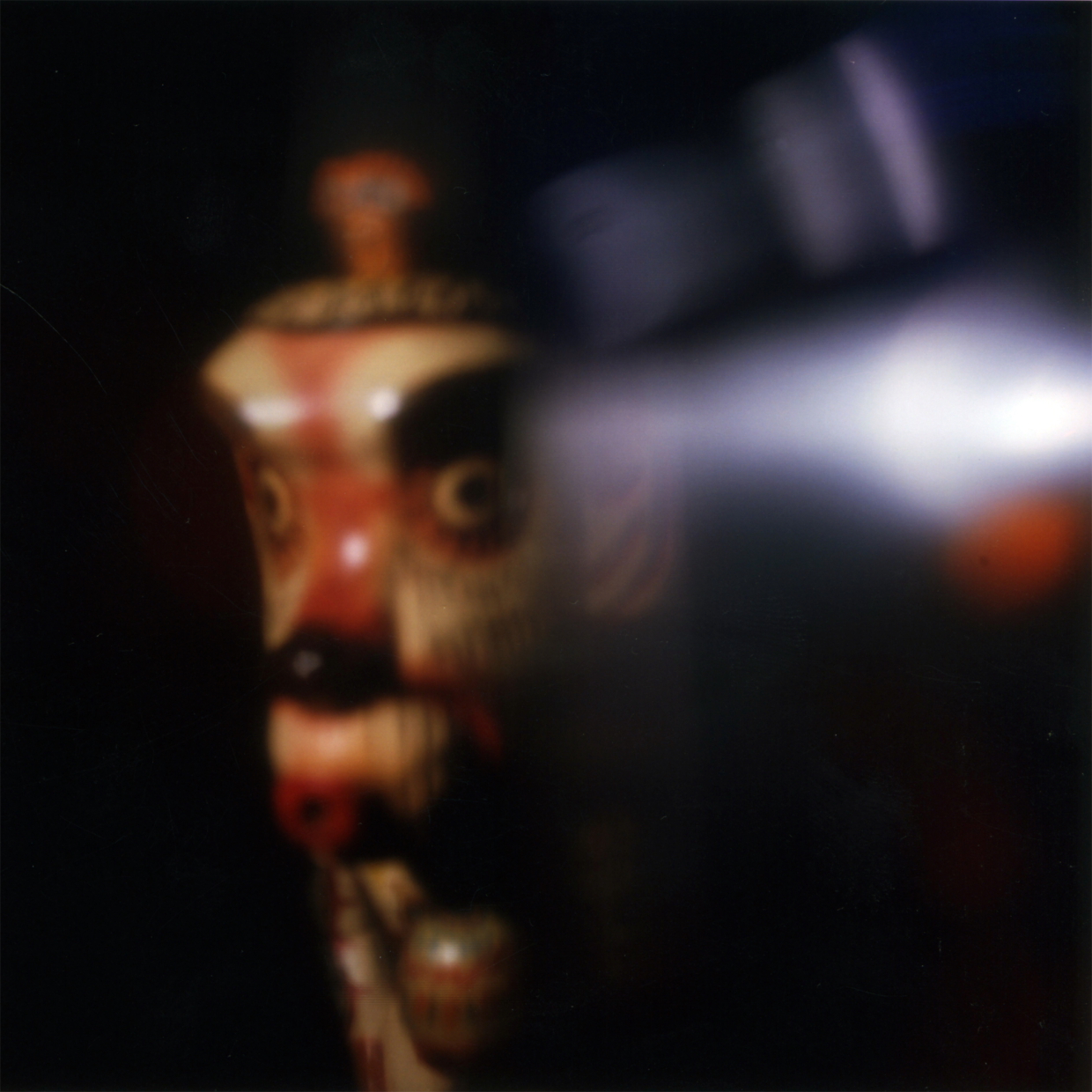
Untitled chromogenic print, edition of 5
A: That’s a trade secret! I will say that if I am going to sign my name to a piece of art, it must be the best that I am able to make at that point in time. In the darkroom I work deliberately and patiently. I slow down. I make tests, then refine and adjust the yellow and magenta filters on the enlarger to emphasize certain parts of the negative – bring an area forward, make another recede, brighten up something, etc. Usually as a last step, I dodge and burn some areas, always trying to produce the best, most eye-catching images I can.
Pearls from artists* # 2
Tucson, AZ
* an ongoing series of quotations – mostly from artists, to artists – that offers wisdom, inspiration, and advice for the sometimes lonely road we are on.
Ms. Dillard is speaking about writing here, but her comments apply to all the arts.
Push it. Examine all things intensely and relentlessly. Probe and search each object in a piece of art. Do not leave it, do not course over it, as if it were understood, but instead follow it down until you see it in the mystery of its own specificity and strength. Giacometti’s drawings and paintings show his bewilderment and persistence. If he had not acknowledged his bewilderment, he would not have persisted. A twentieth-century master of drawing, Rico Lebrun, taught that “the draftsman must aggress; only by persistent assault will the live image capitulate and give up its secret to an unrelenting line.” Who but an artist fierce to know – not fierce to seem to know – would suppose that a live image possessed a secret? The artist is willing to give all his or her strength and life to probing with blunt instruments those same secrets no one can describe in any way but with those instruments’ faint tracks.
Admire the world for never ending on you – as you would admire an opponent without taking your eyes from him, or walking away.
One of the few things I know about writing is this: spend it all, shoot it, play it, lose it, all, right away, every time. Do not hoard what seems good for a later place in the book, or for another book; give it, give it all, give it now. The impulse to save something good for a better place later is the signal to spend it now. Something else will arise for later, something better. These things fall from behind, from beneath, like well water. Similarly, the impulse to keep to yourself what you have learned is not only shameful, it is destructive. Anything you do not give freely and abundantly becomes lost to you. You open your safe and find ashes.
After Michelangelo died, someone found in his studio a piece of paper on which he had written a note to an apprentice, in the handwriting of his old age: “Draw, Antonio, draw, Antonio, and do not waste time.”
Annie Dillard, The Writing Life
Comments are welcome.
Q: When did you begin seriously studying photography?
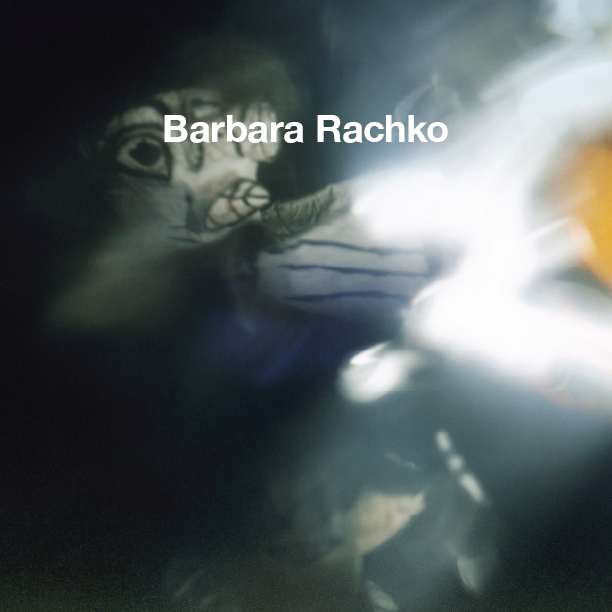
Exhibition catalogue, 2009 solo exhibition at HP Garcia Gallery, NYC; click
“Exhibition catalogue” under Blogroll to view inside pages
A: After I lost my husband, Bryan, on 9/11 – as I’ve discussed elsewhere, Bryan photographed most of the setups for my “Domestic Threats” series – I needed to find a way to continue making art. In June 2002 I began studying photography at the International Center of Photography (ICP) in New York. I took a one week 4 x 5 view camera workshop because Bryan had photographed the setups with a Toyo-Omega view camera. I was surprised to discover that I had absorbed quite a bit of technical information just by watching him. Once I completed the workshop, I decided to start over and to learn as much as I could about photography. So I enrolled in Photography I. Over the next several years I completed about a dozen courses at ICP, eventually learning to make my own large-scale chromogenic prints. Around 2007 I began working seriously as a photographer, creating my photographic series, “Gods and Monsters,” with Bryan’s Mamiya 6 camera. In October 2009 HP Garcia Gallery in New York gave me my first solo photography exhibition (see “Exhibition catalogue” under Blogroll).
I’m busy getting ready for my next solo show there in October. This exhibition will be fairly comprehensive and will include recent photographs (diptychs and single images), new work from the “Black Paintings” series, and a selection of Mexican and Guatemalan figures. There will be an exhibition catalogue and later in the fall, the gallery will publish the first book about my work. I am particularly thrilled about the book, a new, but long overdue, career milestone!
Q: What are you working on now?
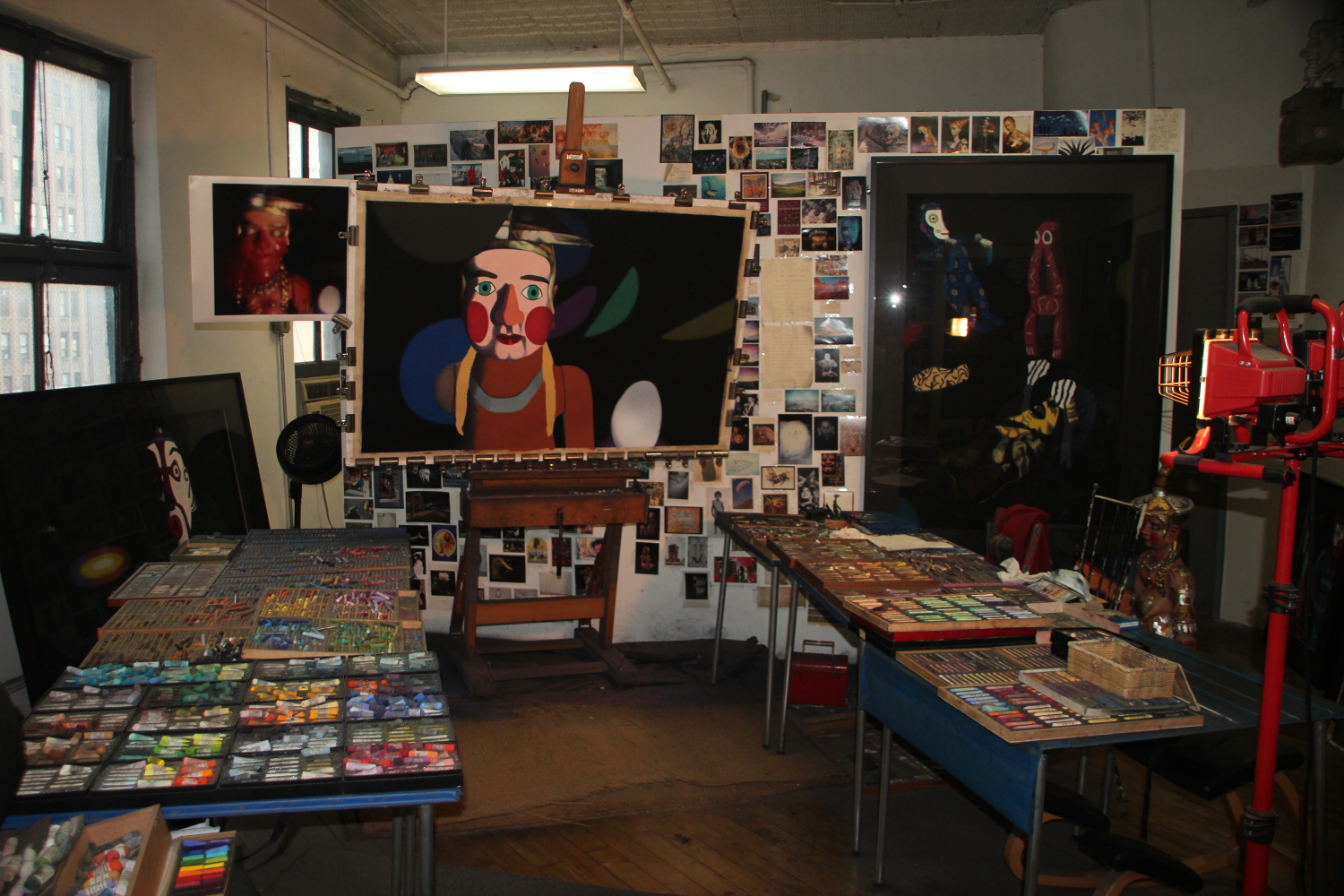
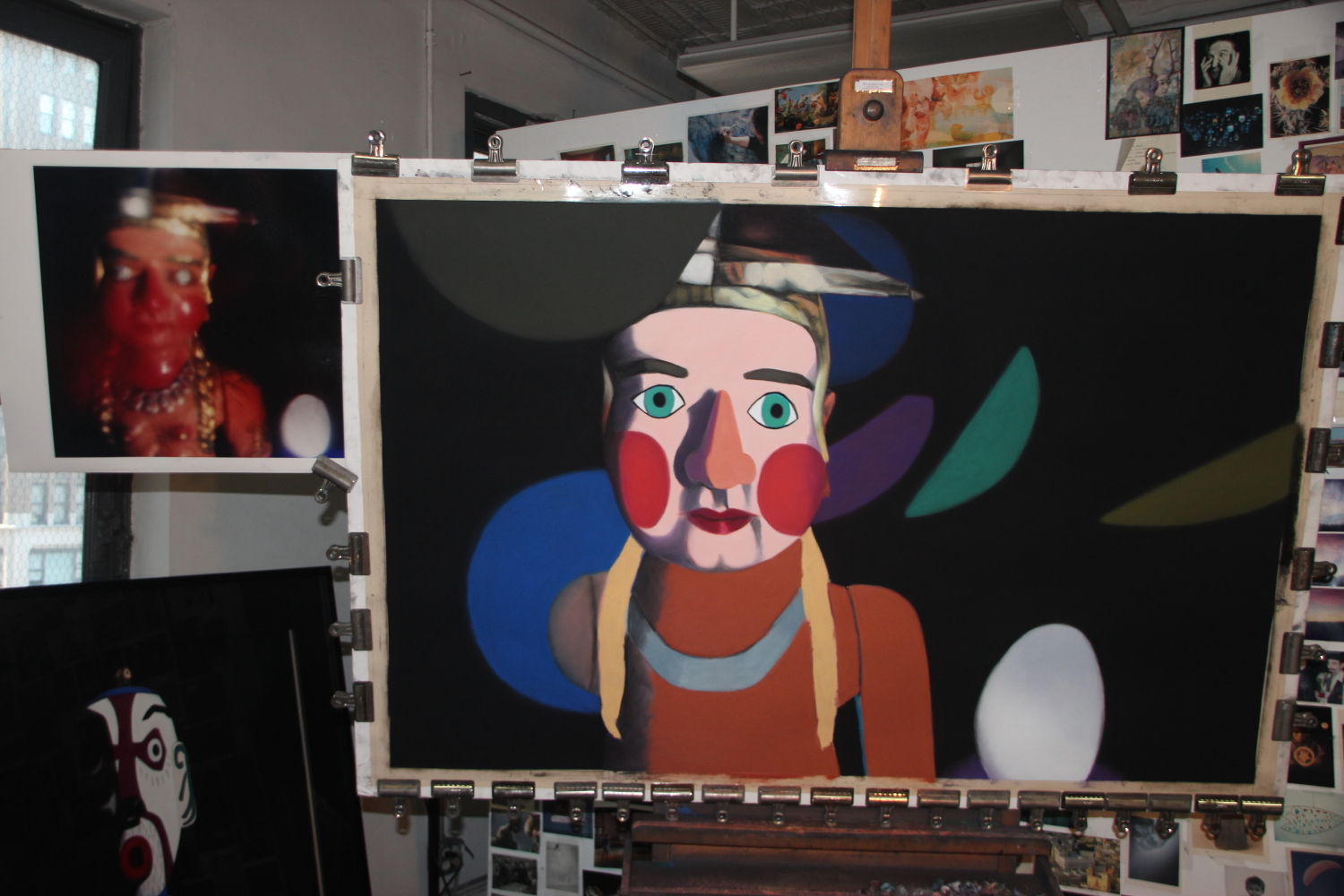
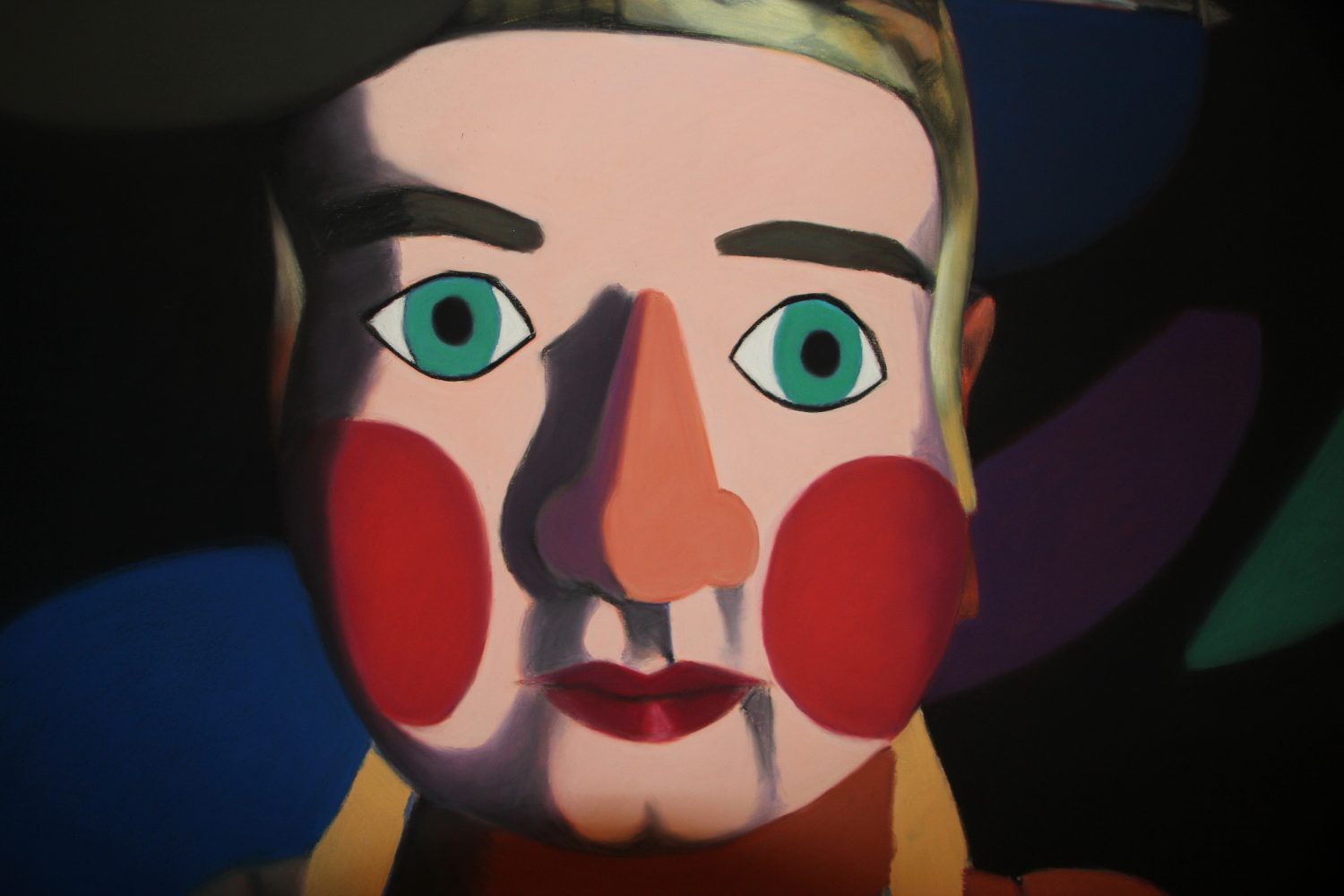
A: I am continuing with the “Black Paintings,” a series started a few years ago. Compared with “Domestic Threats,” these paintings are stripped of everything – walls, furniture, rugs – except the actors, who appear on a stark black background. As I’ve continued working over the years, I’ve learned to communicate better. I’ve stripped away all the extraneous stuff and gradually have been able to do more with less. There is wisdom in simplifying the work to reveal the essential vision. It is an artist’s life work.
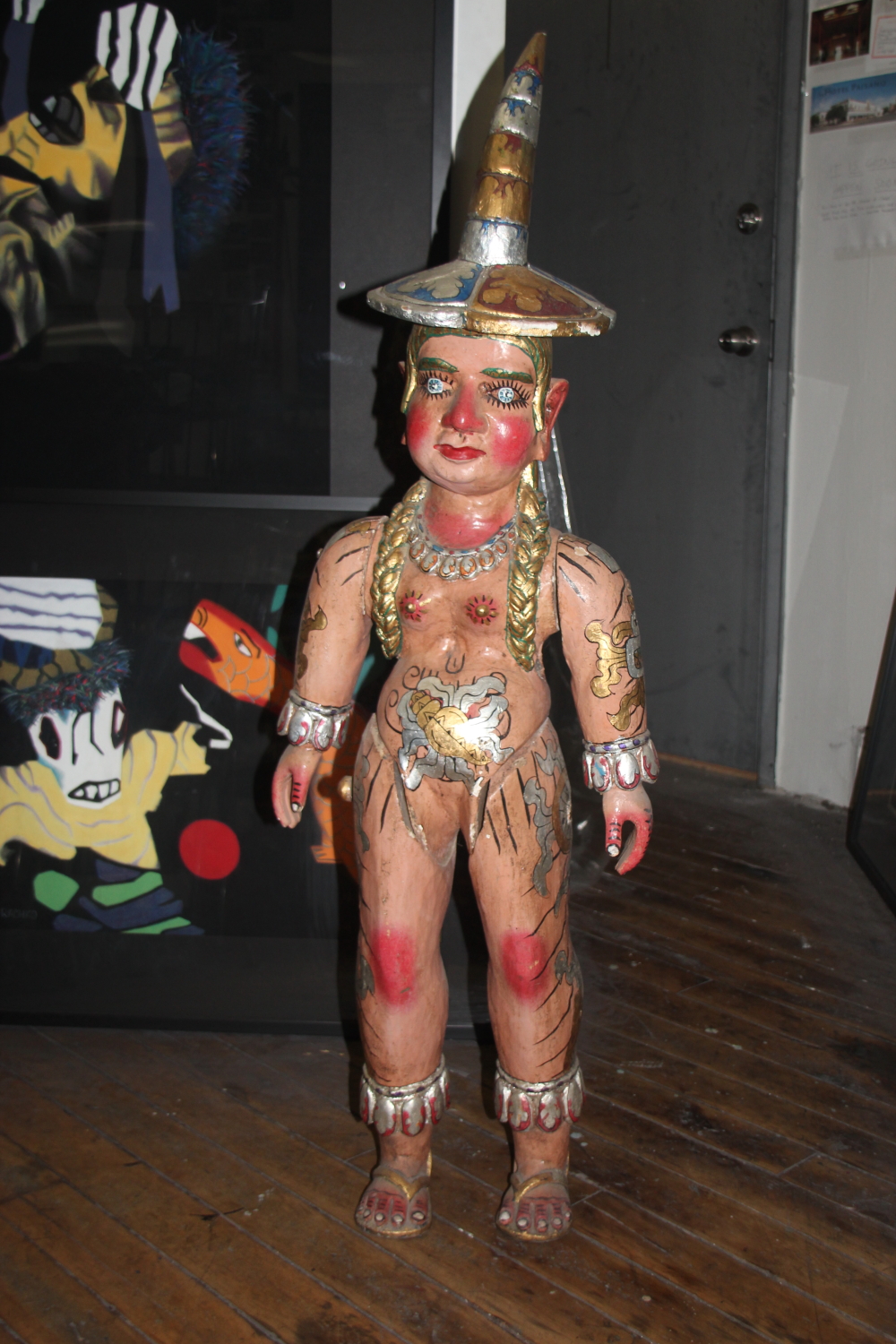
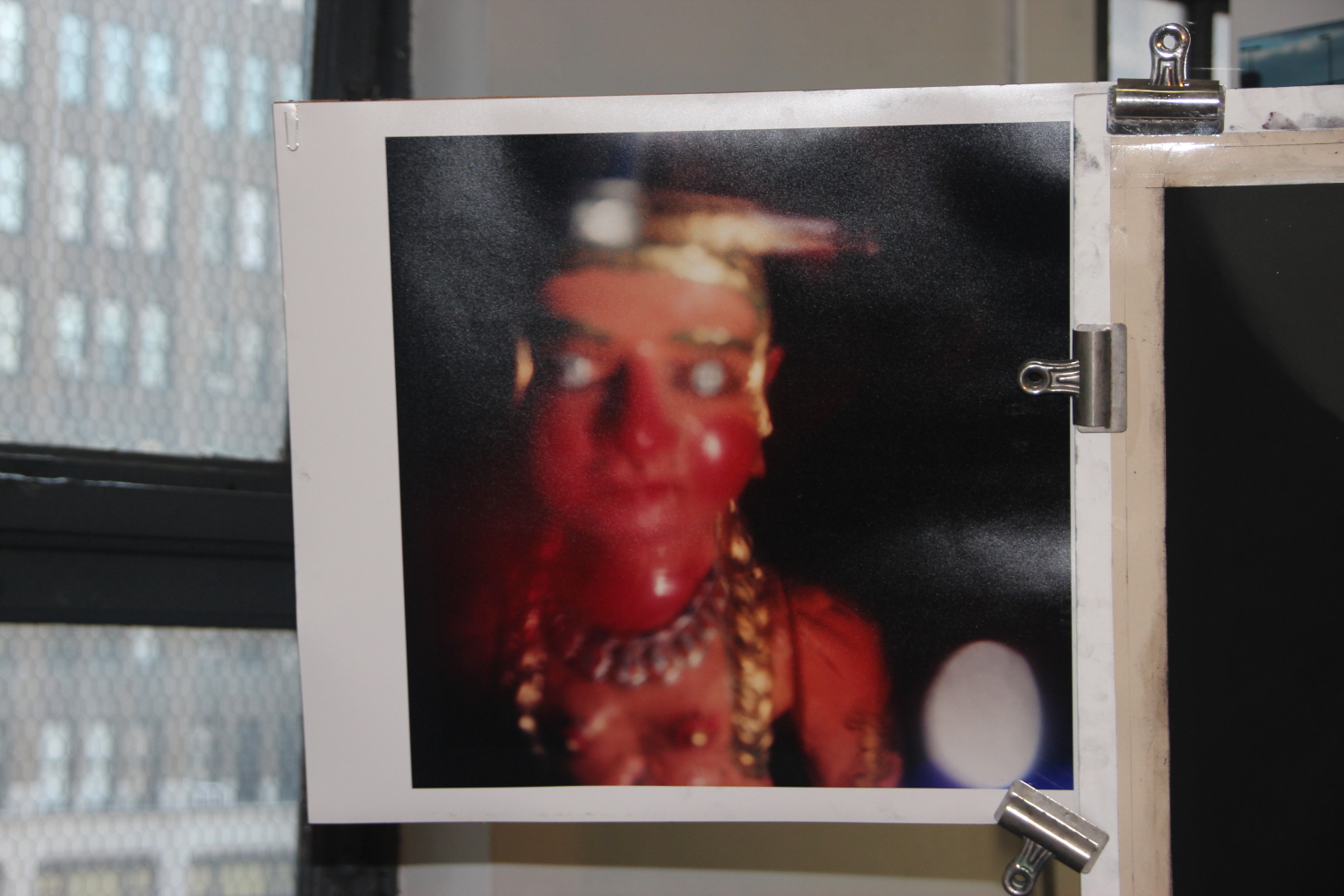
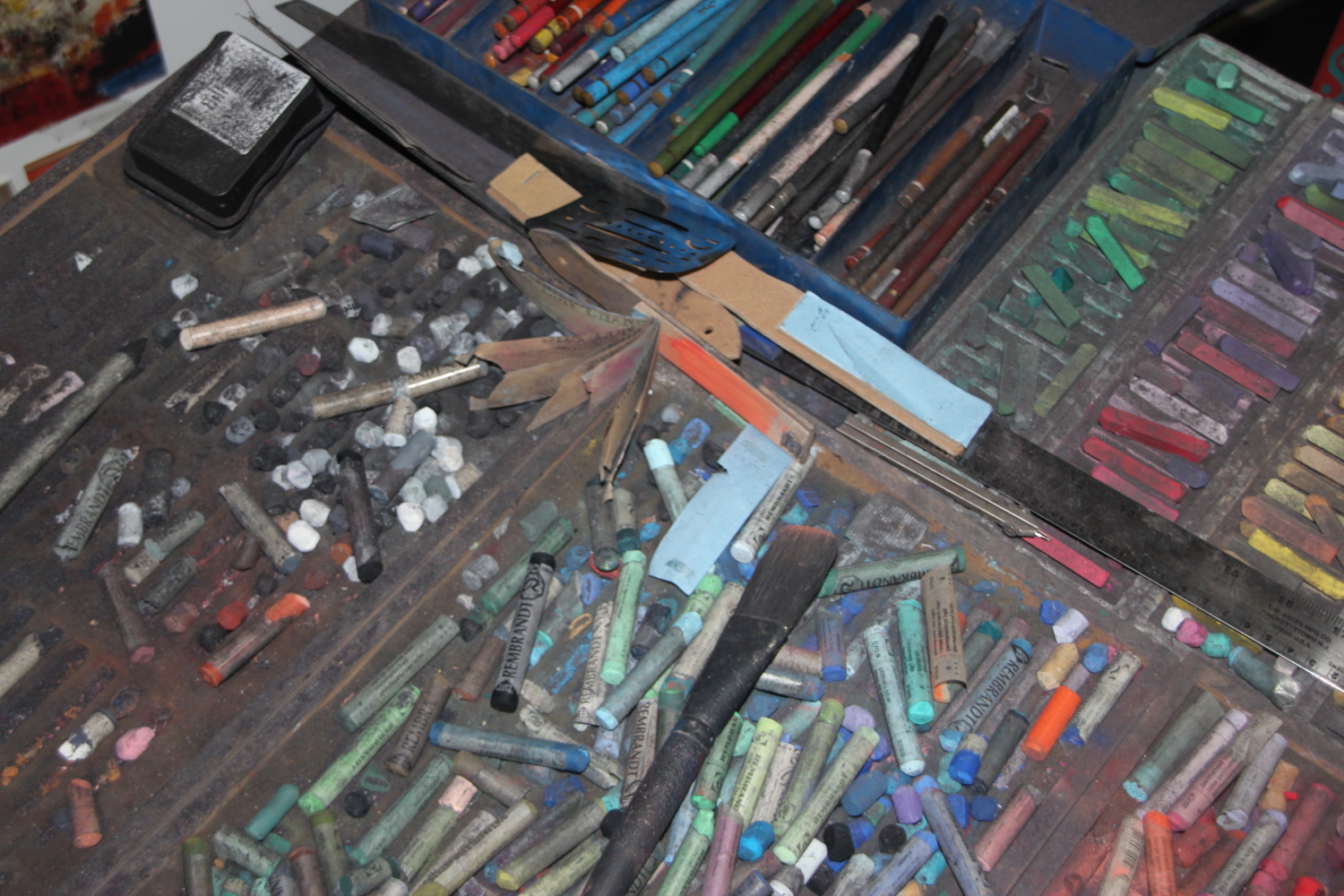
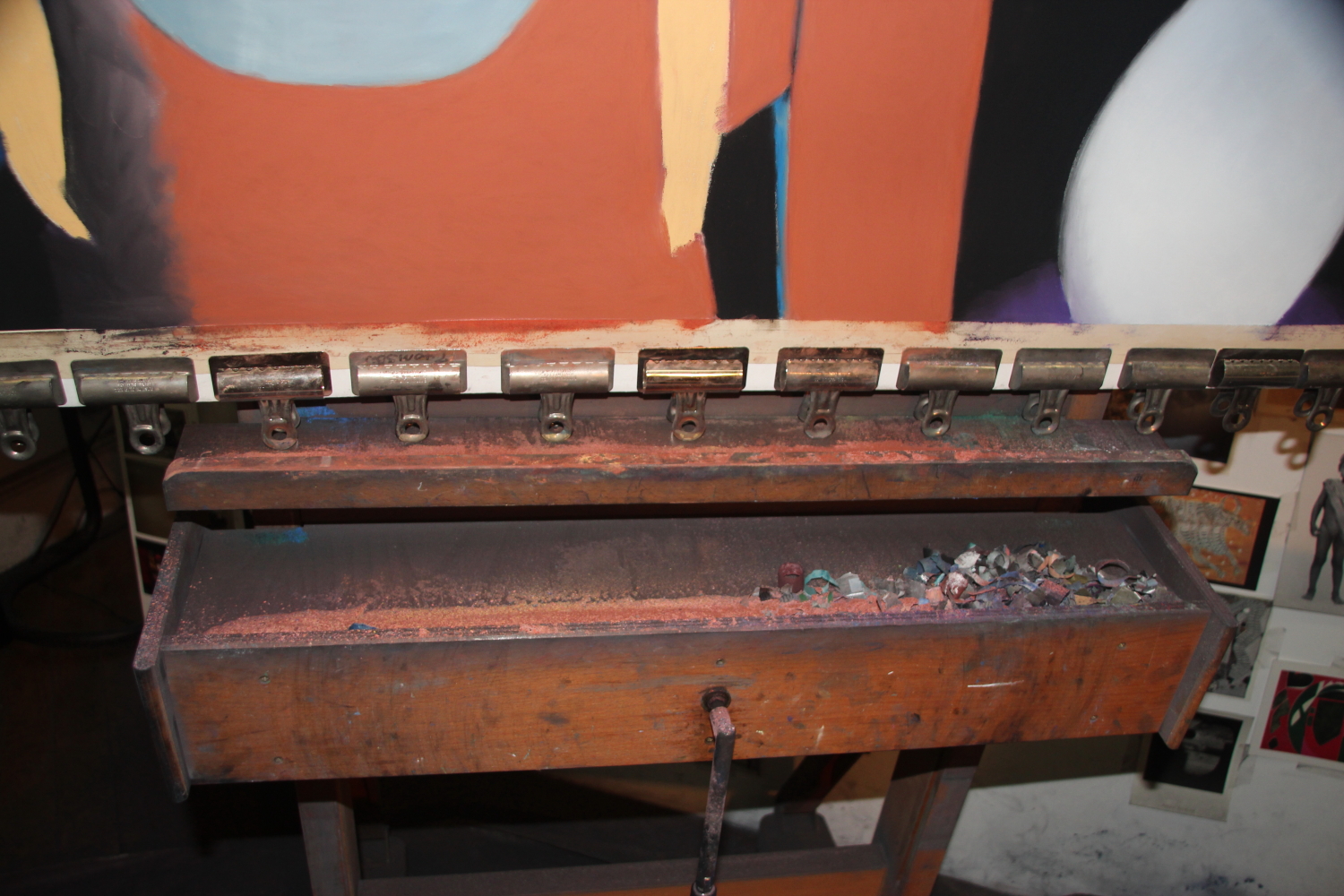
The first photograph below is of a carved wooden figure found in Mexico City at Eugenio’s, my favorite mask store in Mexico. She is part of a male-female pair. The second image is my 20″ x 24″ photograph of her, the starting point and reference for the painting. The next five photographs, I think, are self-explanatory. Questions are welcome, as always.
Q: If your “actors” could talk, what might they say about you as a director?

“He Was So in Need of Botany,” soft pastel on sandpaper
A: I hope they would say that I am very focused, devoted to doing the best work possible, that I know exactly what I am after, and that I use all the skills and knowledge I have acquired over many years as a painter and a photographer to make art that is worthwhile and meaningful.
Q: Your paintings are full-blown productions. You take great care to not only cast them, but to choose the right sets and lighting for them. Would you consider making films?
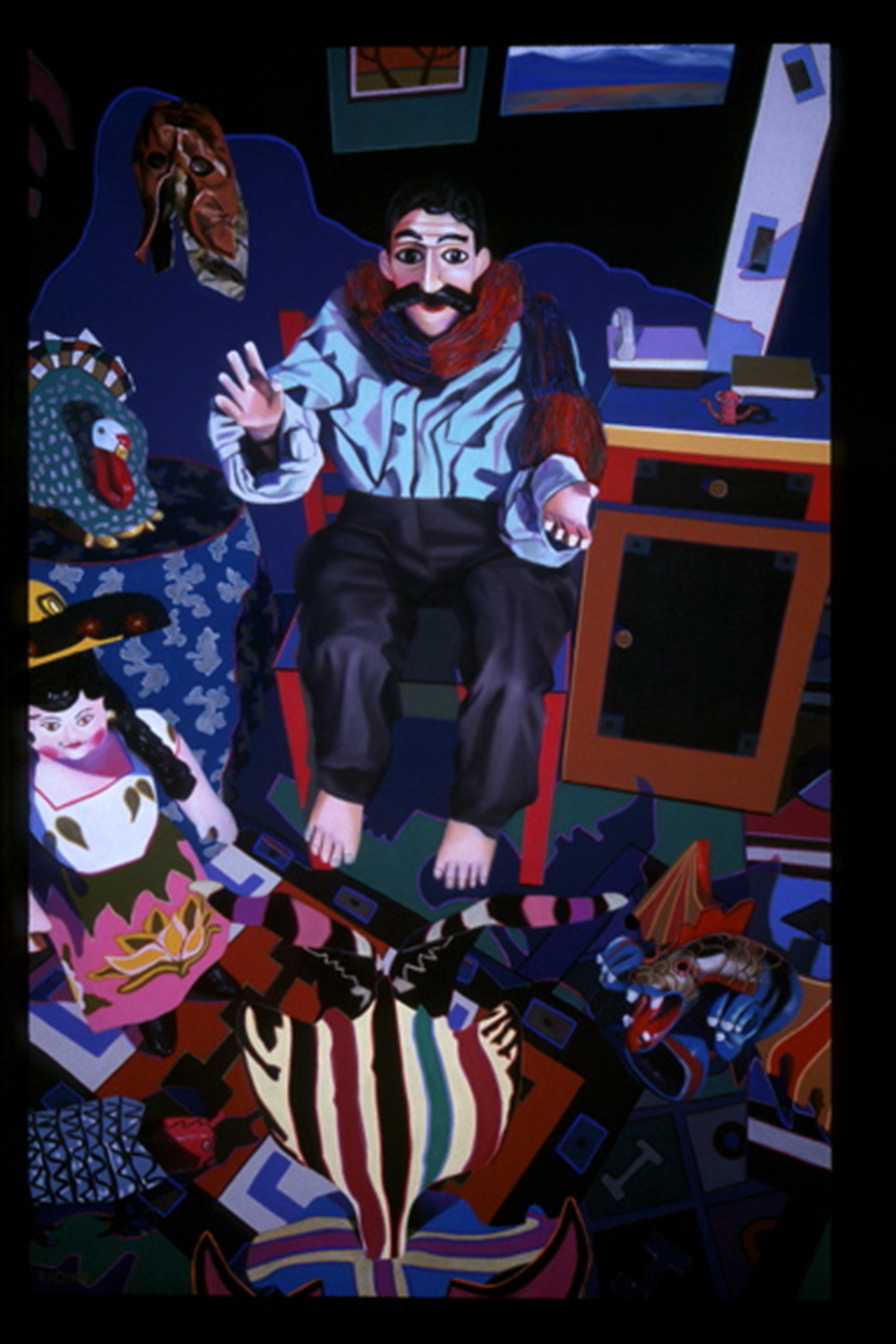
“Truth Betrayed by Innocence,” soft pastel on sandpaper
A: In the late 1990s I seriously considered it – I studied film at the New School and at New York University – but ultimately I decided to stay with painting. A well-made film will be seen by more people than a painting ever will, but the finances of making it are daunting. Historically visual artists have achieved mixed results when they have turned to filmmaking. Cindy Sherman was not very good at it, but Shirin Neshat’s feature film was very good. Julian Schnabel is arguably a much better filmmaker than he ever was a painter. Most importantly for me, filmmaking is a very complex collaboration. I love the time I spend alone in my studio and prefer having control over and being fully responsible for the results. It would be difficult to give this up.
Q: There is plenty of joyful and vibrant color in your work, but shadows are also ever-present. I would almost go as far as calling them the supporting players of your compositions. Can you elaborate on their importance and significance?

“She Embraced It and Grew Stronger,” soft pastel on sandpaper
A: When I arrange the setups, I spend a lot of time lighting them, mainly in a search for intriguing cast shadows. At one point in the “Domestic Threats” series the shadows became so important that I thought of them as physical objects in their own right. So I made them very prominent, outlined them, and otherwise gave them added emphasis. Often they had no relation to the actual objects as I created any shadow shapes that looked interesting in the painting. When I go to art galleries and museums, I always look at the shadows surrounding well-lit three dimensional objects. I find shadows quite fascinating. How less visually satisfying Calder’s mobiles and stabiles would be without the cast shadows!
Q: In your paintings, we occasionally catch a glimpse of a blond-haired female whom I assume is you. Are you also playing a character or do you appear as yourself?

“No Cure for Insomnia,” soft pastel on sandpaper
A: I am playing myself. I like to include myself in a painting now and then. I used to be a portrait artist and this is one way to keep up my technical skills. Beyond that when I’m in the painting it gives another level of reality to the scene depicted. I painted “No Cure for Insomnia” (above) at a time when I was having trouble sleeping. In it I imagined what people who didn’t know me personally, but who only knew my work, might think was keeping me up at night!



